


- Motor
- 5 HP
- Production (approx.)
- 60–70 kg
- Hopper
- 30 kg
- Grinding chambers
- 2
What This Machine Is
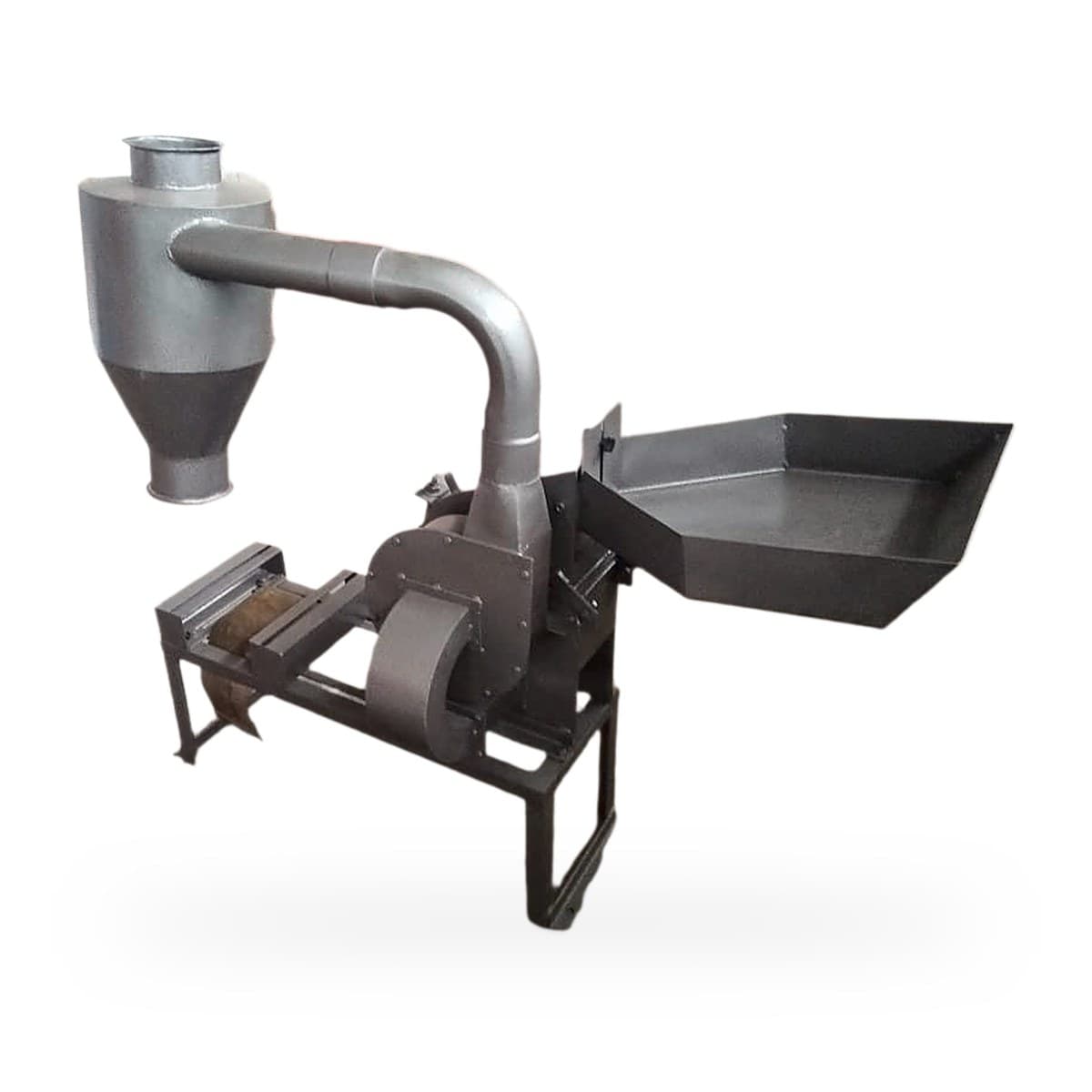
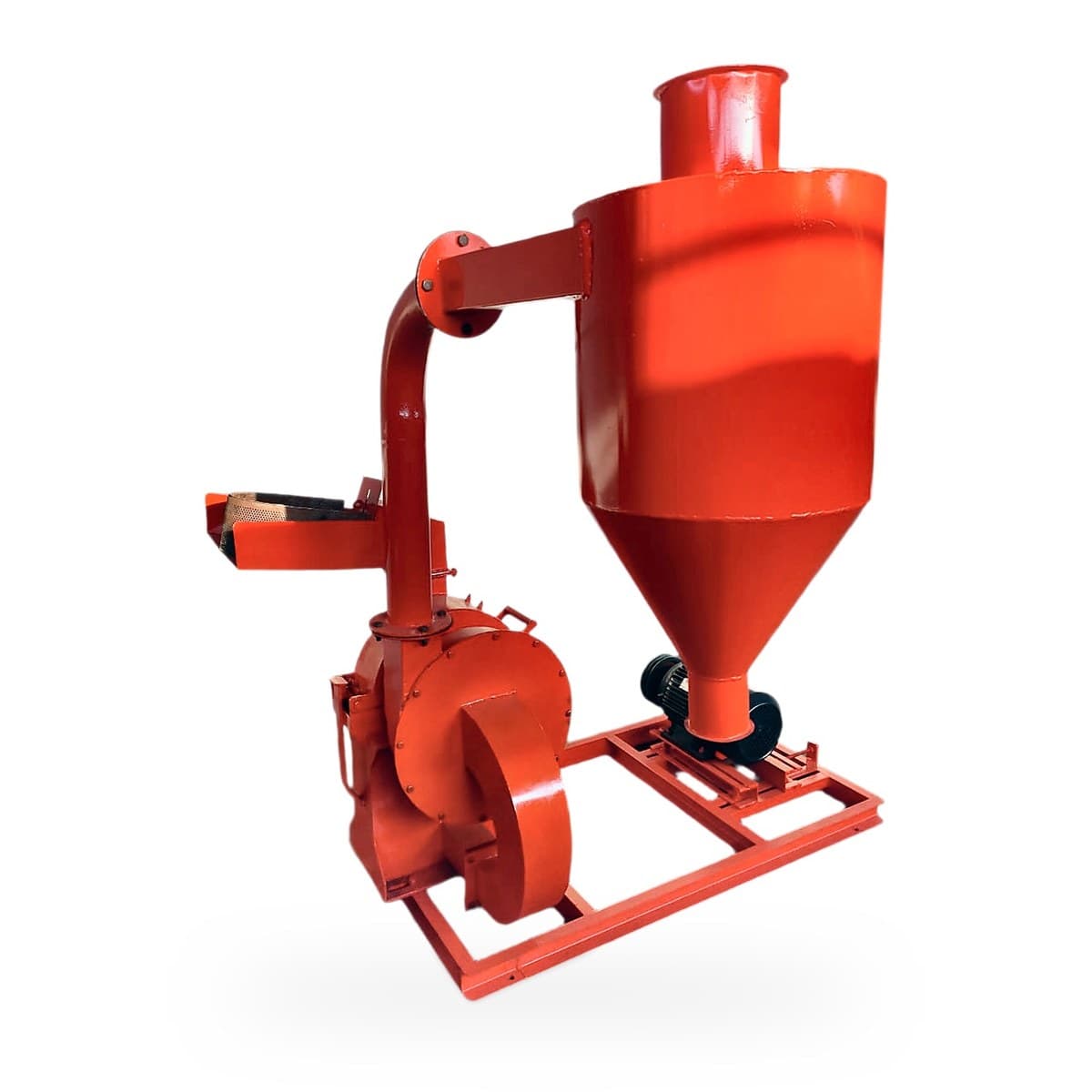
This is an impact pulverizer built as one unit on a heavy steel base frame. Material goes from the feed tray into the grinding chamber, where blades break it down until it is fine enough to leave. The powder then travels up a duct into a large cyclone, settles in the cone and comes out at the bottom outlet, where you tie a bag or place a bin.
What makes this model different from a standard pulverizer is the pair of grinding chambers and the size of the hopper. Most shop machines have a single chamber and a hopper you refill often. This one is built for longer runs and for a unit that handles more than one kind of job.
What Two Chambers Give You
The big chamber measures 10 x 4 inches and the small one 8 x 4 inches. In daily work, two chambers help in a few ways:
- Separate materials. Turmeric colour and chilli heat carry over easily. Having a second chamber makes it easier to keep a job apart from your main line.
- Matched to batch size. Large lots suit the big chamber, while smaller customer or blend jobs can go through the small one.
- Less downtime. When one chamber is being cleaned or checked, you are not left without any grinding capacity.
Ask for the demo video before you order so you can see how the chambers are used on this machine and decide whether it fits the way you plan to work.
The Cyclone, Explained Simply
A cyclone is a tall cylinder with a cone at the bottom. Air carrying powder enters from the side and spins around the inside wall. The powder is heavier than the air, so it slides down the wall into the cone, while the cleaner air leaves from the top. You get your powder in one place at the outlet.
For a spice unit this means less powder hanging in the air and less loss on the floor. It also means the powder leaves the hot grinding zone quickly. Spice that stays hot loses aroma, and buyers notice a dull chilli powder at once.
Who Should Buy It
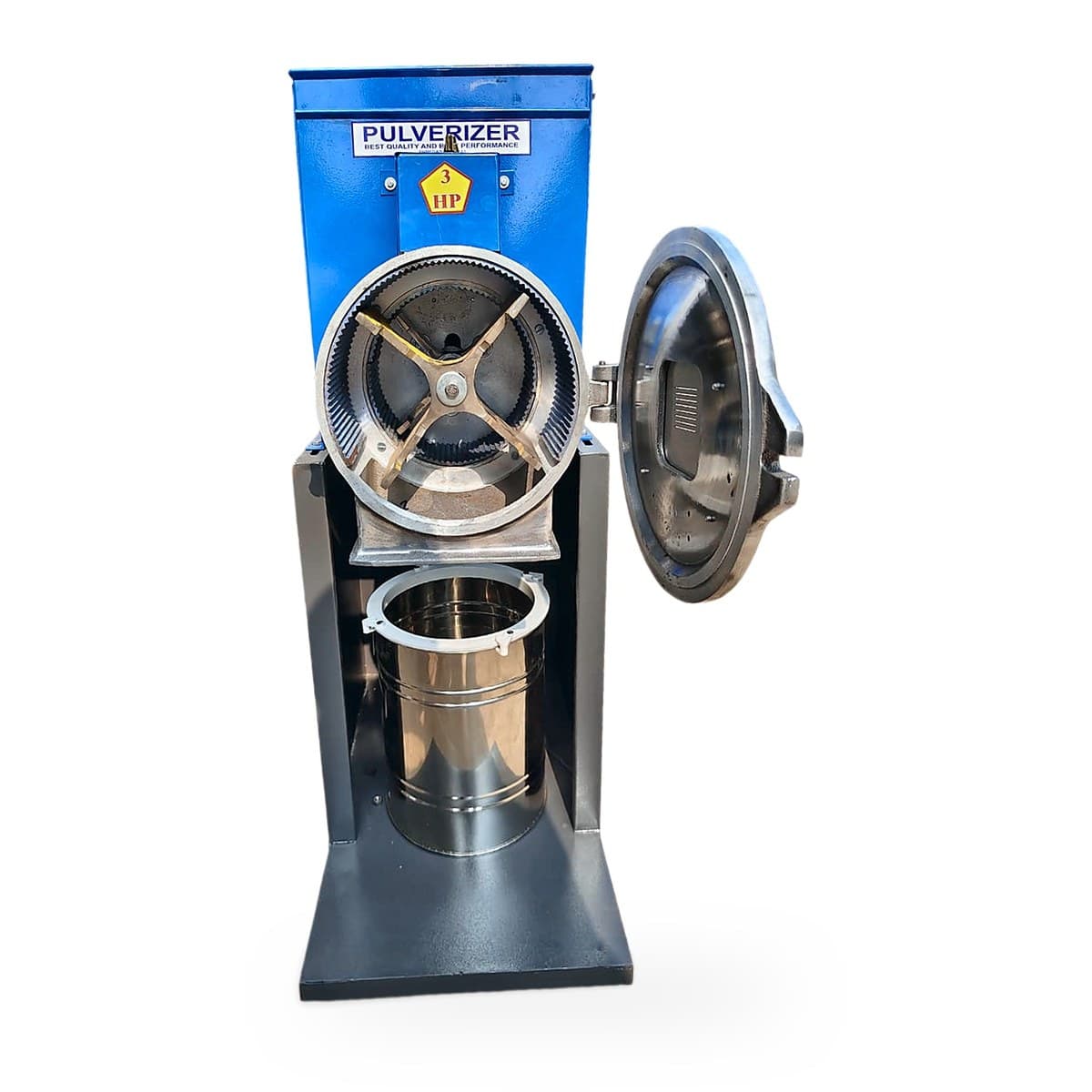
This machine suits a unit that already sells or has firm orders, such as a packed masala brand, a job work grinder serving several shops, or a wholesaler adding powder to whole spice trade. If you are just starting with walk-in customers, a smaller 3 HP masala pulverizer on single phase is usually the easier first step. If you need a wider choice of motor sizes up to 10 HP, compare the blower type masala pulverizer range.
Planning a Commercial Grinding Unit
A commercial grinding unit is more than the machine. Plan these before delivery:
- Power. The phase and power use for this model are not on the sheet. Confirm them with us, then check your connection and get a qualified electrician to fit a proper starter.
- Space. Floor area for the frame, height for the cyclone, and room to feed and change bags.
- Raw stock area. Dry storage off the floor, away from the grinding area.
- Drying. A way to dry material again if it absorbs moisture in monsoon.
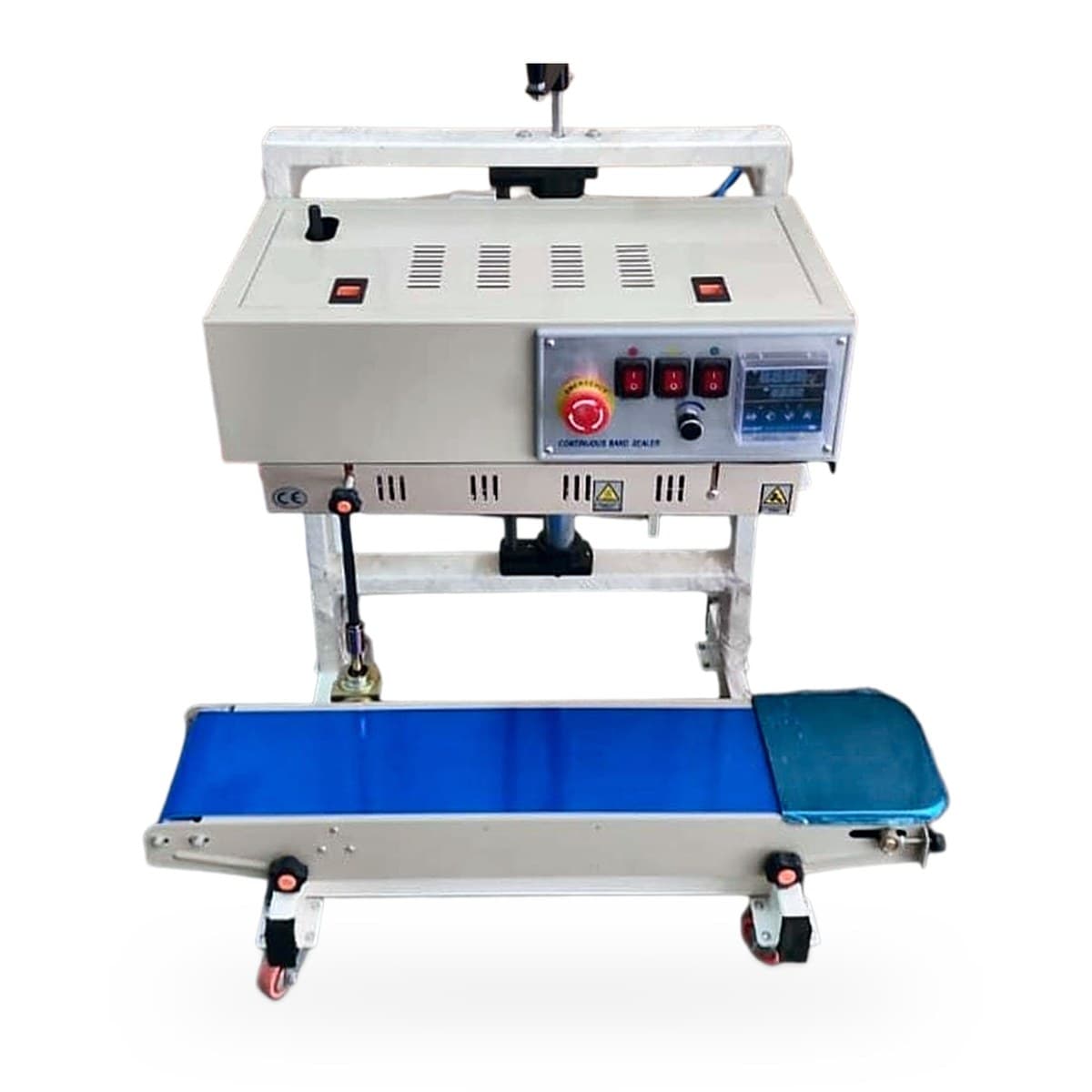
- Packing. A weighing scale and a sealer. Most units start with a band sealing machine for pouches and add a handheld inkjet printer for batch coding when they need dates and batch numbers on packs.
Getting Consistent Powder
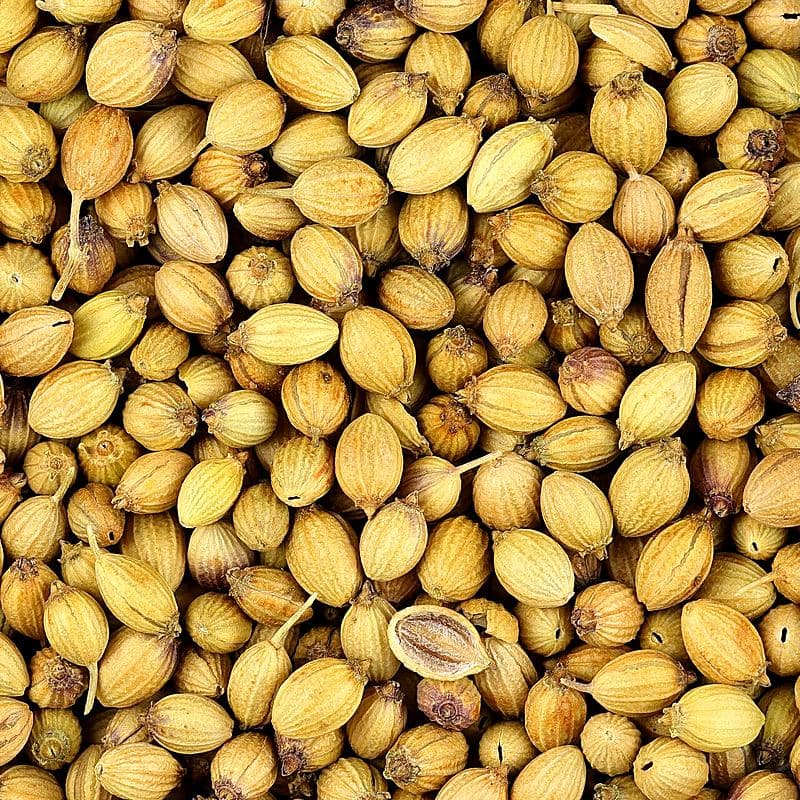
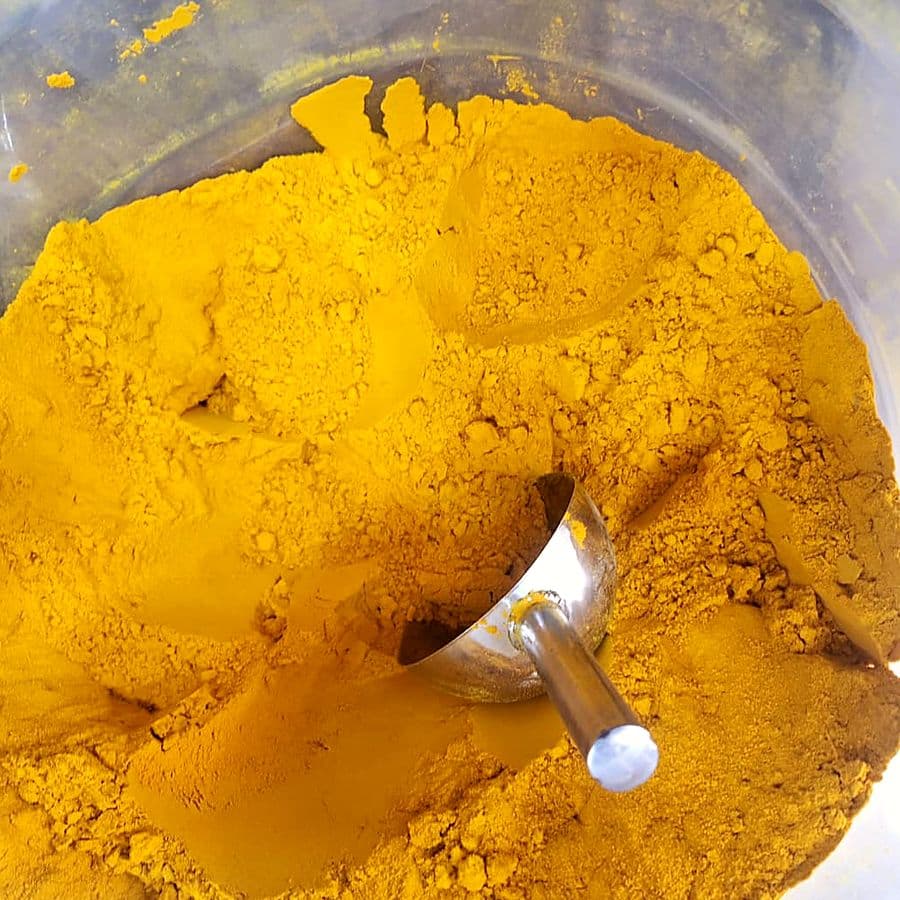
Consistent powder comes from consistent input. Buy from the same grade where possible, clean out stones and stems, and dry everything to the same point. Feed at a steady rate: dumping material in chokes the chamber, heats the powder and slows output. Keep a written recipe for every blend, grind components separately and mix after. Let powder cool before packing so it does not sweat in the pouch.
Care and Cleaning
Most breakdowns on a pulverizer start small. A bag tied loosely at the cyclone outlet lets powder escape and the air flow change. A screen with a small tear passes coarse pieces long before anyone sees the hole. A motor that runs warm because its vents are packed with spice dust will fail sooner. None of these need a fitter if you catch them early, so make one person responsible for a short daily check and give them a written list to follow. Keep a spare screen of the size you use most, a spare outlet bag and the basic tools in one place near the machine, so a small problem does not stop a full day of grinding.
Run the machine empty for a short while at the end of each material so the duct and cyclone clear. Brush out the chamber and the cyclone outlet when you change spice. Check blades and screens on a fixed day each week, and keep the motor clean and its air path open. Tighten bolts on the frame now and then, since a heavy machine running daily will loosen them over time.
Questions to Ask Before You Buy
- Which supply phase is the motor for, and what is the power use?
- How are the two chambers used, and how long does changeover take?
- Which screens come with it, and what fineness do they give?
- What does installation cost at your location?
We will answer all of these with the demo video. Send us a message with your material and power supply.
Short Mein Samjhiye (Hinglish Summary)
Yeh 5 HP ki pulverizer hai jismein do chamber hain, ek bada (10 x 4 inch) aur ek chhota (8 x 4 inch). Hopper 30 kg ka hai aur production lagbhag 60 se 70 kg. Pisa hua powder cyclone mein jaata hai, wahan hawa se alag hokar neeche outlet par girta hai, isliye powder ek jagah collect hota hai aur kamre mein dhool kam hoti hai.
Yeh machine un units ke liye hai jinke paas pehle se order hain. Masala saaf aur sookha rakhiye, dheere feed kijiye, har material ke baad machine khaali chala kar saaf kijiye, aur powder thanda karke pack kijiye. Phase aur bijli ki khapat sheet par nahi hai, isliye price ke saath yeh bhi humse poochh lijiye.