Skip to content

MachinePasta Making Machine

Pasta Making Machine

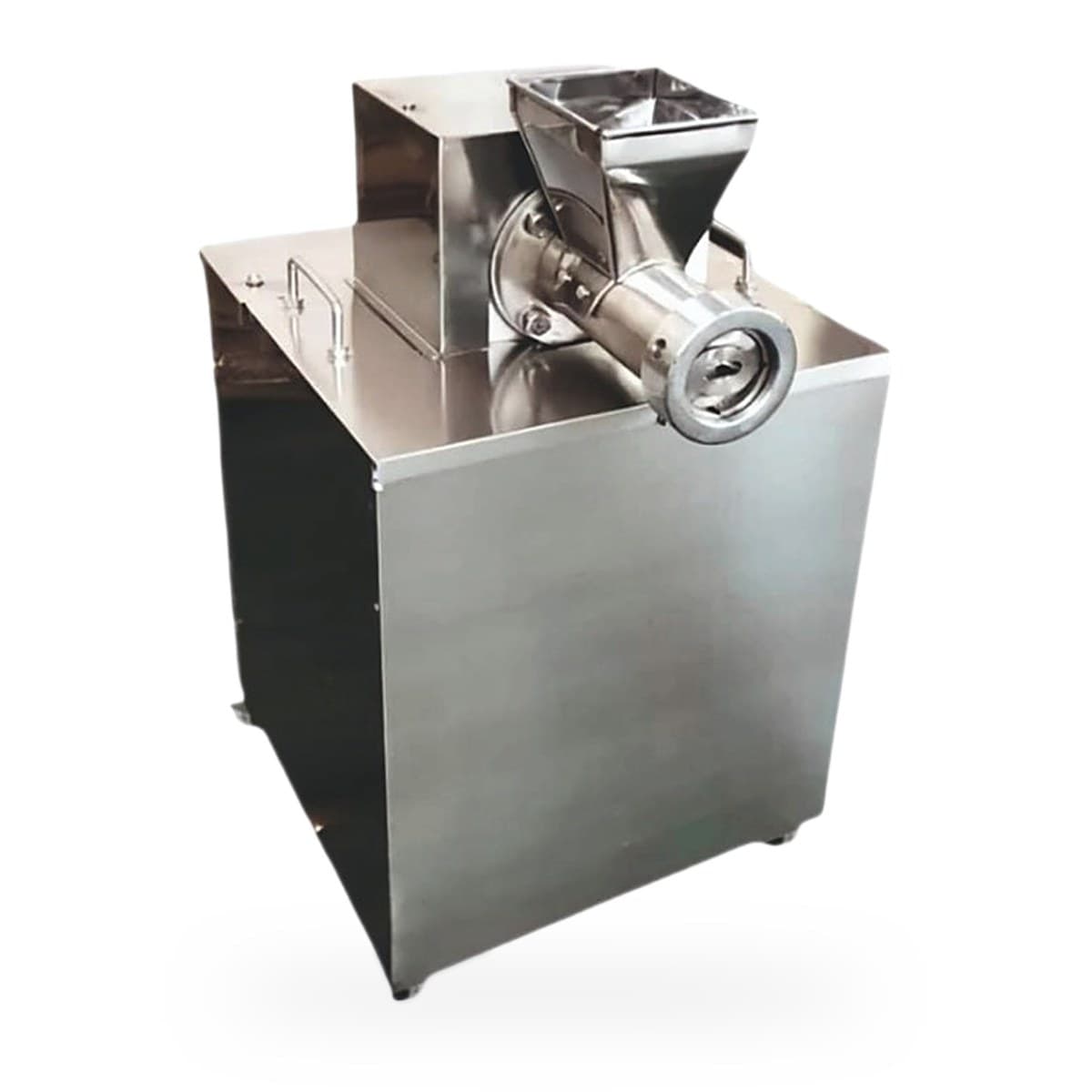
A full stainless steel extruder that pushes dough through interchangeable dies to make macaroni, fusilli, shells, flat noodles and more than a dozen other shapes. Three models from 20 to 80 kg an hour, all supplied with motor, and a matching dough mixer.

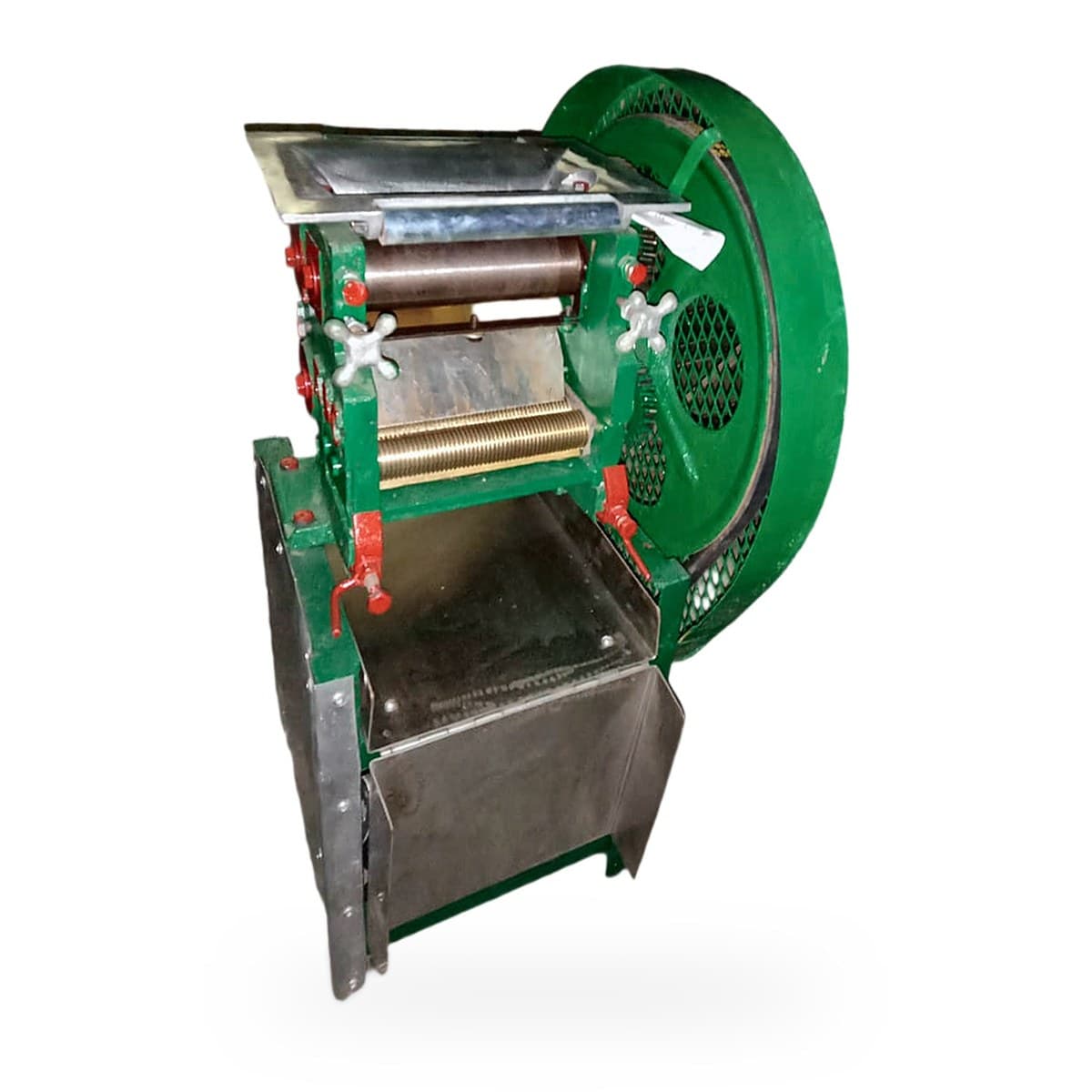
Stainless steel pasta making machine with top hopper, extrusion barrel and die head on a square cabinet baseHopper, barrel and die head1 / 3
Capacity
20 – 80 kg / hr
Power
3 – 5 HP
Shapes
12+ dies
Body
Full SS

Or call+91 85058 21738/+91 96257 59353

  • Supplied with motor
  • Food-grade stainless steel
  • Matching mixer available
  • Support Mon – Sat

Part of our food processing machines range · GST 18% extra

01Specifications

Technical Specifications

Available in 4 fully automatic models. Compare them below, then ask us for the one that fits your output and power supply.

Get Spec Sheet
Pasta Making Machine: specifications of both models
Specification60 Model20 – 25 kg / hr80 Model45 – 60 kg / hr100 Model75 – 80 kg / hrMixer10 – 15 kg
Capacity20 – 25 kg / hr45 – 60 kg / hr75 – 80 kg / hr10 – 15 kg
Power3 HP, single phase4.5 HP, single phase5 HP, three phase0.5 HP
Weight—125 kg150 kg26 kg
Package size (mm)820 × 480 × 660860 × 570 × 810900 × 610 × 875530 × 400 × 710
BodyStainless steelStainless steelStainless steel—
Motor includedYesYesYesYes

Values are from the manufacturer sheet. The 60 model weight and the mixer body material are not on the sheet and are available on request. The mixer capacity is listed without a time unit. Output depends on the dough and the die shape. — = not on that model’s sheet yet.

Key Features

  • Interchangeable dies

    Over 12 shapes including macaroni, fusilli, shells and flat noodles, by changing the die on the head.

  • Full stainless body

    Food-grade stainless steel throughout, which is easy to wash down between batches.

  • Three capacities

    20 to 25, 45 to 60 and 75 to 80 kg an hour, so you can match the machine to your orders.

  • Single phase options

    The 60 and 80 models run on single phase. The 100 model is three phase.

  • Matching dough mixer

    A 0.5 HP mixer prepares dough to feed the extruder.

  • Motor included

    All machines are supplied with motor, so there is nothing extra to source.

02Raw Material

What Pasta Is Made From, and the Shapes You Get

The extruder shapes dough you mix. Your flour, how much water goes in and how you dry the pasta decide how it cooks and how long it keeps.

Raw Material Price
  1. 1FlourSooji or a flour blend weighed out
  2. 2MixFlour and water in the mixer
  3. 3This machinePressed through the die and cut
  4. 4DryDried until hard and brittle
  5. 5PackCooled, weighed and sealed
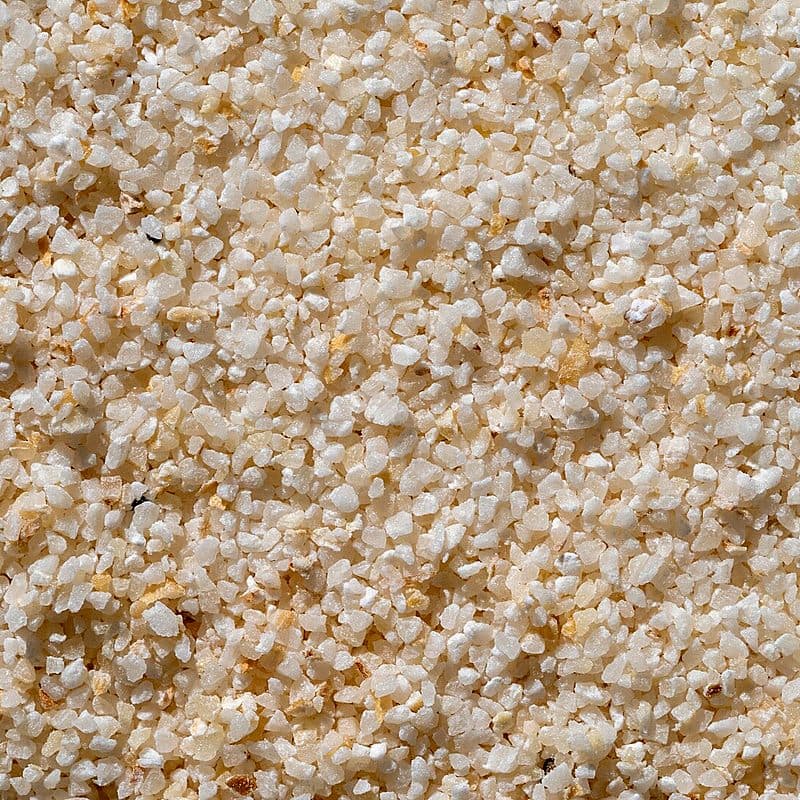
  • Close view of coarse semolina sooji grainsCore

    Semolina

    Sooji, rava

    The usual base for dry pasta. It gives pasta a firm bite and holds its shape when cooked. Some units blend in maida or other flours.

    Check when buying

    • Even grain size
    • Fresh, with no smell
    • Same supplier batch to batch
    Get price of semolina
  • Core

    Water

    Clean drinking water

    Pasta dough is a stiff, crumbly mix, much drier than roti dough. Weigh water every batch, because small changes change how the dough extrudes.

    Check when buying

    • Clean, potable water
    • Weighed, not poured by eye
    • Same temperature each batch
    Get price of water
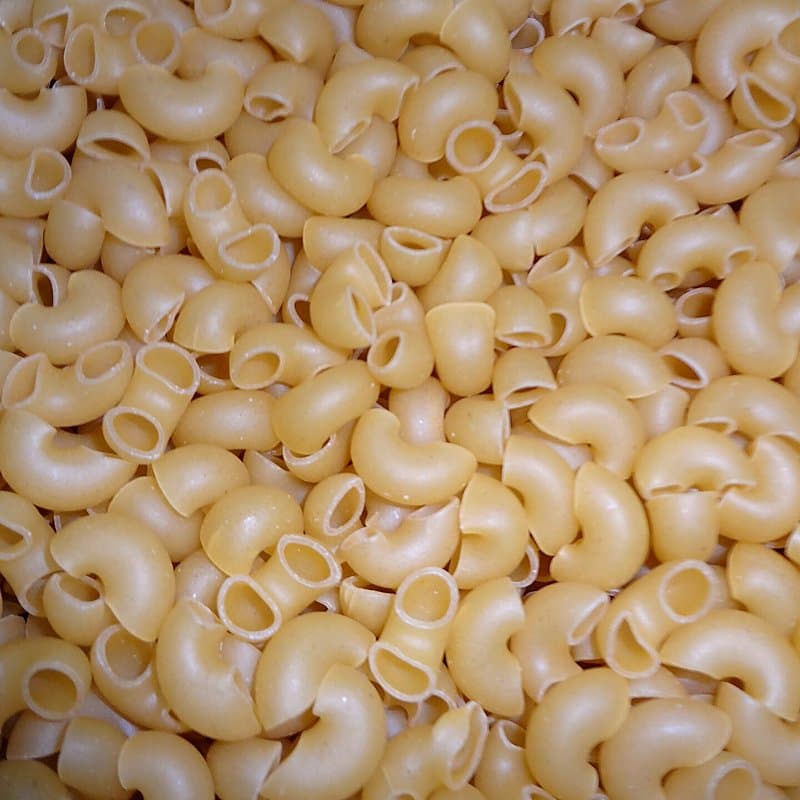
  • Dry elbow macaroni pieces filling the frameFinishing

    Elbow Macaroni

    Macaroni

    The best known shape in India, made with a hollow tube die and cut to length at the head.

    Check when buying

    • Even length
    • Smooth surface
    • Fully dried before packing
    Get price of elbow macaroni
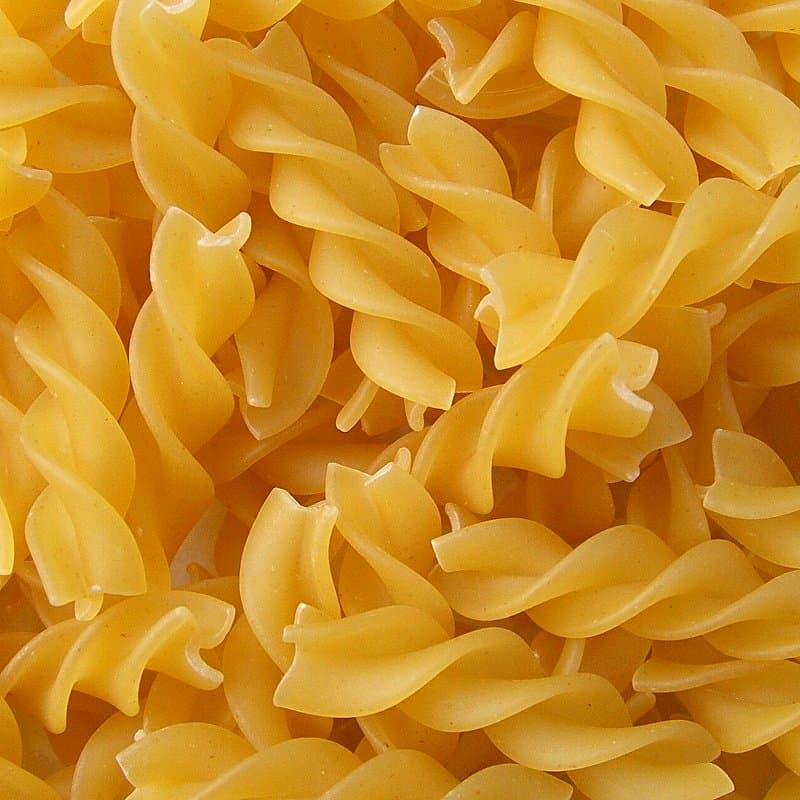
  • Dry yellow fusilli spirals filling the frameFinishing

    Fusilli

    Spiral pasta

    Spirals that hold sauce well and sell well in packs and to restaurants.

    Check when buying

    • Spiral holds shape
    • No cracks after drying
    • Packed gently
    Get price of fusilli
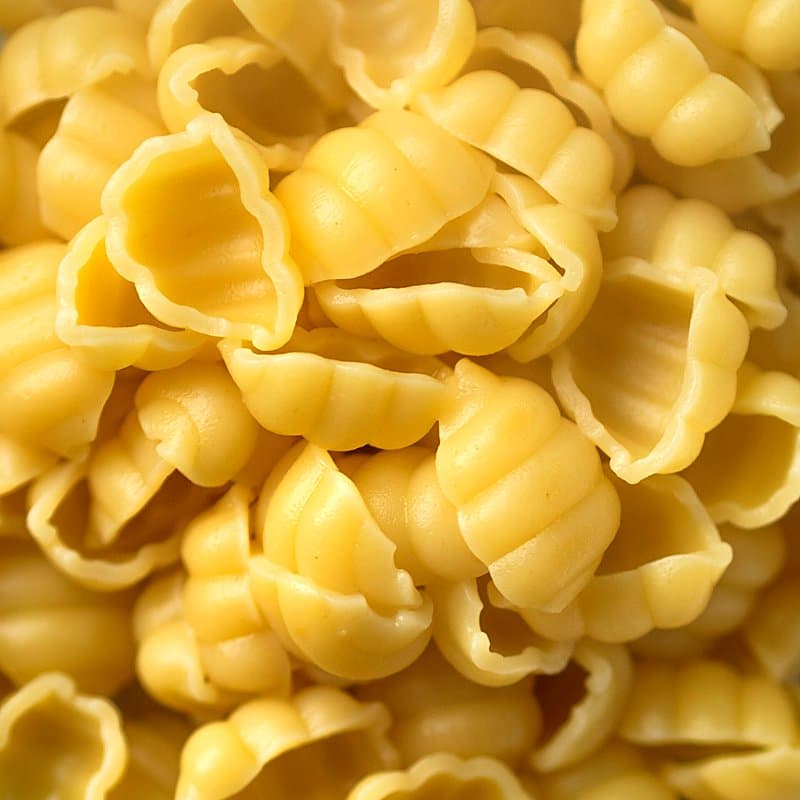
  • Ridged shell shaped pasta pieces close upFinishing

    Shells

    Shell pasta

    One of the other shapes the die set covers. A wider range of shapes helps you sell to more buyers.

    Check when buying

    • Even size
    • Ridges clean
    • Dried evenly
    Get price of shells
  • Finishing

    Dies

    Pasta shape dies

    The die on the head decides the shape. Over 12 shapes are available. Keep dies clean and dry, since a blocked hole gives a broken shape.

    Check when buying

    • Cleaned after each run
    • Stored dry
    • Holes free of dried dough
    Get price of dies

Material photos (illustrative): Sooji by Ajay Suresh, CC BY 2.0 · Elbow macaroni by David Adam Kess, CC BY-SA 4.0 · Fusilli by Luigi Chiesa, CC BY-SA 3.0 · Shells by Takeaway, CC BY-SA 3.0.

One supplier · one quote

Get the machine and your first raw material lot together

Sticks, masala and fragrance that suit this machine, in the same quotation, so production can start as soon as it is installed.

Get Combined Quote

03Complete Guide

Pasta Making Machine: The Complete Guide

How a pasta extruder shapes dough through dies, which of the three models fits your unit, and why dough and drying decide your product.

By the Shivaa Traders team Updated 5 min read

What a Pasta Extruder Does

Macaroni and fusilli sell in every kirana shop and are used by hotels, canteens and cloud kitchens. Most of it reaches small towns from a few big brands. A local unit with an extruder can supply shops, restaurants and institutions nearby with fresher stock and its own label.

The machine is an extruder. Dough goes into a hopper on top, a screw inside a barrel pushes and compresses it, and it comes out through a die on the front. The holes in the die decide the shape. A cutter at the die face sets the length of each piece.

How the Machine Makes Pasta

  1. Mix. Flour and water go into the mixer until the dough is evenly damp.
  2. Feed. Dough goes into the stainless hopper.
  3. Extrude. The screw carries it along the barrel and presses it through the die.
  4. Cut. Pieces are cut to length as they leave the die.
  5. Dry. Fresh pasta is spread on trays and dried until hard.
  6. Pack. Cooled pasta is weighed and sealed.

60, 80 or 100 Model?

Pasta machine models from the manufacturer sheet
ModelCapacityPowerWeight
60 Model20 – 25 kg / hr3 HP, single phaseOn request
80 Model45 – 60 kg / hr4.5 HP, single phase125 kg
100 Model75 – 80 kg / hr5 HP, three phase150 kg
Mixer10 – 15 kg0.5 HP26 kg

Choose the model from what you can dry and sell. Extrusion is fast; drying is slow and needs space. The 60 model suits a first unit or a restaurant supply business on single phase. The 80 model doubles capacity and still runs on single phase. The 100 model is for units with steady wholesale orders and a three phase connection.

Dies and Shapes

Over 12 shapes are available, including macaroni, fusilli, shells and flat noodles. Each die is a metal disc with shaped openings. Changing the die changes the product, so one machine can supply several shapes. Begin with the two or three shapes your local buyers already know, usually elbow macaroni and fusilli, and add more as orders come in.

Dies need care. Dried dough left in the holes gives broken or rough pieces in the next run. Soak and clean dies after every use, and store them dry. Ask us which dies come with your model when you order.

Getting the Dough Right

Pasta dough looks wrong to anyone used to roti dough. It is stiff and crumbly, closer to damp sand than to a smooth ball. The extruder does the work of pressing it together. Too much water and pieces stick and lose shape. Too little and they crack.

  • Flour. Semolina (sooji) is the common base. Some units blend in other flours.
  • Weigh everything. Flour and water by weight, every batch.
  • Mix evenly. Dry pockets in the dough become cracks in the pasta. The matching mixer helps here.
  • Test first. Run a small batch, dry it and cook a few pieces before full production.

Drying: The Step That Decides Shelf Life

Fresh pasta has to be dried before it can be packed and stored. Pasta packed with moisture in it can grow mould and spoil in the pack. Small units dry on trays in a clean, airy room, protected from dust and insects. Larger units use a dryer. Either way, dry evenly: pasta that dries too fast on the outside can crack.

Plan drying space from day one. If the machine makes pasta faster than you can dry it, the extra output is of no use to you.

Setting Up a Pasta Unit

  • Power. Single phase for the 60 and 80 models, three phase for the 100.
  • Space. Mixing, extrusion, a drying area and a separate packing table.
  • Hygiene. Washable floor and walls, covered flour and clean trays.
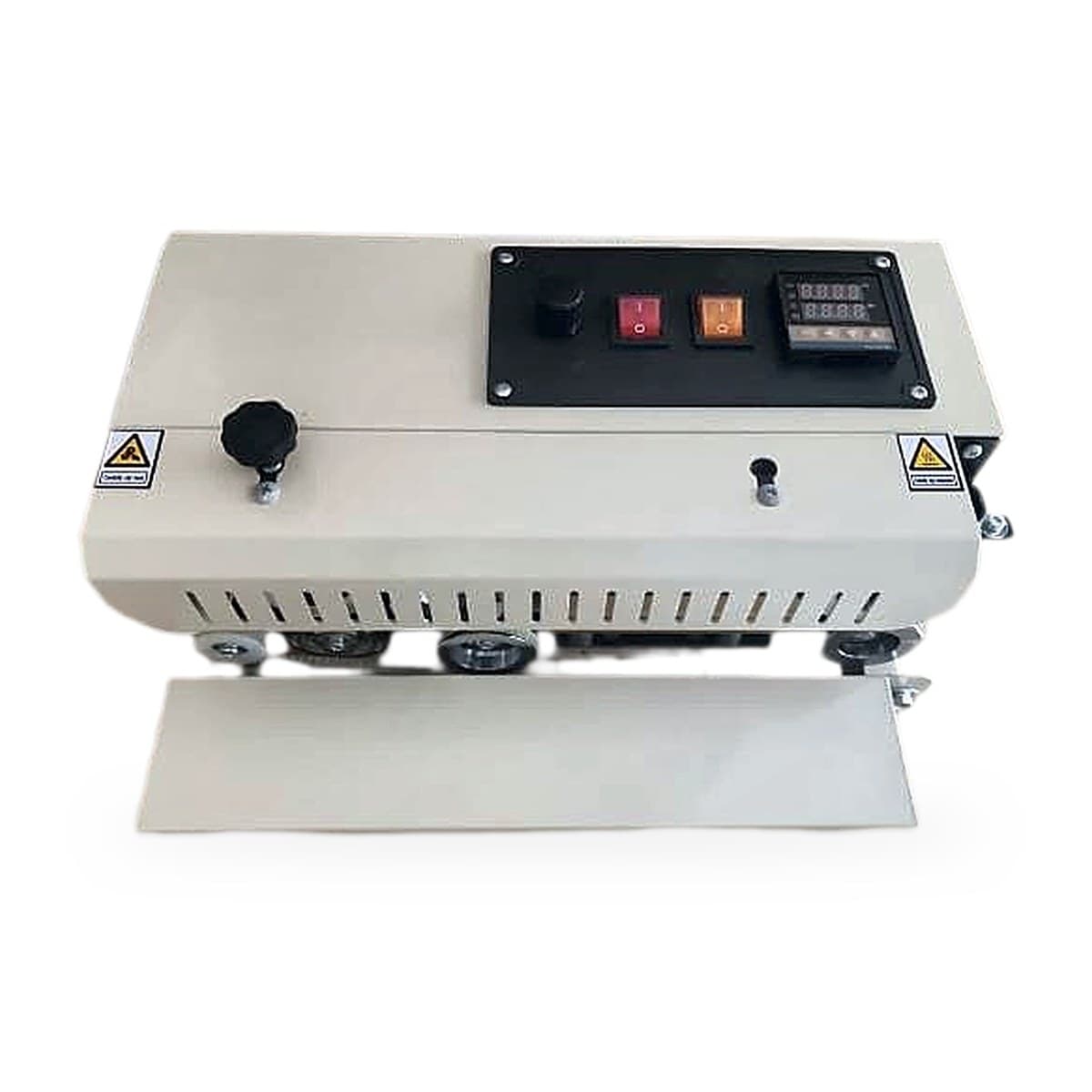
  • Packing. A weighing scale and a sealer such as a continuous band sealing machine with SS body.

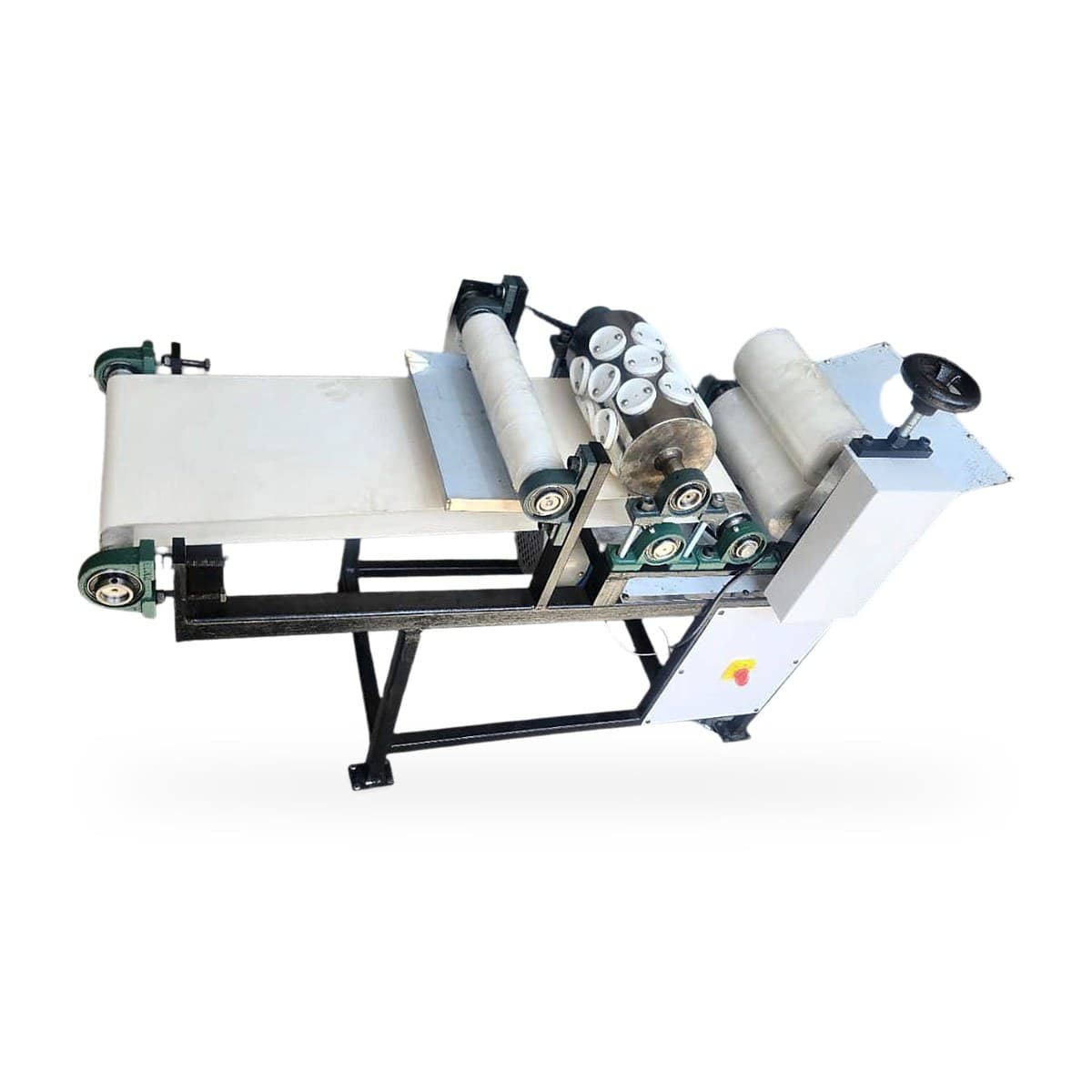
Many units add related lines. A mini noodle making machine or a 2 HP sevai making machine uses the same flour store and drying room, and a papad and pani puri making machine brings in a snack line for the same shops.

Cleaning and Care

Selling is easier when you start close to home. Show cooked samples to local restaurants, canteens, hostels and caterers, who buy in kilos and reorder every week. Kirana shops will try a new brand when the pack looks clean and the price is fair against the big names. Small packs of 200 to 500 grams with a clear label, a batch code and a pack date build trust quickly. A handheld inkjet printer for batch coding prints those details on each pouch. Keep a few shapes in stock rather than many, and add a new die only when buyers ask for it.

At the end of the day, empty the hopper and barrel, remove and clean the die, and wipe down the stainless body. Do not leave dough in the barrel overnight. Keep the motor dry and its vents clear, and check bolts and the cutter on a fixed day each week. For price and a demo video, send us a message with the model and your power supply.

Short Mein Samjhiye (Hinglish Summary)

Pasta machine aate ko die se dabakar shape deti hai: macaroni, fusilli, shells, flat noodles aur 12 se zyada shape. Body poori stainless steel ki hai. Teen model hain: 20 se 25 kg, 45 se 60 kg aur 75 se 80 kg prati ghanta. 60 aur 80 model single phase par chalte hain, 100 model three phase par. Saath mein 0.5 HP ka mixer bhi milta hai, aur har machine motor ke saath aati hai.

Pasta ka aata sakht aur bhurbhura hota hai, isliye sooji aur paani hamesha tol kar daliye. Machine pasta sukhati nahi, isliye sukhane ki jagah pehle se tay kijiye. Poori tarah sookha pasta hi pack kijiye. Price aur demo video ke liye WhatsApp kijiye.
Have a question this guide didn’t answer?Our team replies on WhatsApp and call, Mon – Sat, 10:00 AM – 7:00 PM.

Ask on WhatsApp

FAQs

Frequently Asked Questions

What buyers ask us most about the pasta making machine.

Ask your own question on WhatsApp

What is the price of the pasta making machine?

Price depends on the model. Message us on WhatsApp or call with the capacity you need and your power supply, and we will share the current price and a demo video. All machines include motor. GST at 18% is extra.

Which models are available?

The 60 model makes 20 to 25 kg an hour on 3 HP single phase. The 80 model makes 45 to 60 kg an hour on 4.5 HP single phase. The 100 model makes 75 to 80 kg an hour on 5 HP three phase.

What shapes can it make?

Over 12 shapes with interchangeable dies, including macaroni, fusilli, shells and flat noodles. Ask us for the full list.

Can it make noodles too?

Yes, the machine makes pasta, macaroni and noodles. For a dedicated noodle line, also look at our mini and semi-automatic noodle machines.

Do I need the dough mixer?

It is strongly recommended. Pasta dough is stiff and mixing it evenly by hand is slow. The matching mixer is 0.5 HP and weighs 26 kg.

Does it run on single phase?

The 60 and 80 models run on single phase. The 100 model needs three phase.

What raw material do I need?

Mainly semolina (sooji) or a flour blend, and clean water. Recipes vary, so test small batches before full production.

Does the machine dry the pasta?

No. The machine shapes the pasta. Drying is a separate step, on trays or in a dryer, until the pasta is hard and brittle.

Is the body food grade?

Yes, the pasta machines have a full stainless steel body that is food-grade and easy to clean.

Do I need a food licence to sell pasta?

Food businesses in India have registration and labelling requirements that depend on turnover and state. Confirm what applies to you with the relevant authority before selling packed pasta.

Best price

Get the price of the Pasta Making Machine

Tell us your model, power supply and stick size. We reply with the price, spec sheet and demo video, and a raw material quote if you need one.

Get Best Price on WhatsApp

Send an enquiry

The machine is already selected. Add your details and press send.

Opens WhatsApp with your details filled in.