What Is a Manual Paper Plate Machine?
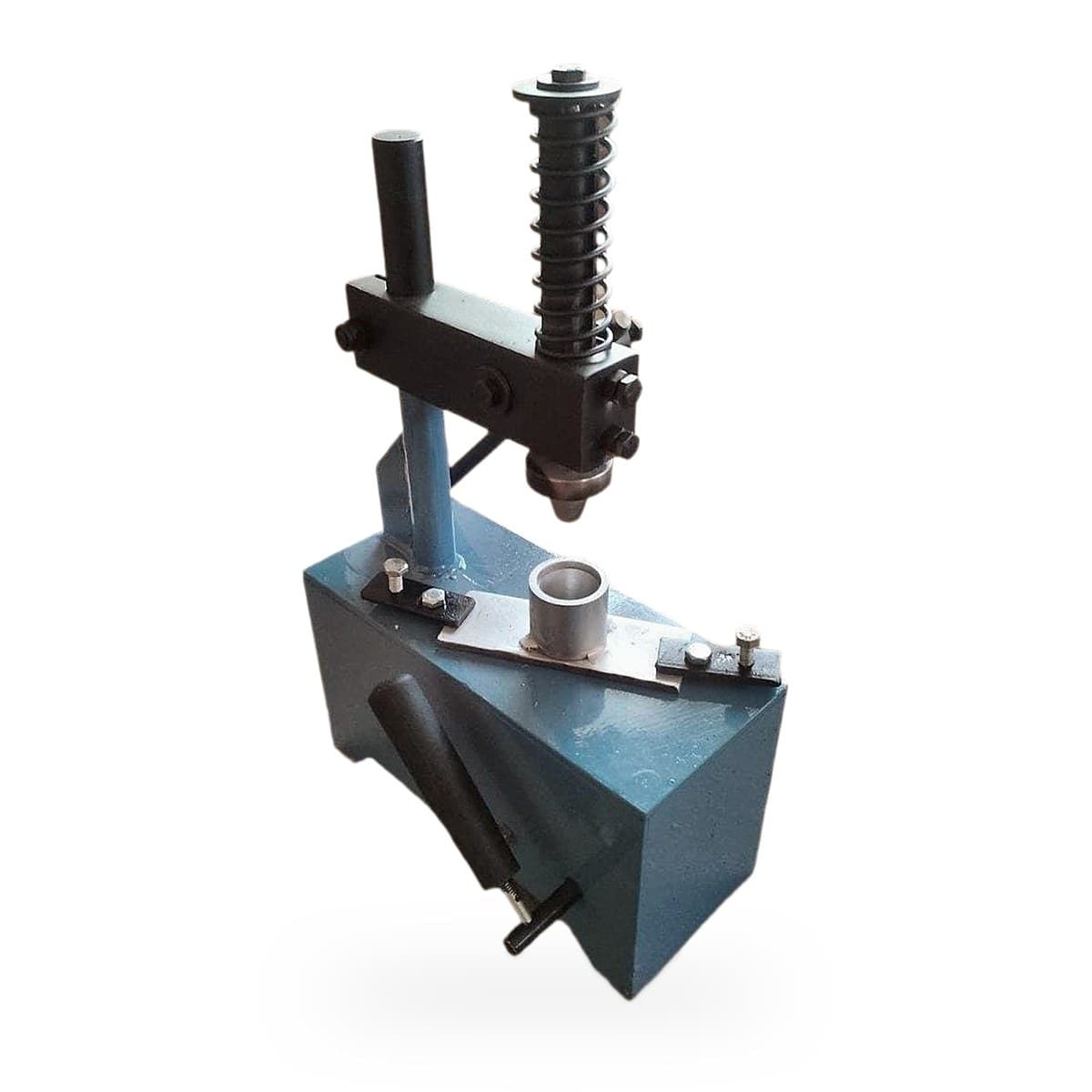
A paper plate is coated paper pressed between two shaped dies. Bigger machines push the die with oil pressure or a motor-driven crank. This one uses your hands and a screw, the same idea as an old book press or an oil expeller press.
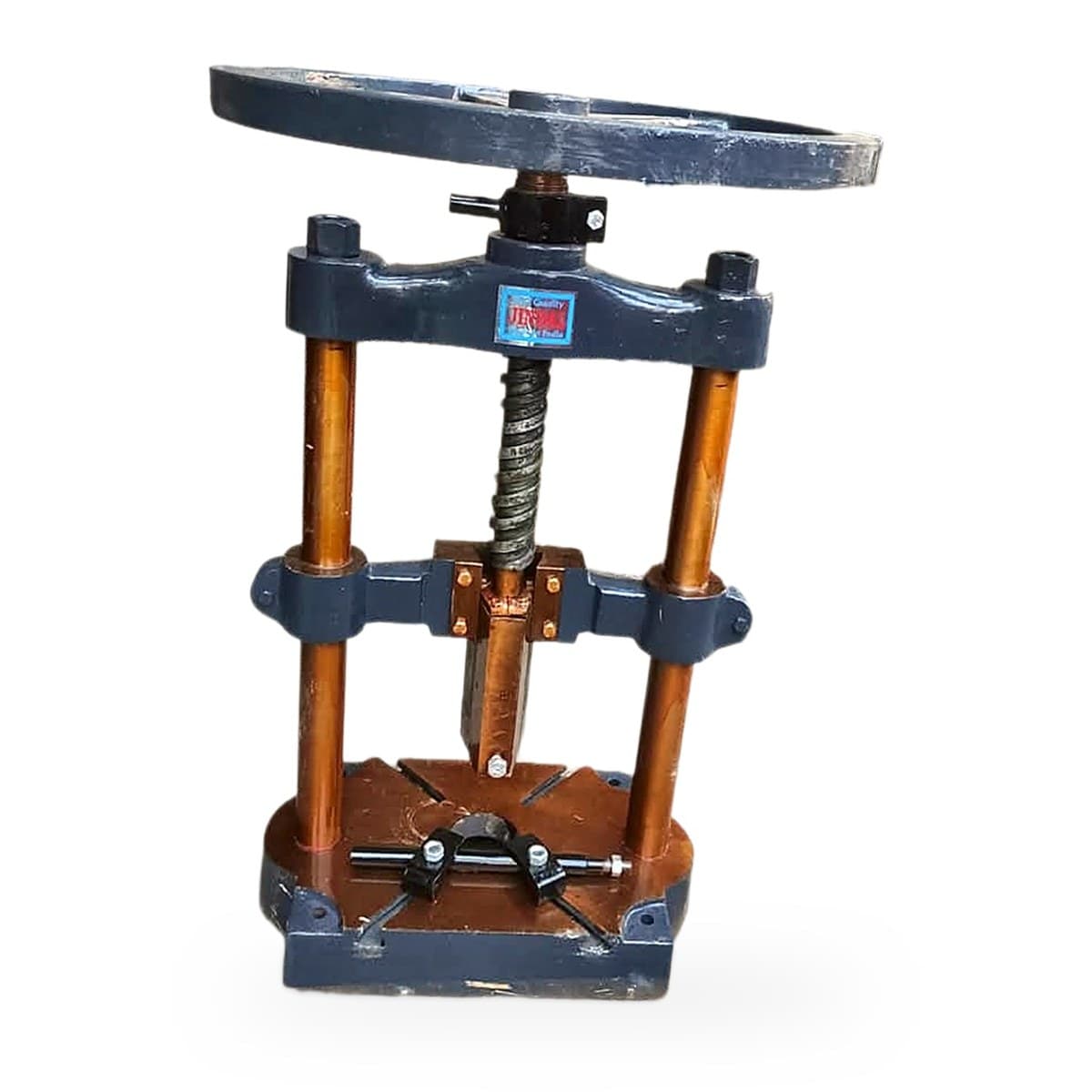
Looking at the machine, you see a heavy cast base, two round guide pillars, a cast crosshead at the top and a big flat hand wheel. The screw passes through the crosshead and carries a sliding block that moves down the pillars. The die sits under that block and on the base. Nothing on it is complicated, which is a big part of its appeal.
How the Screw Press Works
- Place a round paper blank centred on the lower die.
- Turn the hand wheel. The screw pushes the sliding block and upper die down onto the paper.
- Tighten firmly for a moment so the rim forms.
- Turn the wheel back to lift the die, and take out the plate.
- Stack the plate and repeat.
The heavier the wheel and the finer the screw thread, the more force your hand turn becomes. That is why the wheel is wide and the frame is cast. The frame must not flex, or the plate rim comes out uneven.
Whether the die is heated is something to confirm with us when you order, because the catalogue sheet does not list it. Heat helps coated paper hold its shape.
Why Start With a Manual Machine
- Small spend. Your money goes into paper and dies instead of a motor and pump.
- You learn the trade. Paper GSM, die sizes, what local buyers pay and how they like their plates packed. These lessons are the same on every machine.
- Low running cost. The press is hand operated, so pressing itself does not use a motor.
- Easy to keep running. A screw, a frame and a die. Any local fitter can work on it.
Many people use a small press like this alongside another home business. The same logic applies to the manual diya making machine and the manual samrani cup making machine, which are also hand presses for festival and pooja products.
The Honest Limits of Hand Pressing
A manual press is honest about what it is. Every plate needs a turn of the wheel, so output depends on one person’s arms. Over a long day the pace drops. Pressure also varies a little from plate to plate, so rims can vary more than on a hydraulic machine. For selling to nearby shops this is usually fine. For a wholesaler wanting thousands of matched plates each week, it is not enough.
Treat the manual machine as a way to prove demand. When buyers start asking for more than you can press, that is your signal to move up.
Hand pressing also suits work that is seasonal or part time. During weddings and festivals you can press for long hours, and in quiet months the machine can sit idle without a motor, pump or oil to worry about. That flexibility is useful while you are still finding regular buyers and learning what sizes move fastest in your area.
A Simple Daily Routine
- Before starting, wipe both dies and check that the blank sits centred.
- Press a few test plates and check the rims before you run the day’s lot.
- Work in batches of a hundred. Count as you stack, so packing is quick.
- Take short breaks. A tired operator presses unevenly.
- At the end of the day, clean the dies and cover the paper stock.
Choosing Your First Dies and Paper
With a manual press, the dies and paper take a bigger share of your starting money than the machine does, so choose them with care. Visit a few sweet shops, chaat stalls and caterers near you and ask which plate and dona sizes they use most and what they pay. Buy dies only for those one or two sizes at first. A die sitting unused on a shelf is money you could have spent on paper.
For paper, start with ready-cut round blanks in the size of your die. Ask the supplier for the GSM and check a few sheets for even coating, clean edges and the same thickness across the bundle. Thicker paper gives a stiffer plate but needs more force on a hand press, so test before you buy a large lot. Printed or coloured paper can come later, once plain plates are selling.
Care and Small Repairs
Grease the screw thread regularly and keep dust off it, because grit wears the thread and the nut. Check the frame bolts and the die fixing screws. Wipe the guide pillars and add a little oil so the block slides freely. If the screw feels tight or rough, clean and re-grease it before forcing it.
Manual, Mini Hydraulic or Automatic
| Manual | Hydraulic | Fully automatic | |
|---|---|---|---|
| Pressing done by | Hand wheel and screw | Oil pressure, one stroke at a time | Motor and crank, continuous |
| Investment | Lowest | Middle | Highest |
| Suits | Testing demand | Steady local supply | Bulk and wholesale |
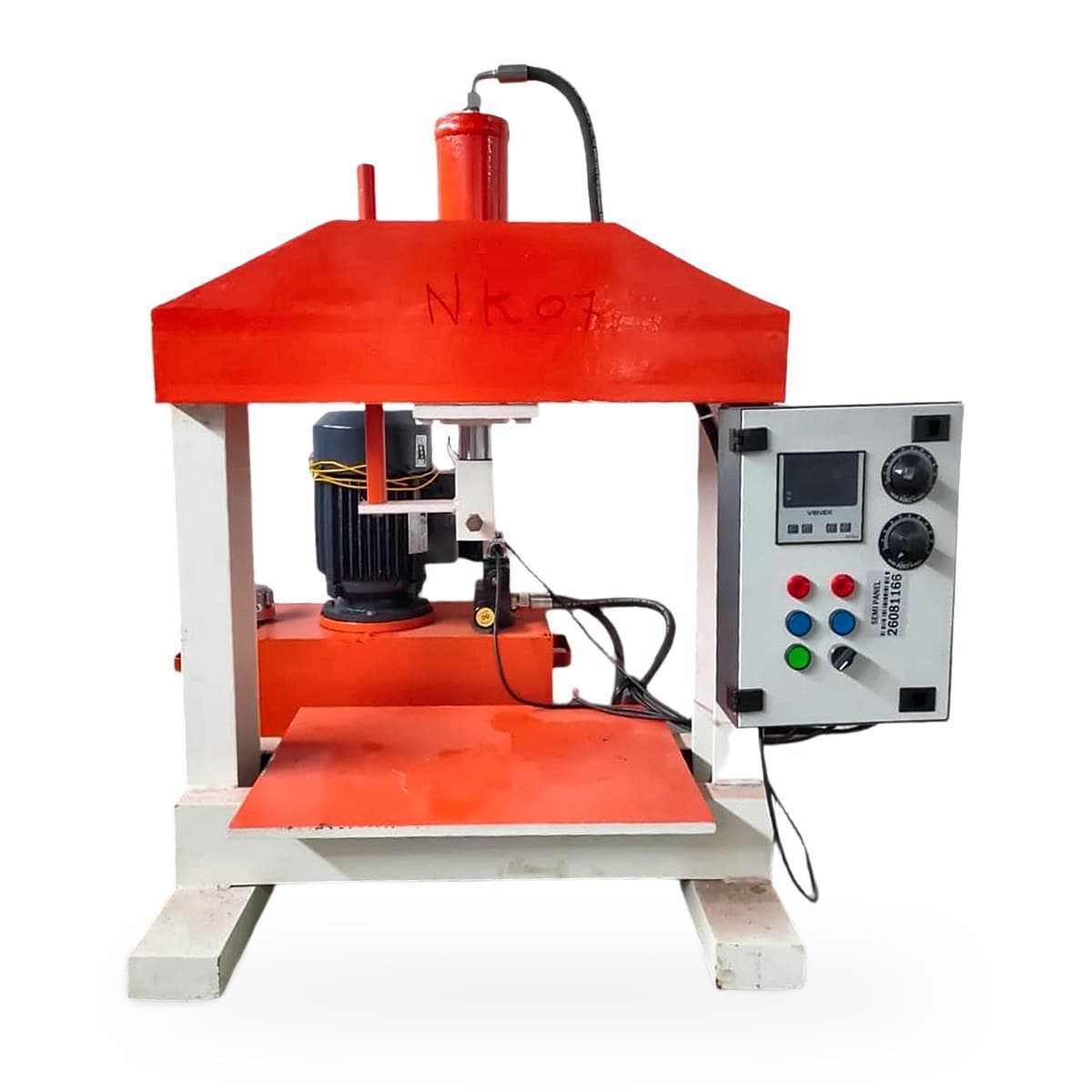
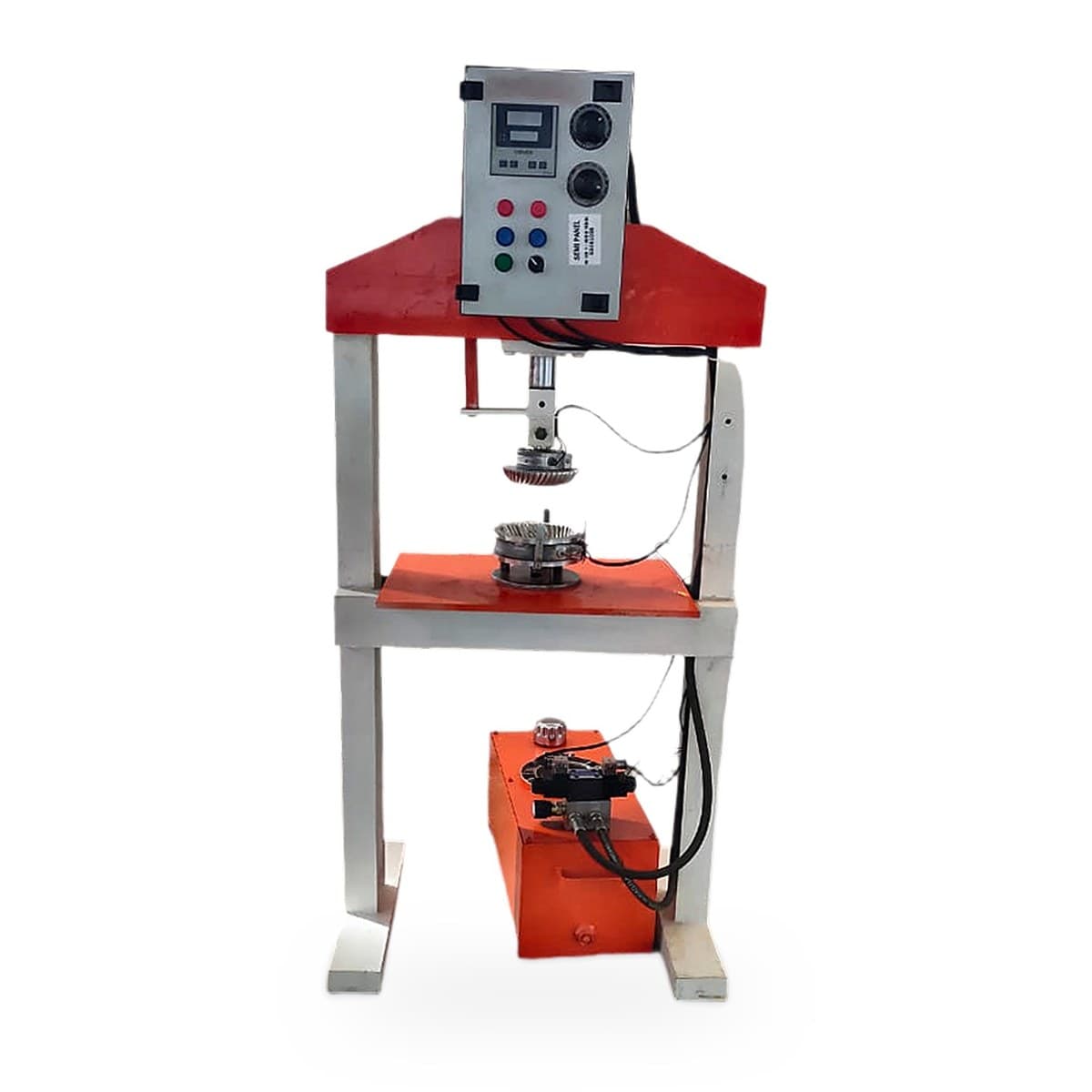
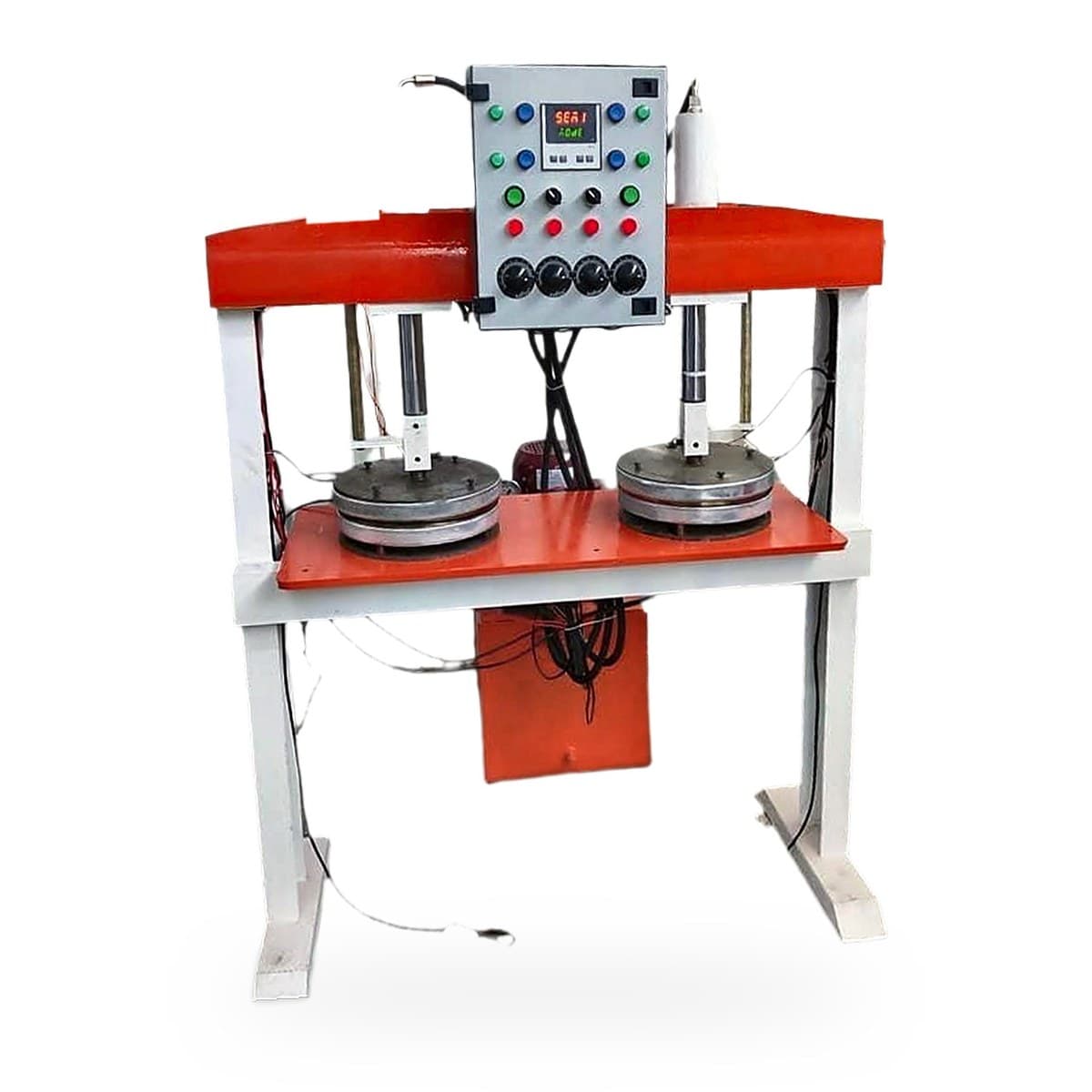
The natural next step is the mini hydraulic paper plate machine, which removes the hand effort and adds a digital temperature controller. For a larger unit, the single die hydraulic all-in-one machine and the double die fully automatic paper plate machine are the usual choices. Your dies and paper knowledge carry over.
Short Mein Samjhiye (Hinglish Summary)
Manual paper plate machine haath se chalne wala screw press hai. Bada pahiya ghumaiye, screw neeche aata hai aur die paper ko plate ya dona mein dabata hai. Frame cast ka aur mazboot hai. Paper plate ka kaam sabse kam investment mein shuru karne ka tareeka yahi hai.
Isse market samajhiye. Jab order itne ho jaayein ki haath se poore na ho, tab mini hydraulic ya badi machine lijiye. Die heating aur output ki details request par milti hain. Price ke liye WhatsApp kijiye. GST 18% alag.