What Is an All in One Hydraulic Paper Plate Machine?
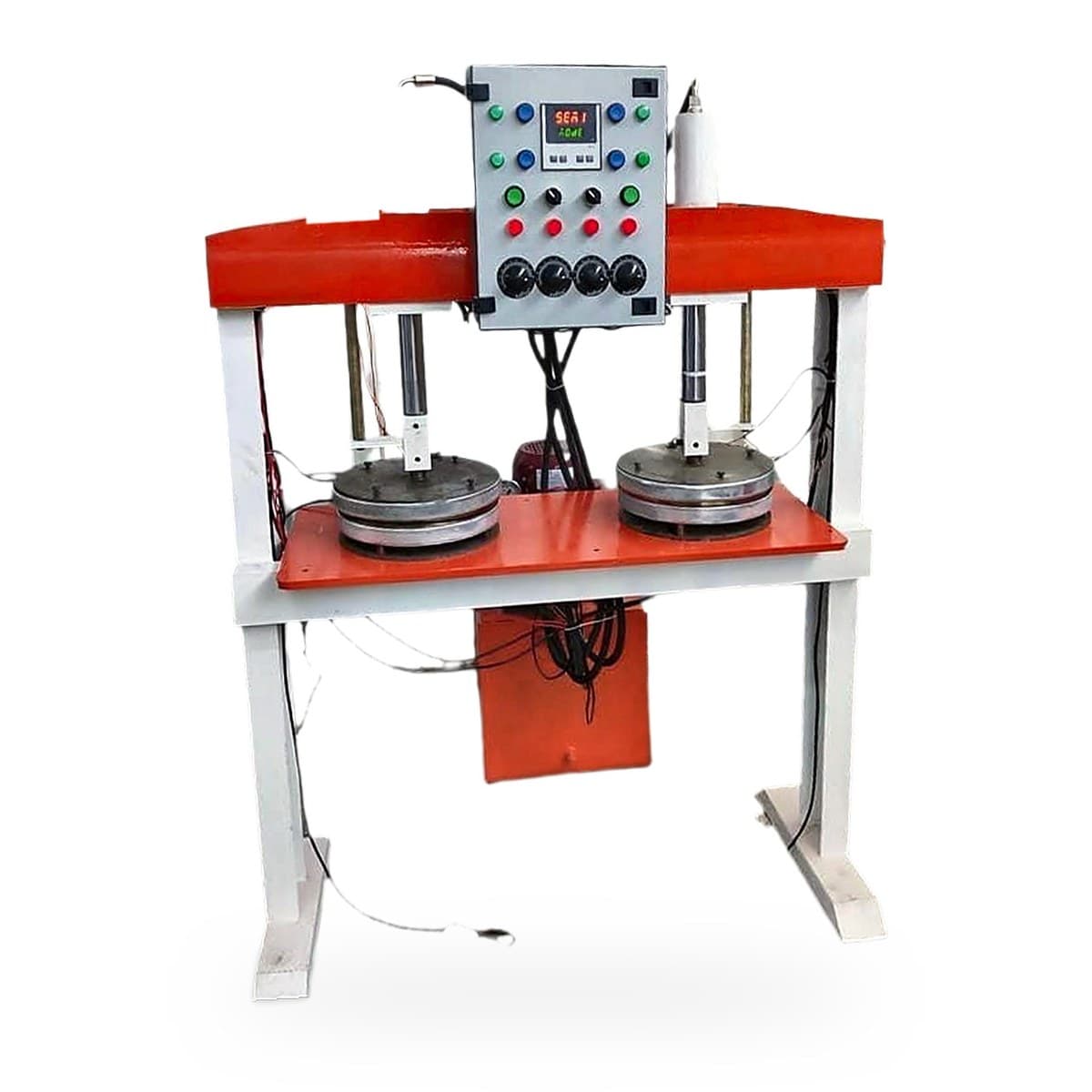
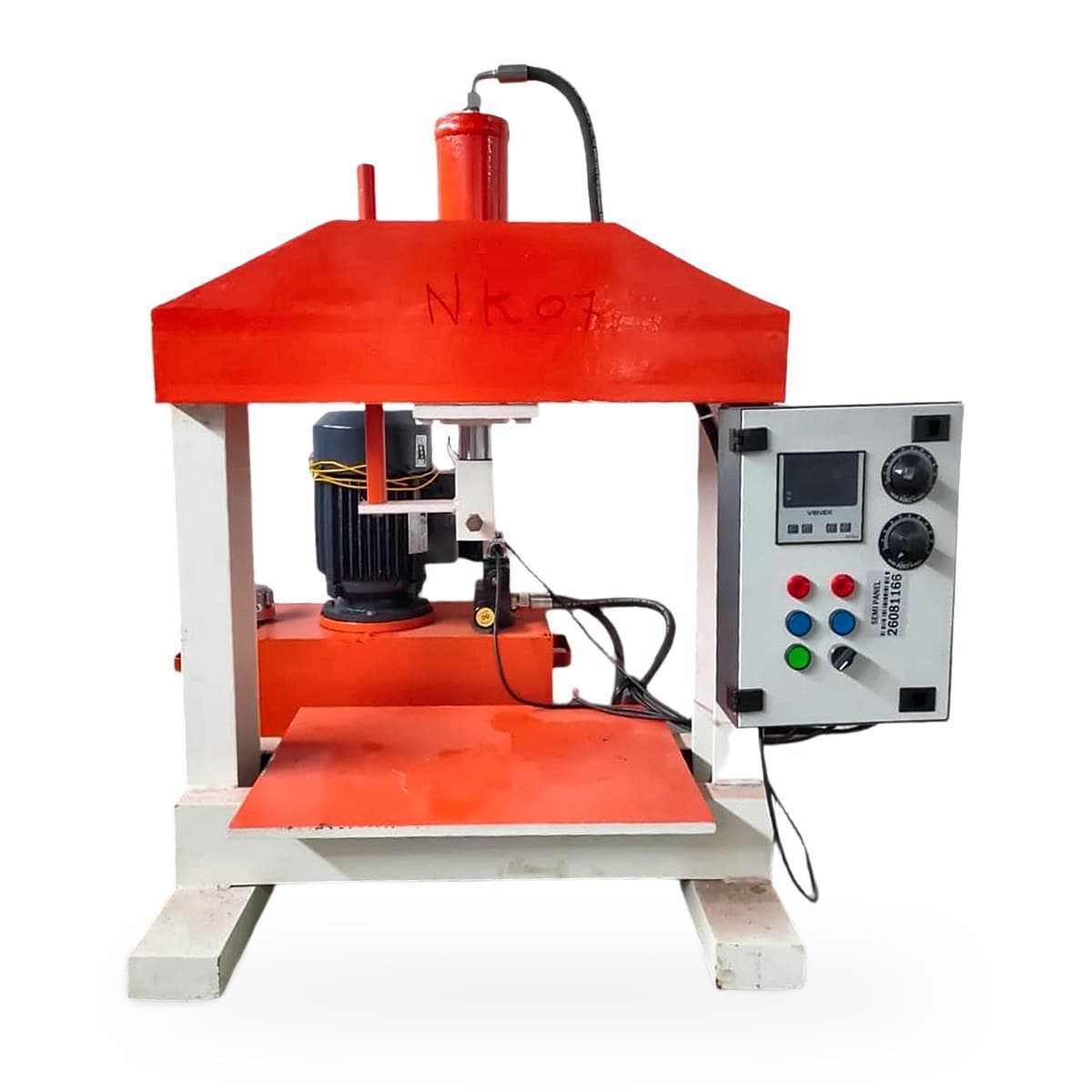
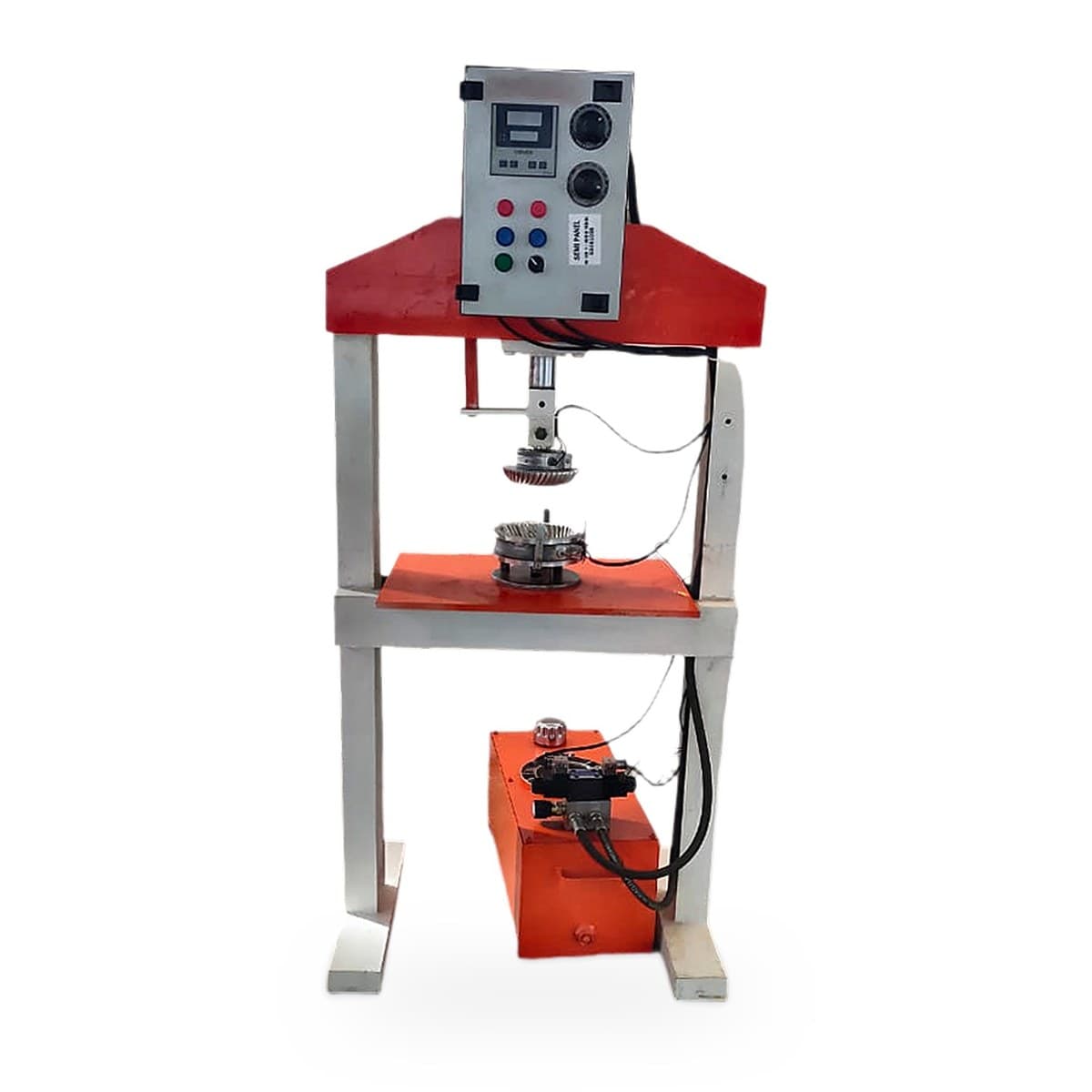
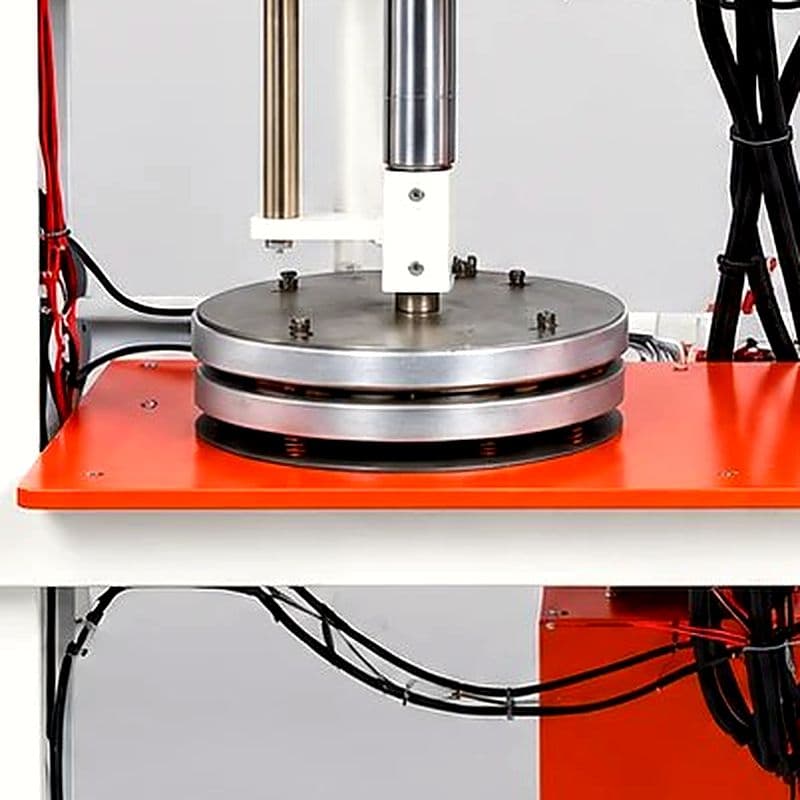
The machine has three main parts. At the top is a control panel with a temperature controller and switches. In the middle, a hydraulic cylinder hangs above a pair of heated dies. Underneath sits the power pack, an oil tank with a motor and valve that drives the cylinder. All in one means all three come together as one machine on a heavy mild steel frame.
The operator places a paper blank on the lower die and starts the stroke. The cylinder brings the upper die down, holds it, and lifts it again. The plate is taken off and the next blank goes in.
How Hydraulic Pressing Works
Hydraulic pressing is simple at heart. The motor in the power pack pumps oil into the cylinder, and the oil pushes the piston down. A valve then sends the oil back so the piston rises. Because oil does not compress, the force on the die is steady through the whole stroke.
That steady force is the reason buyers choose hydraulic. The paper is held firmly against the hot die for a moment, so the rim pleats set evenly and the plate comes out strong. The catalogue puts it as uniform, strong plates.
Each stroke is one cycle started by the operator. That makes the machine slower than a fully automatic crank model, but easier to control when you are trying a new die or a thicker paper.
Getting the Temperature Right
Heat softens the coating on the paper so it takes the shape of the die. Too little heat and the pleats spring open. Too much and the coating scorches or sticks to the die.
- Let the die reach its set temperature before the first piece.
- Press three or four test pieces each time you start or change paper.
- Laminated, silver and printed papers often need a different setting from plain white.
- Note the setting that works for each die and paper so the next run starts quickly.
Plates, Dona, Thali: One Machine, Many Dies
The catalogue lists paper plates, paper dona and thali or partition plates for this machine, each with its own die. Interchangeable dies are the real strength of a hydraulic press. Deep shapes and compartments need the paper held under steady force, which a cylinder does well.
That gives a small unit room to serve different buyers. Thali plates go to caterers and tiffin services, dona to sweet shops and temples, round plates to everyone. Start with the shapes local buyers already ask for and add dies as orders come in. Shivaa Traders supplies plate and dona dies.
Manual, Mini, Single Die or Double Die?
Shivaa Traders has a paper plate machine for each stage of a business. Here is how this model fits.
| Pressing | Dies | Suits | |
|---|---|---|---|
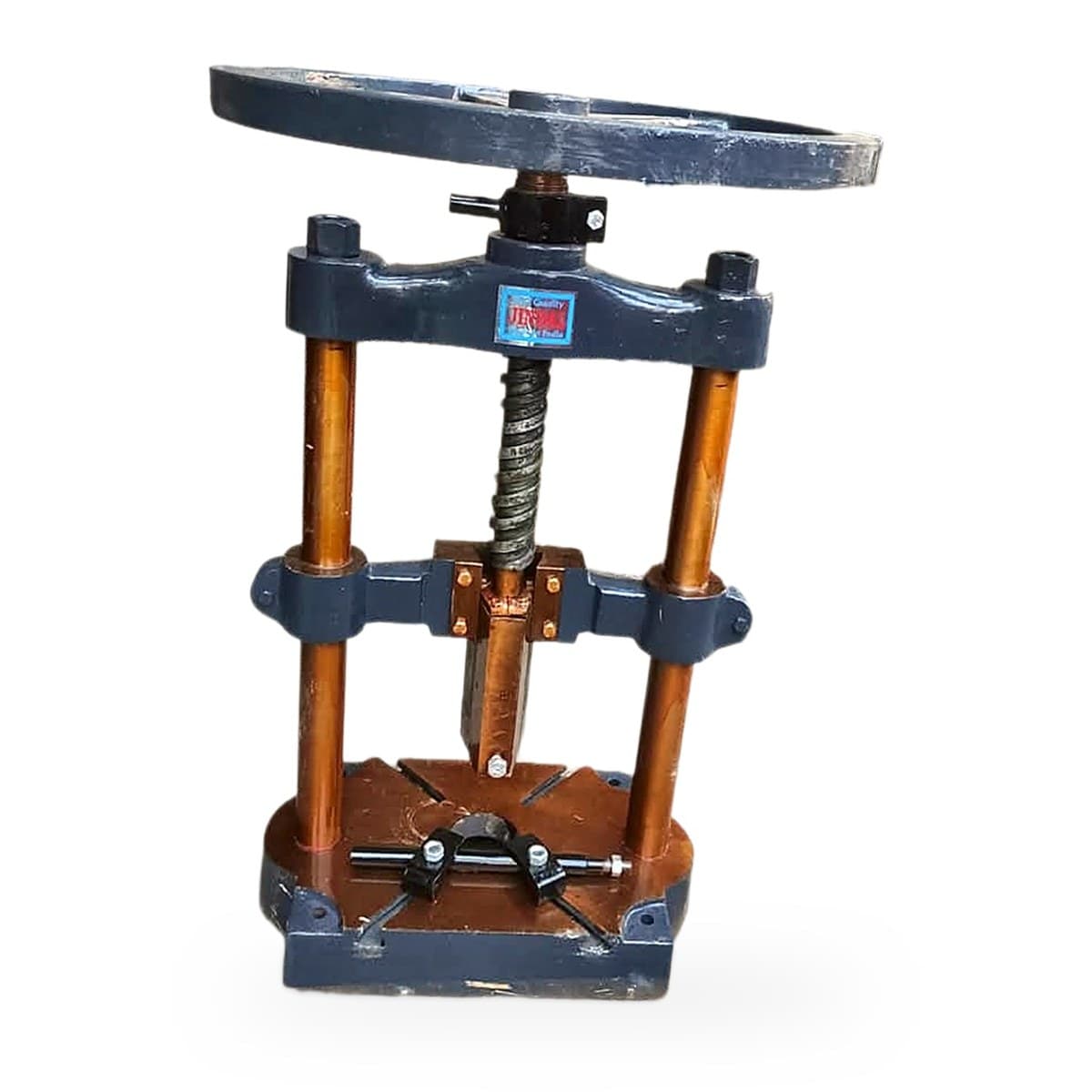
| Manual | Hand screw press | One | Lowest investment |
| Mini hydraulic | Hydraulic, compact | One | Home units, beginners |
| Single die hydraulic | Hydraulic, all in one | One, changeable | Small units, many shapes |
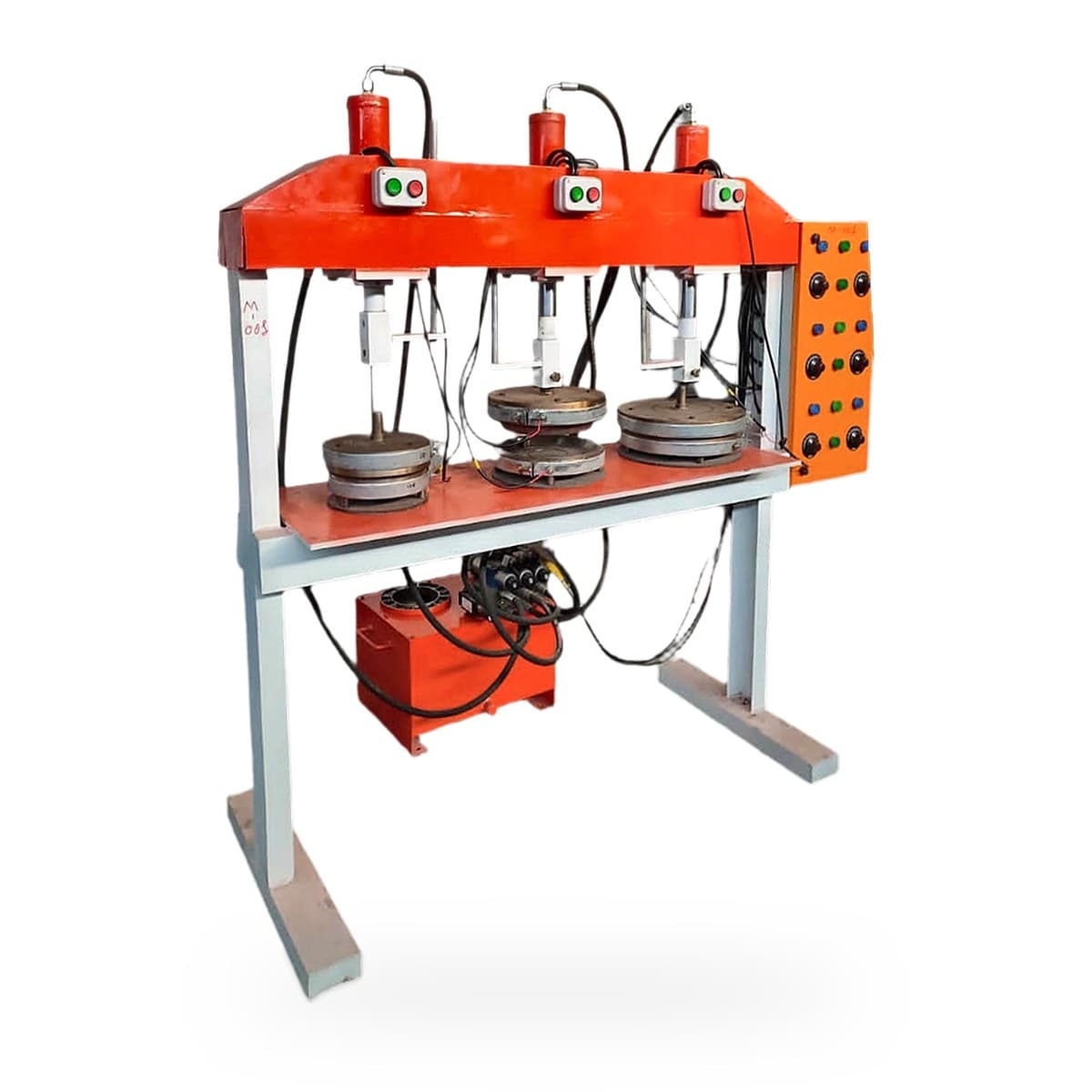
| Double die hydraulic | Two cylinders | Two | Twice the pieces per cycle |
On the smallest budget, the manual paper plate making machine gets you started with no power pack at all. For a compact hydraulic start, see the mini hydraulic paper plate machine. When one die is not enough, the double die hydraulic paper plate machine presses two pieces per cycle on one frame.
Looking After the Hydraulic System
The hydraulic side needs very little, but it does need attention.
- Oil level. Check it every week. Low oil makes the stroke slow or jerky.
- Oil condition. Change it at the interval given with your machine, or sooner if it turns dark, milky or smells burnt.
- Hoses and joints. Look for wet patches or drips. Tighten or replace before a small leak becomes a big one.
- Cleanliness. Keep paper dust away from the tank cap and breather.
On the electrical side, wipe the die while warm each day, check heater leads once a month and have the earthing tested. The same habits apply on other hydraulic presses we sell, such as the hydraulic slipper making machine.
Starting a Small Unit With This Machine
A single die hydraulic machine suits a person starting with modest orders and a mix of products. One operator runs it. Plan a table for stacking and packing next to the machine, a dry rack for paper and a proper power point fitted by an electrician.
Start with ready-cut blanks so you can press from day one. Buy dies for two or three products you can already sell. Keep a notebook of temperature settings. When the machine is busy all day, the next step is a second die rather than a second operator.
A few safety habits are worth setting from the first day. Keep hands out of the die area while the cylinder is moving and use the switches on the panel, never a hand on the die, to stop a stroke. The die stays hot long after you switch off, so let it cool before you change it and use gloves when handling it. Keep the floor around the power pack dry, since a small oil drip on a smooth floor is easy to slip on. Fit the machine on its own earthed socket rather than an extension board.
Short Mein Samjhiye (Hinglish Summary)
Single die hydraulic paper plate machine mein hydraulic cylinder garam die ke andar paper ko dabata hai. All in one ka matlab hai power pack aur control panel saath mein aata hai. Die badal kar plate, dona aur thali ban jaati hai.
Har hafte oil level dekhiye aur pipe mein leak check kijiye. Shuru mein ready-cut paper aur do teen die lijiye. Detail specification aur price ke liye humein WhatsApp kijiye.