What Raw Material a Slipper Needs
A hawai chappal is a simple product. The sole is cut from a sheet, three holes are punched, and a strap is pulled through. That means almost all of your running cost is material, and the quality of that material is what customers see and feel.
| Item | Per pair | Bought |
|---|---|---|
| Soling sheet | Two soles cut from the sheet | Every production lot |
| Straps with plugs | Two straps | Every production lot |
| Box or bag | One | Every production lot |
| Die | Shared by all pairs of that size | Once per size, replaced when worn |
Choosing Soling Sheets
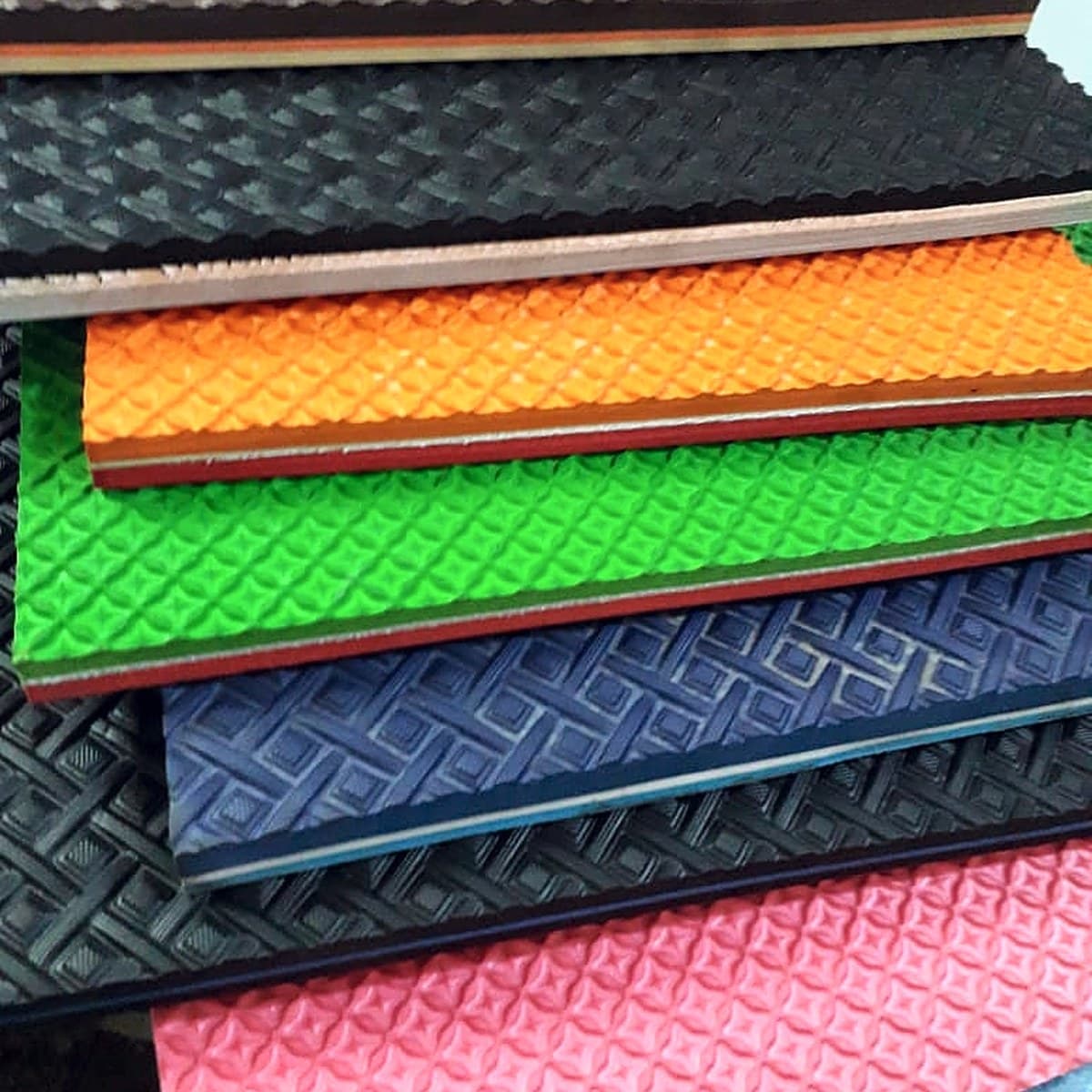
Soling sheets come in EVA and rubber. EVA is a light foam that feels soft. Rubber is heavier and generally firmer with more grip. Many units keep both, with EVA for the everyday price point and rubber for buyers who want a sturdier slipper.
Three things decide which sheet you buy:
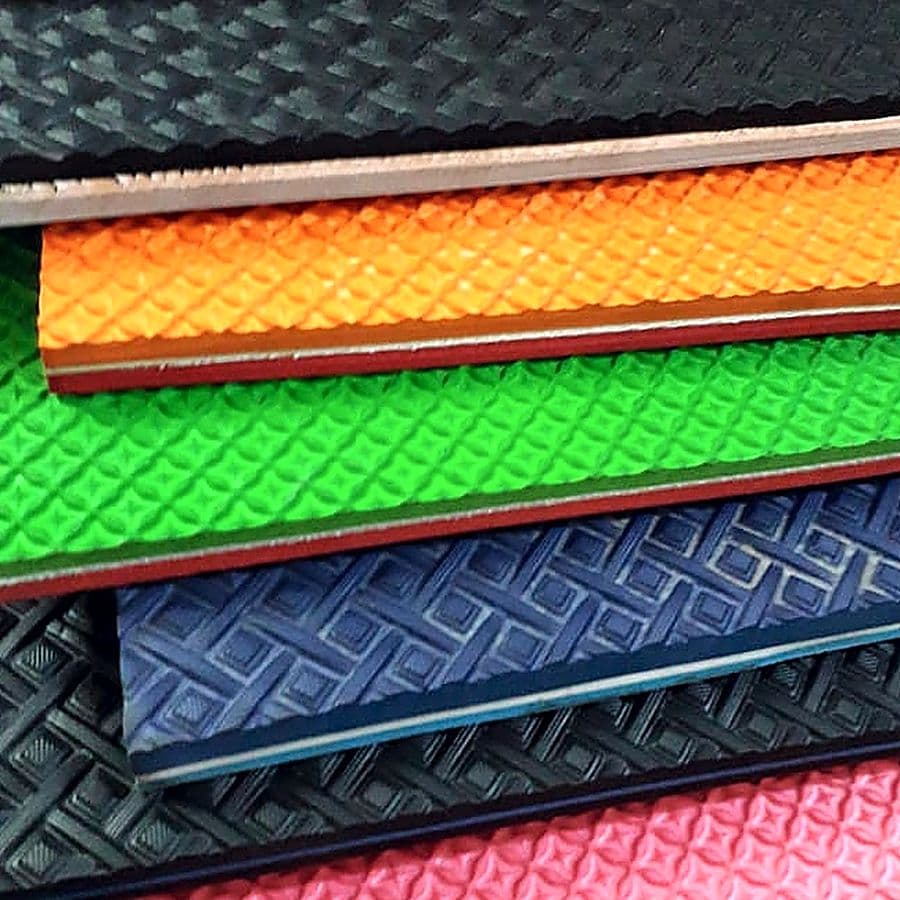
- Texture. The embossed tread on the face, such as diamonds or squares, sets the look and the grip.
- Colour layers. Many sheets have a contrasting layer, so the cut edge shows a stripe of a second colour. It is an easy way to make a plain slipper look finished.
- Thickness. Thicker sheets feel more comfortable and cost more per pair. Thickness options are not on our published sheet, so ask what is in stock.
The easiest way to choose is to start from your buyer. A shop selling the cheapest everyday slipper wants a light sheet and a plain strap at a sharp price. A shop selling to families wants kids sizes in bright colours and prints. A shop in a rainy area may prefer rubber for grip. Ask two or three shopkeepers what they reorder most often before you place your first sheet order, and buy for that.
Printed and Designer Sheets
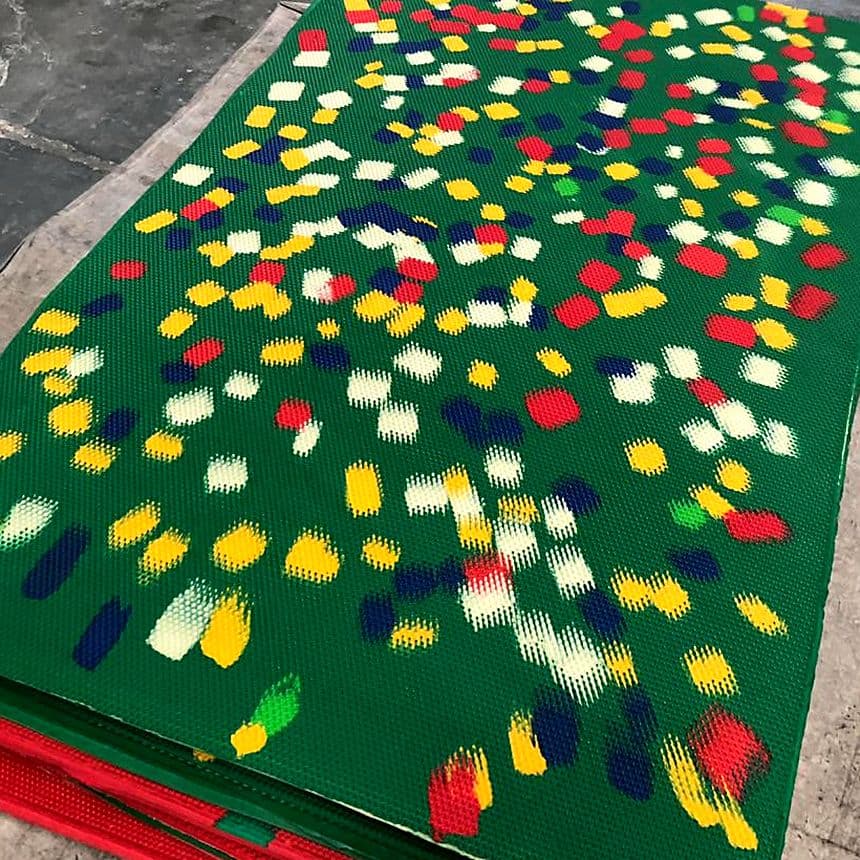
Printed or designer sheets already carry a pattern, so each sole comes off the die decorated. They are popular for kids and ladies ranges. Because the die can land anywhere on the sheet, pick an all-over pattern that looks right whichever way the sole is cut.
Before you buy a large lot, bend a sample hard a few times. Good print stays put. Poor print cracks or lifts at the bend, and it will do the same at the cut edge.
Straps and Toe Plugs
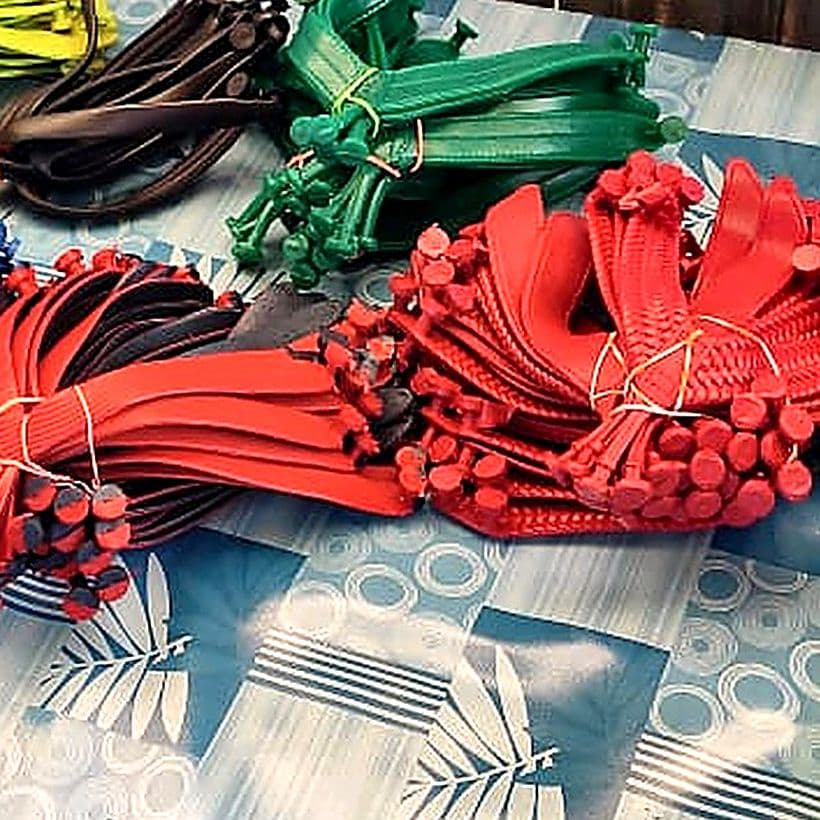
We supply straps for gents, ladies and kids, including kids five-pin D/C straps. Order straps after you have chosen your sheet, because the plug has to suit the sole thickness and the hole you punch. A plug that is too small pulls out. One that is too big tears the hole.
- Match strap size to die size, so a kids sole gets a kids strap.
- Pick strap colours that go with two or three sheet colours, so stock stays simple.
- Check the rubber is soft and bends without whitening.
Strap stock is where small units most often lose money, because it is easy to end up with a pile of one size and colour that does not match any sheet you still have. Keep a simple chart on the wall with each sheet colour and the strap colours that go with it, and reorder straps whenever you reorder that sheet. Count straps as pairs, not pieces, so the numbers match your sole count.
Slipper Boxes
A box makes a low-priced slipper easier to sell to shops. Pairs stay together, they stack neatly on a shelf, and the box gives you space for your brand name and size. Ask us which box sizes are in stock and make sure the largest pair you cut fits comfortably.
Boxes also protect the slipper in transport. Loose pairs packed in a sack arrive creased and dusty, and printed soles get scratched against each other. A boxed pair reaches the shop looking the way it left your unit, which matters when the shopkeeper decides whether to reorder from you.
If you print your own boxes or labels, a handheld inkjet printer for batch coding lets you mark size and batch on each box without ordering printed stock for every size.
Checks When a Lot Arrives
- Count the sheets and strap bundles against the bill.
- Lay a few sheets side by side in daylight and compare colour.
- Feel the thickness at the corners and centre of a sheet. It should be even.
- Cut one test pair before cutting the lot.
- Fit straps to the test pair and walk in it for a few minutes.
Planning and Storing Stock
Order by what you sell, not by what looks good in the shop. Start with your best selling sizes and two or three colours, and add designs once those move steadily.
Store sheets flat, off the floor, away from direct sun and heat. A sheet that warps in storage does not lie flat under the die and gives uneven cuts. Keep straps in their bundles by size, and keep boxes dry.
Matching Material to Your Machine
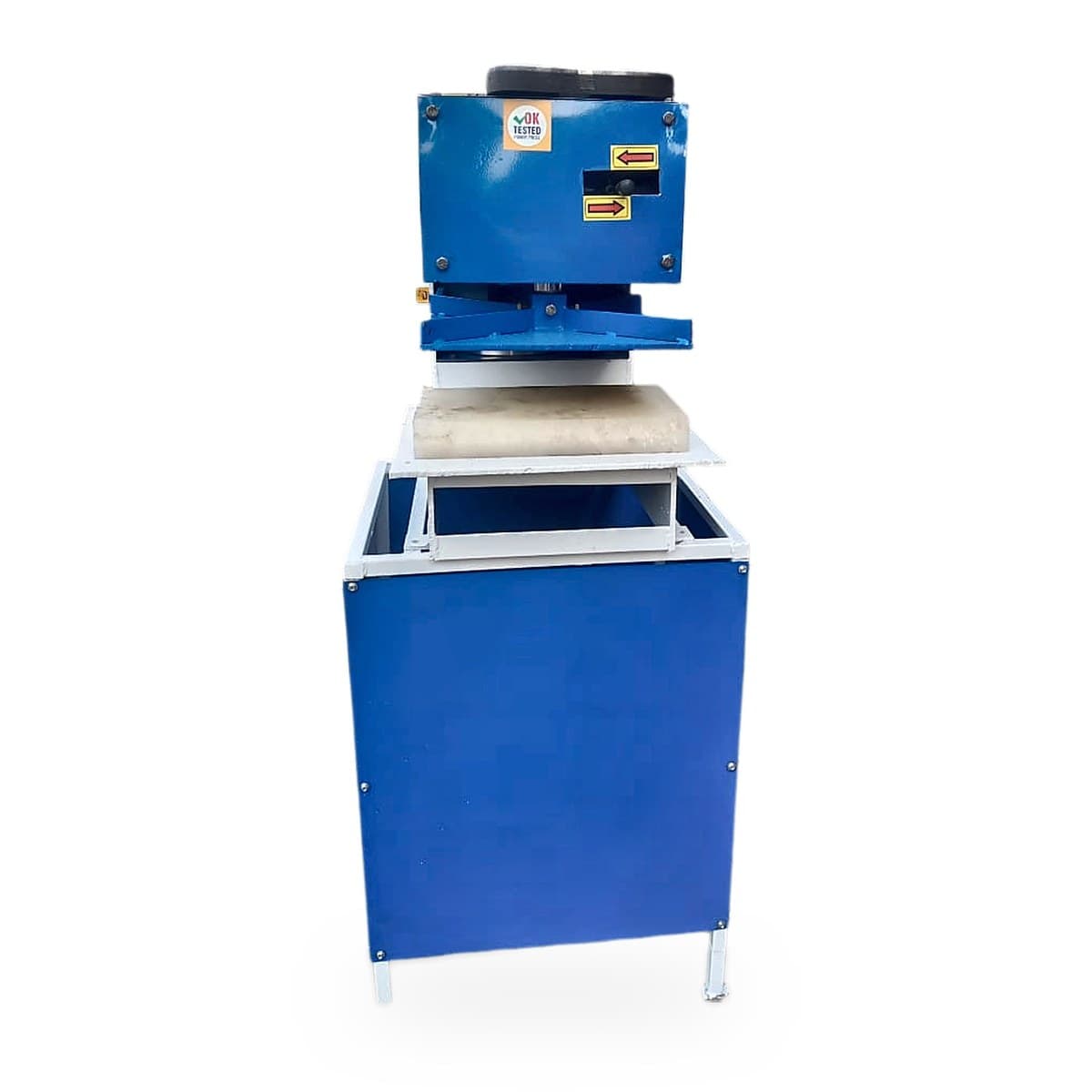
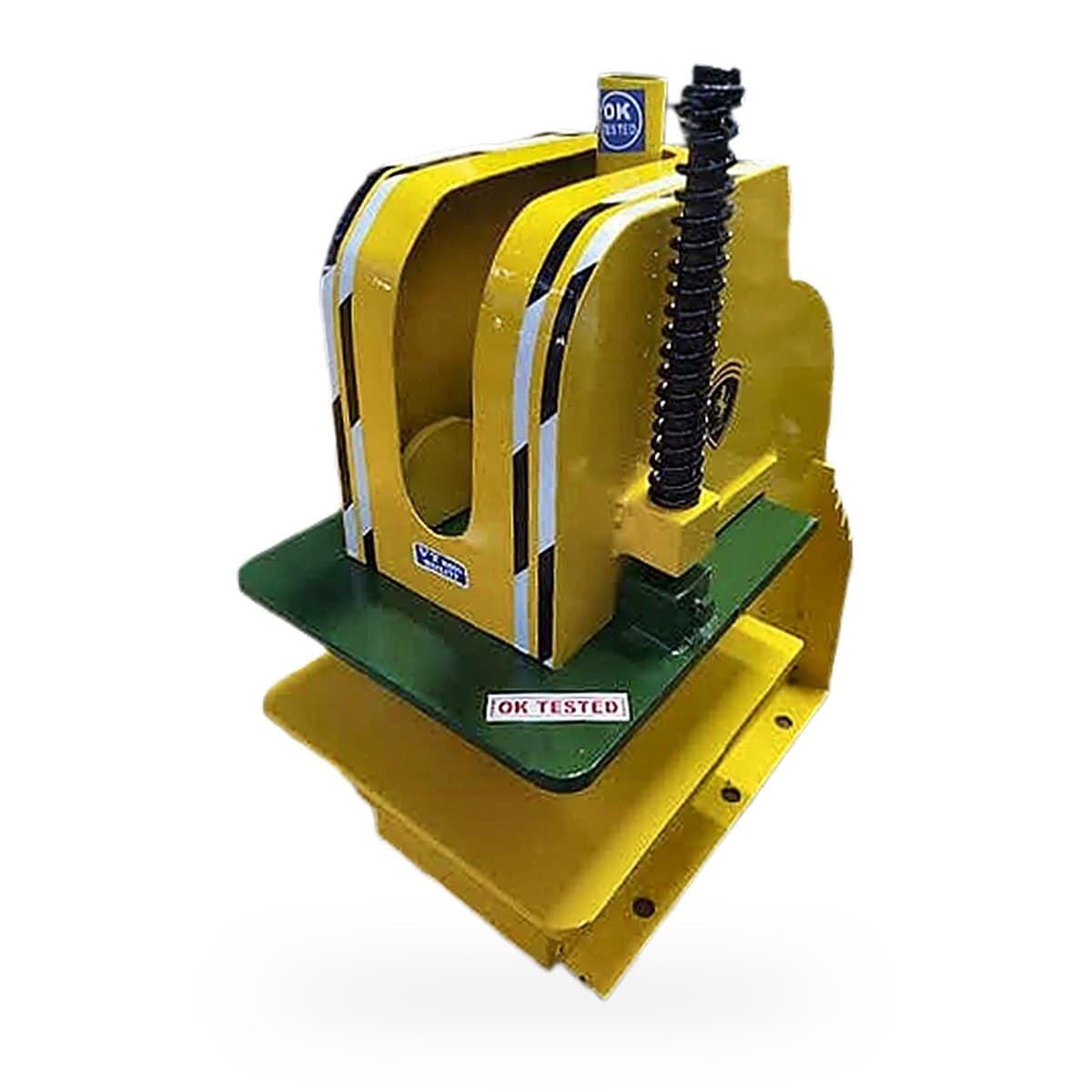
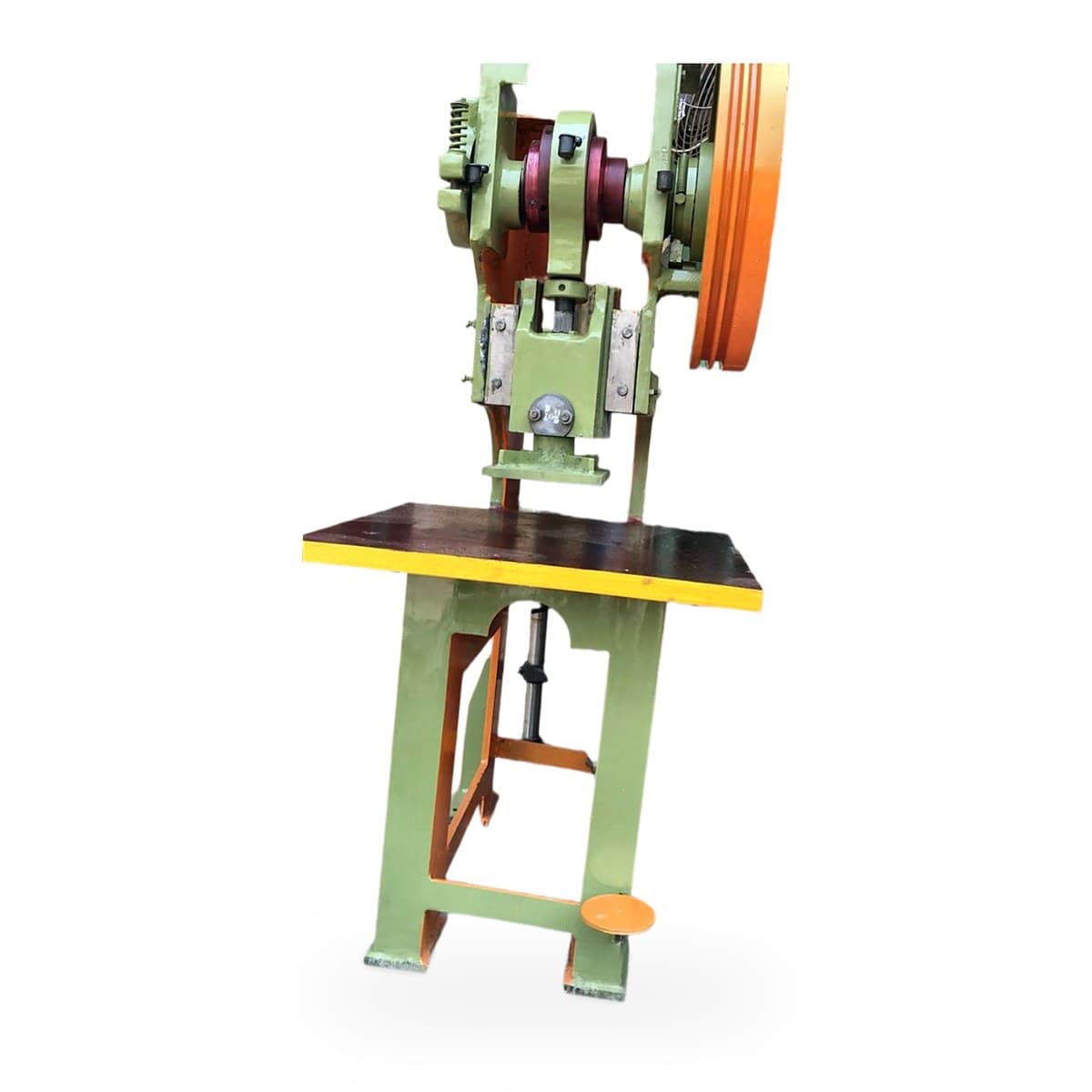
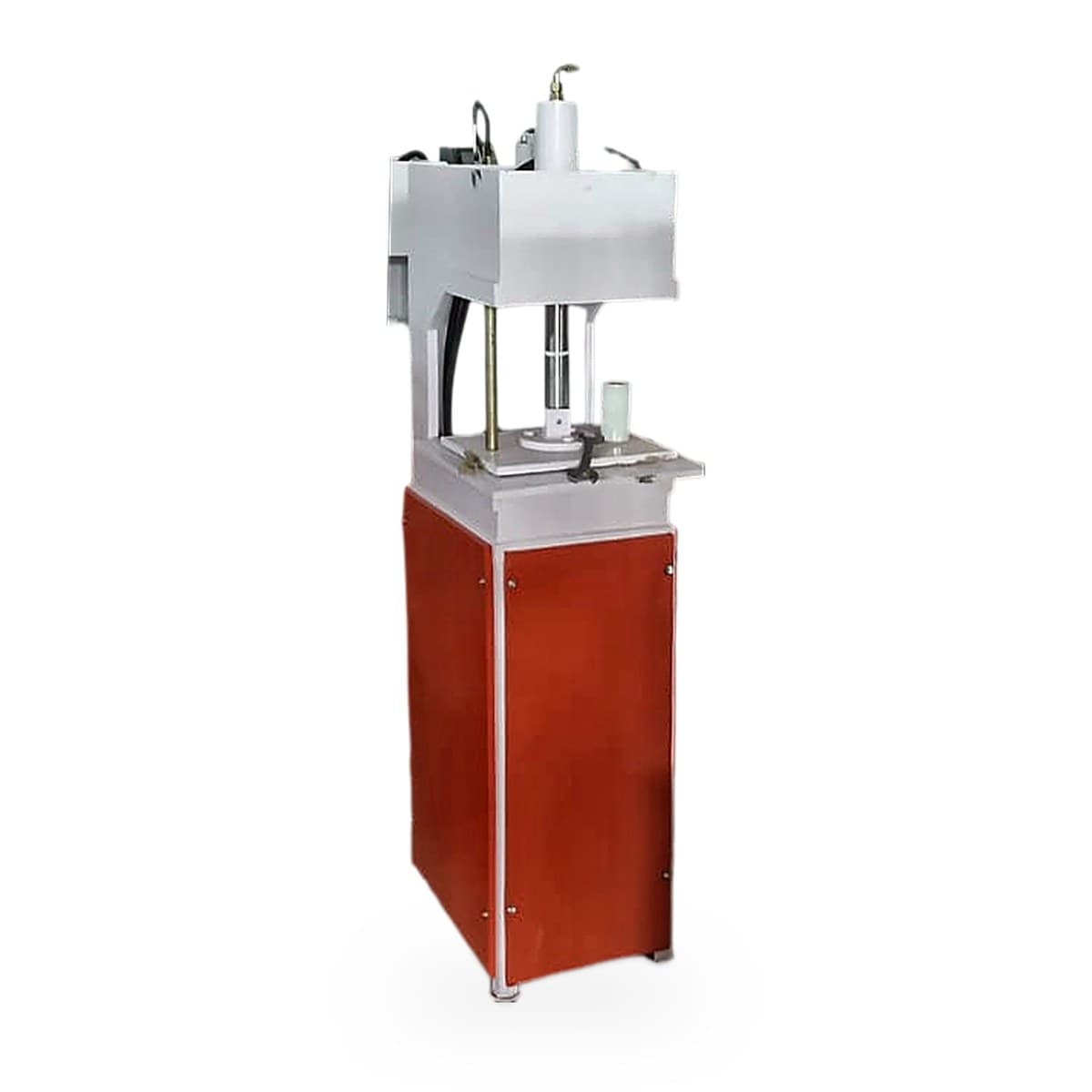
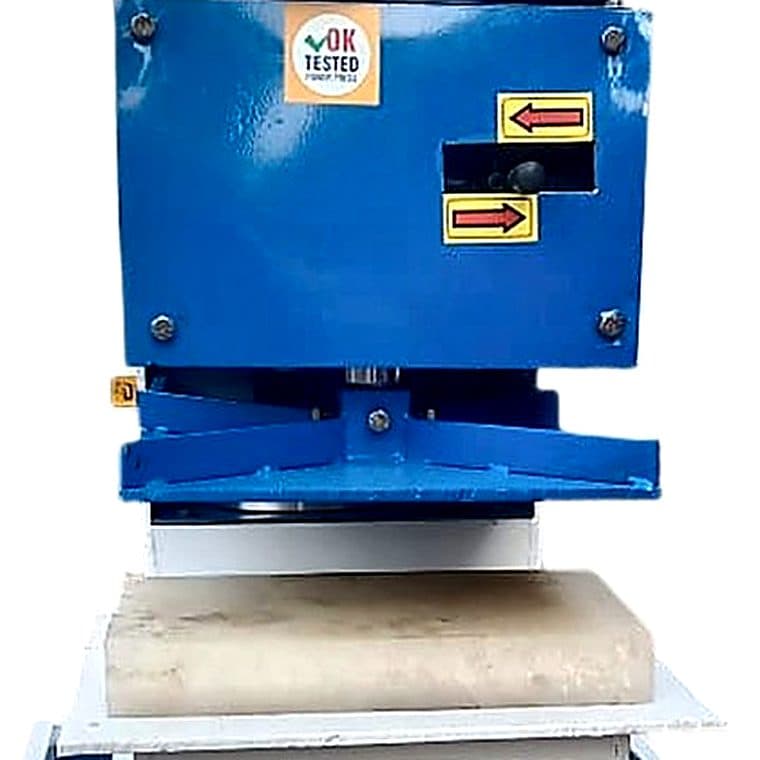
Your machine affects which sheet is comfortable to cut. A manual slipper making machine set works best with sheets that are not too thick or dense. A hydraulic slipper making machine or the 15 ton power press handles heavier sheets with less effort. Tell us your machine when you order and we will suggest sheets that suit it.
Many of our buyers run more than one small product line from the same unit. If you have spare space, a manual diya making machine is another low investment product for local and festival markets.
Short Mein Samjhiye (Hinglish Summary)
Chappal banane ke liye soling sheet, strap, die aur box chahiye. Hum EVA aur rubber sheet kai rang aur design mein, printed sheet, gents, ladies aur kids ke strap (kids five-pin D/C strap bhi) aur slipper box dete hain. Stock badalta rehta hai, isliye order se pehle photo maang lijiye. Rate ke liye WhatsApp ya call kijiye, GST 18% alag.