
What a 15 Ton Power Press Is
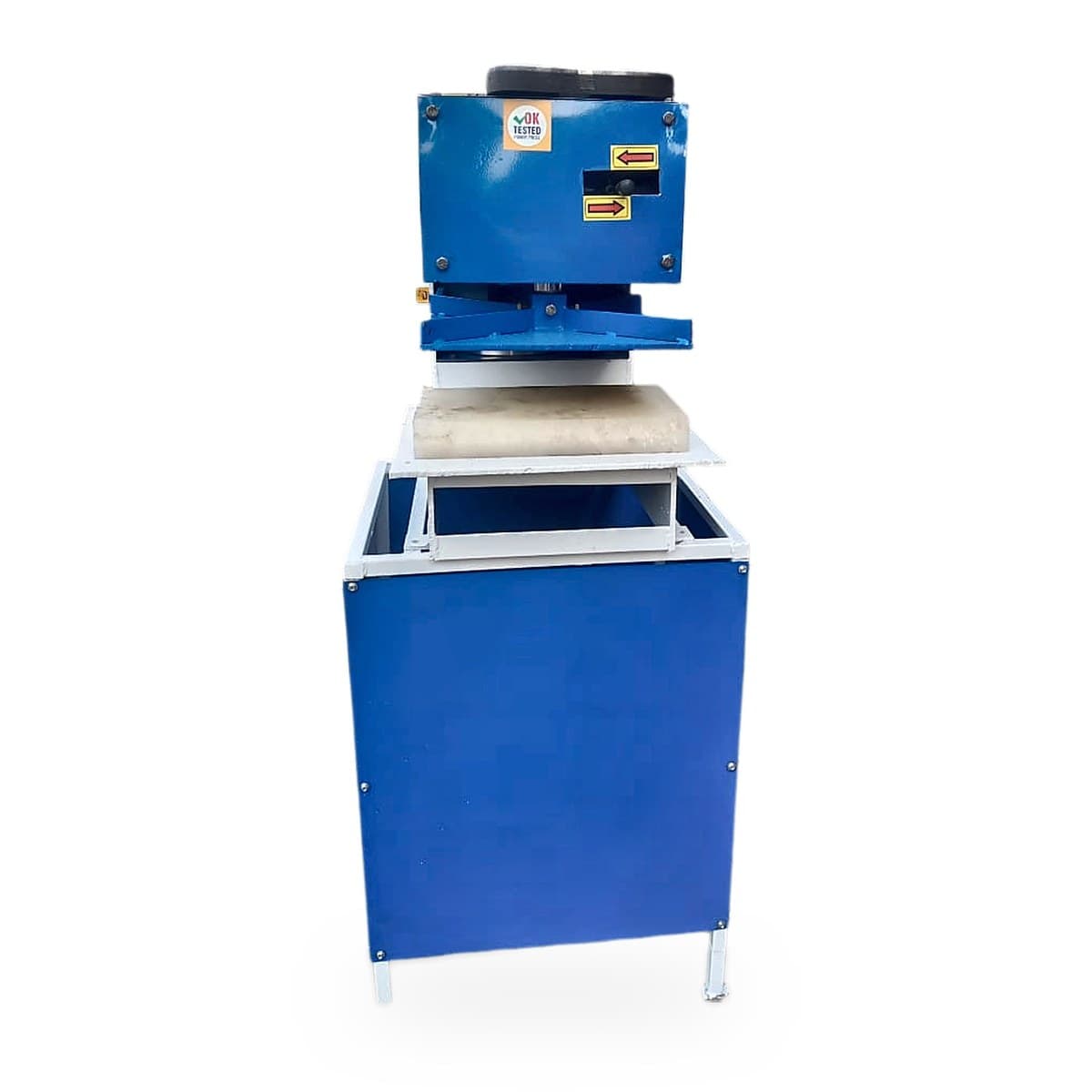
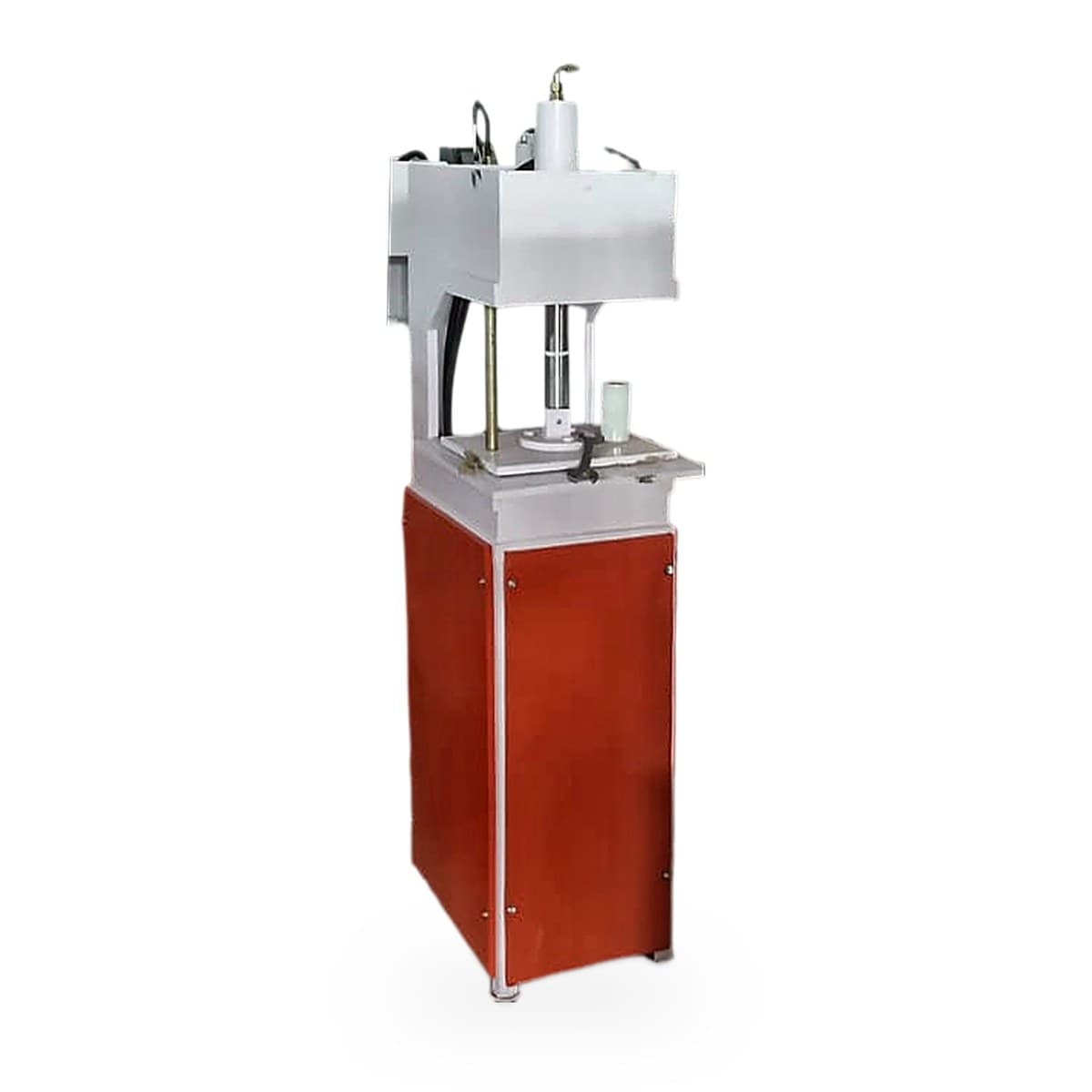
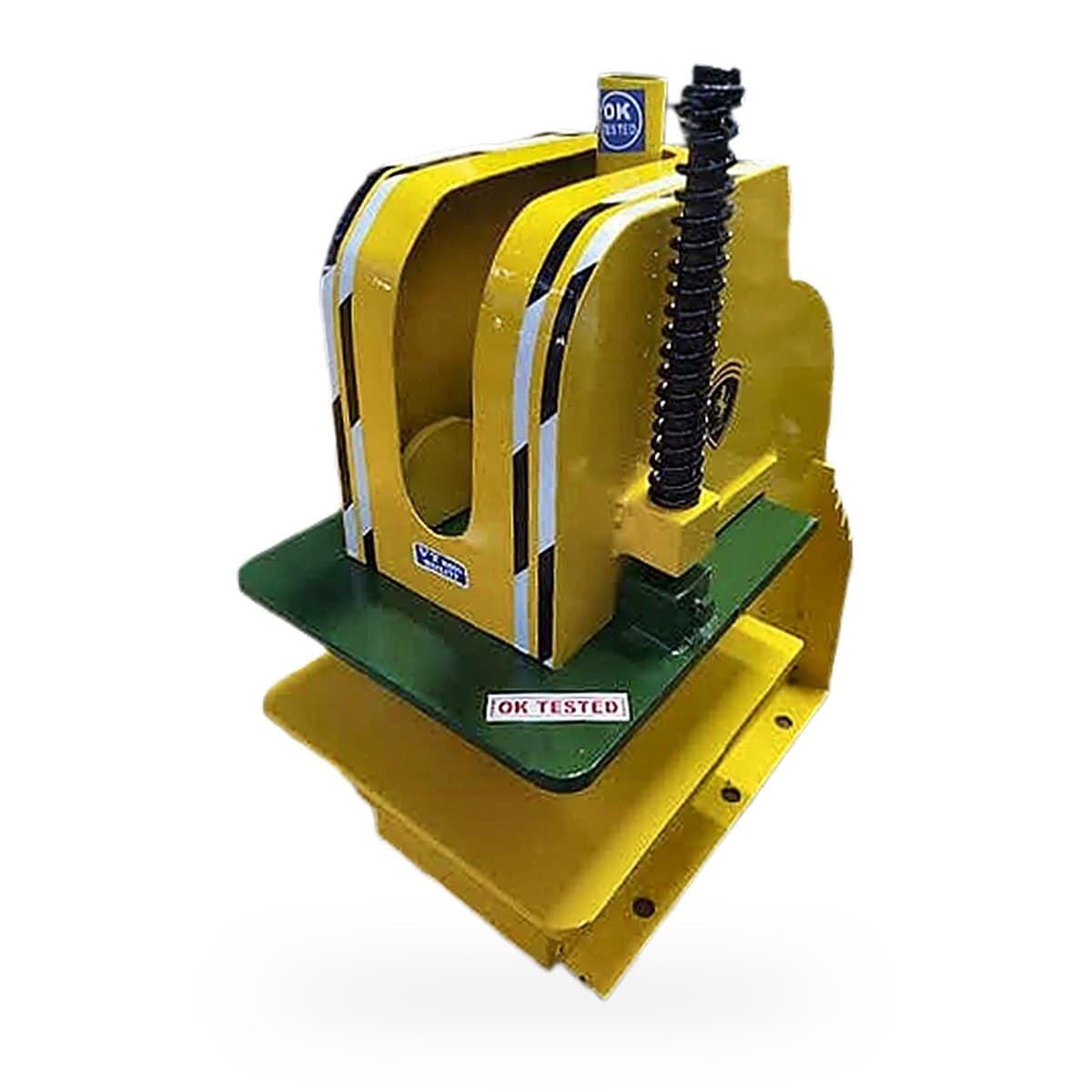
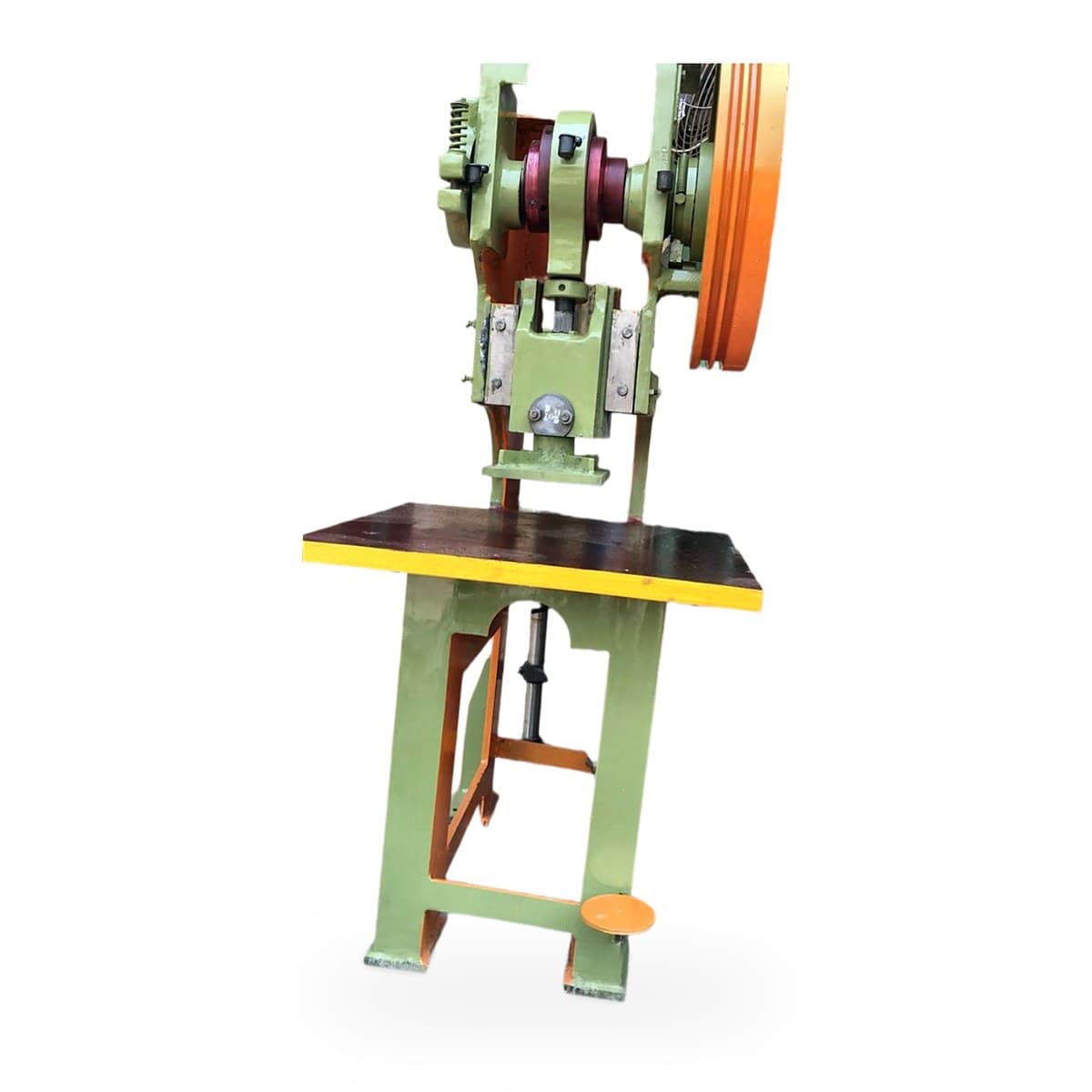
A power press is the classic machine of small engineering workshops, used for punching, blanking and cutting. In a slipper unit it does one thing: drive a sole die through a soling sheet. The press in the photo has a green cast frame, a large orange flywheel at the back, a ram above a working table, and a pedal at floor level.
The catalogue lists four facts: 15 ton capacity, flywheel drive, heavy cast body with working table, and foot-operated control. Everything else, including motor rating, table size and weight, is available on request.
Flywheel, Clutch and Pedal: How One Stroke Happens
- The flywheel spins. A motor drives the heavy flywheel through a belt and keeps it turning the whole time the press is on.
- The pedal engages the clutch. When the operator presses the pedal, a clutch locks the flywheel to the crankshaft for one turn.
- The ram comes down. The crank pushes the ram down onto the die, and the energy stored in the flywheel drives it through the sheet.
- The ram returns. The crank carries on round, lifting the ram, and the clutch lets go at the top.
Because the energy is stored in advance, each stroke is fast and does not depend on a pump building pressure. That is why mechanical presses cycle faster than hydraulic ones, and also why they need more respect.
What 15 Ton Means for Slipper Work
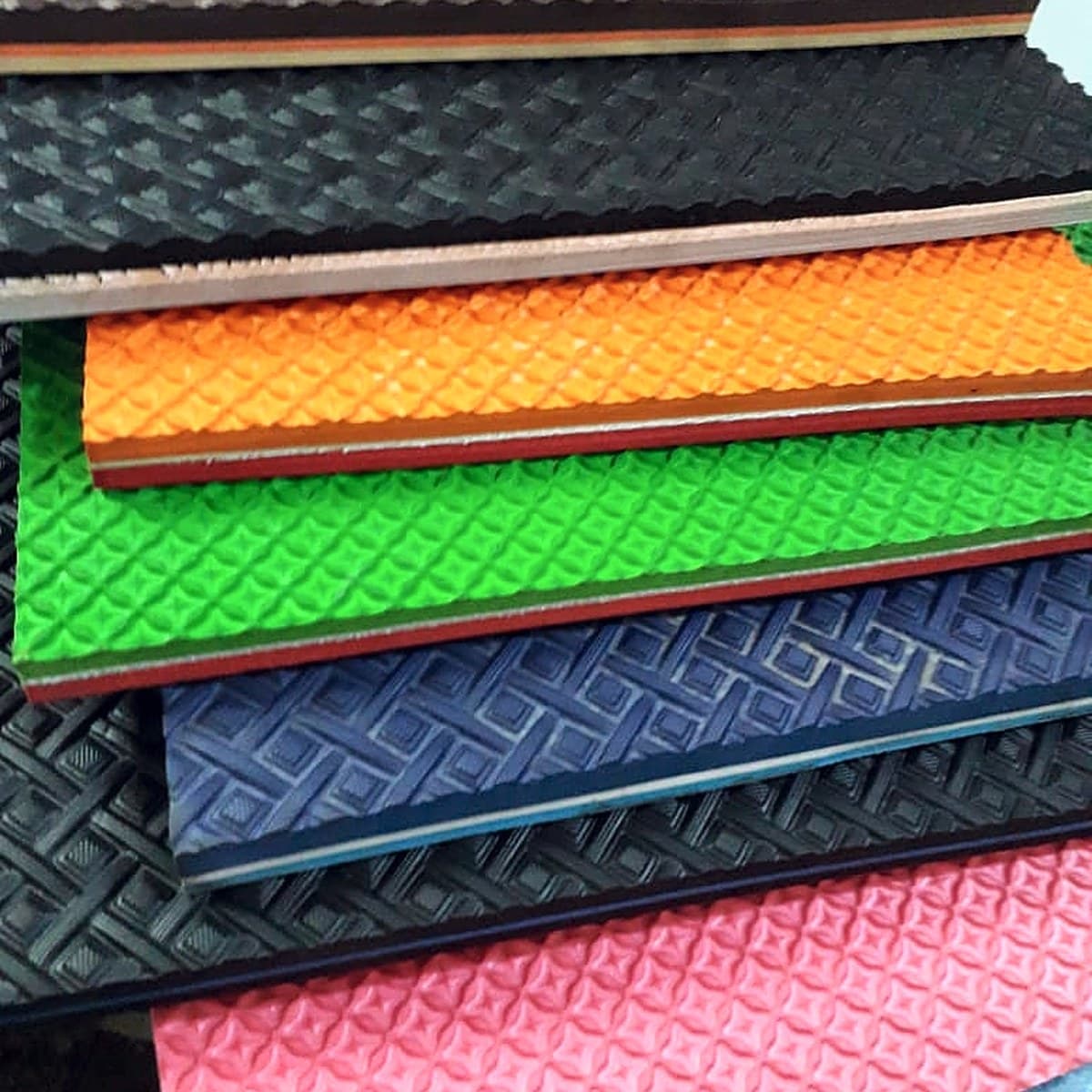
The tonnage rating is the force the press can deliver at the ram. For slipper work that force pushes a die edge through foam or rubber. Soling sheets are soft compared with metal, so a 15 ton press is working well within itself when cutting soles, which is good for the life of the machine.
Higher tonnage does not make a cleaner cut on its own. A clean sole comes from a sharp die, a flat cutting block and the right stroke setting.
Setting the Press for a Clean Cut
On a mechanical press, the ram always travels the same distance, so you set how far down it reaches. Set it too high and the die does not pass right through, leaving tags. Set it too low and the die bites deep into the cutting block, wearing it out and blunting the die.
- Start high and lower the setting in small steps on scrap sheet.
- Stop when every edge of the sole is cut through and the die just marks the block.
- Recheck whenever you change to a die of a different height or a thicker sheet.
Safety Comes First on a Power Press
A foot-operated press leaves both hands free to place the die, and that is exactly where the risk lies. A ram moving down under flywheel energy will not stop for a hand.
- Hands come fully out from under the ram before the foot touches the pedal.
- Never rest a foot on the pedal between strokes.
- Only trained, alert operators run the press. No rushing to hit a count.
- Switch off and let the flywheel stop before changing dies or clearing a jam.
- Keep guards in place and the floor clear of offcuts.
Power presses are covered by workplace safety rules in India. Check the requirements for your unit with your local factory or labour department.
Simple Maintenance
| When | What to do |
|---|---|
| Every day | Oil the ram slides and crank points, clean the table, test the pedal and brake |
| Every week | Check belt tension, look for loose bolts, inspect the cutting block |
| As needed | Resurface or replace the block, sharpen or replace dull dies |
| Any time | Stop if the ram does not return cleanly or the press repeats a stroke |
A press that strokes twice from one pedal press needs attention before it is used again. Call us and do not keep working.
Common Cutting Problems
Most cutting faults on a slipper power press come back to the die, the block or the stroke setting. Work through them in that order before you suspect the machine.
- Sole still joined at one spot. Look at the die edge at that point. A small nick or rolled edge leaves the same uncut tag on every sole.
- Uncut along one whole side. The block may be uneven, or the die may be sitting on an offcut. Clean the table and check the block is flat.
- Ragged edges all round. The die is dull, or the block is grooved where the die is landing. Move to a fresh area of the block and check the die.
- Die cutting deep into the block. The stroke is set too low. Raise it in small steps until the die just marks the block.
- Print lifting at the edge. On printed sheets, a dull die tears rather than cuts. Sharpen it and test on scrap.
If the ram itself behaves oddly, such as slowing down, knocking or not returning to the top, stop using the press and contact us.
Power Press or Hydraulic?
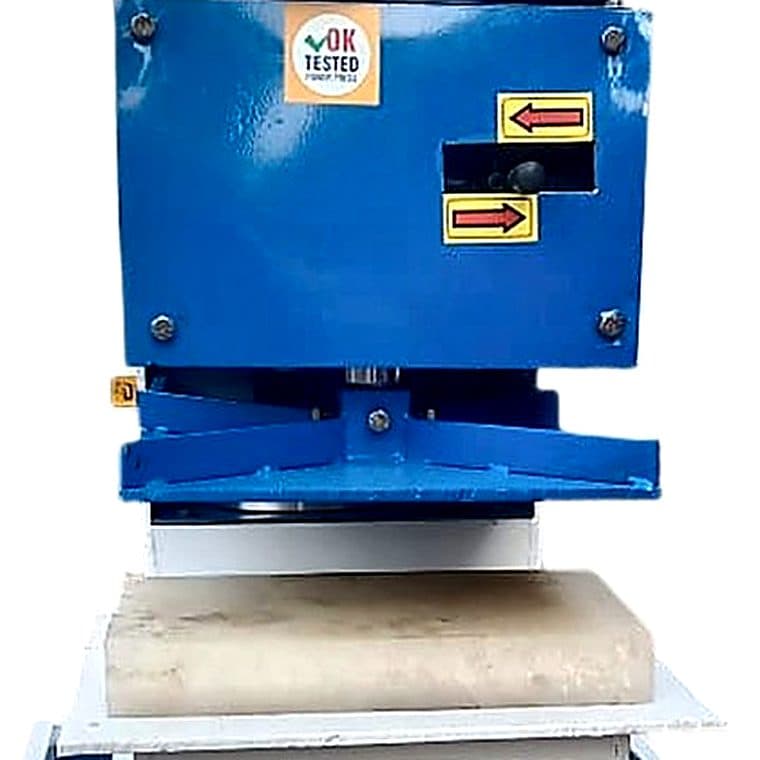
The hydraulic slipper making machine and the upgraded hydraulic model give a smooth, slower stroke that is easier on dies and on new operators. The power press is faster per stroke and suits a unit that already has trained hands and steady orders. A unit just starting out with very little money may begin with the manual slipper making machine set instead.
Faster cutting only helps if the rest of the line keeps up. Plan for enough people to punch holes, fit straps and pack. Packing tools such as a band sealing machine can help if you sell slippers in sealed poly bags.
Short Mein Samjhiye (Hinglish Summary)
Yeh 15 ton ki mechanical power press hai jo flywheel se chalti hai aur pedal se stroke deti hai. Chappal ka sole die se jaldi kat jaata hai. Haath hamesha ram ke neeche se hata kar hi pedal dabaiye. Motor aur baaki detail request par milegi. Sheet, strap, die aur box bhi humse milte hain. Price ke liye WhatsApp ya call kijiye, GST 18% alag.