What Is a Manual Camphor Making Machine?
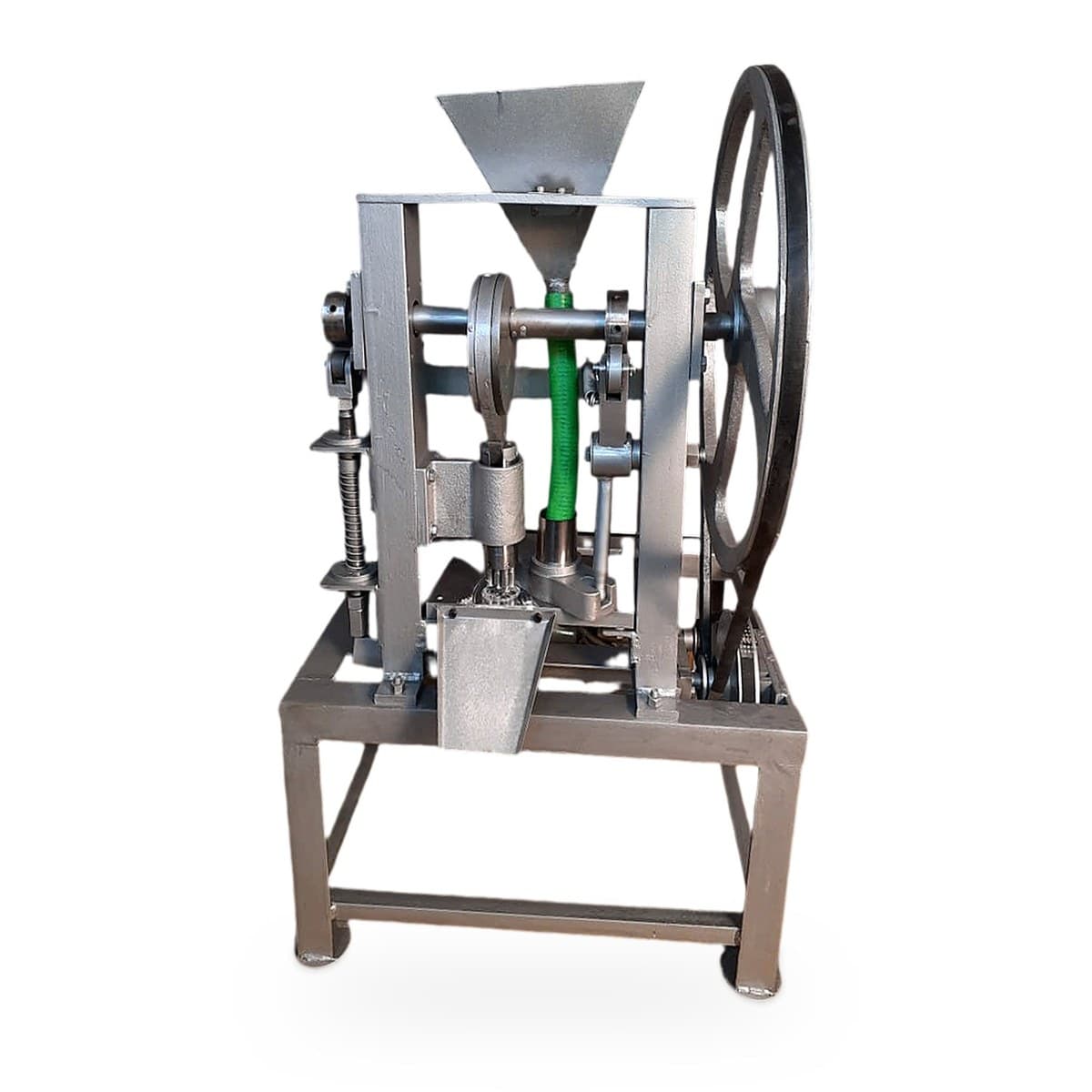
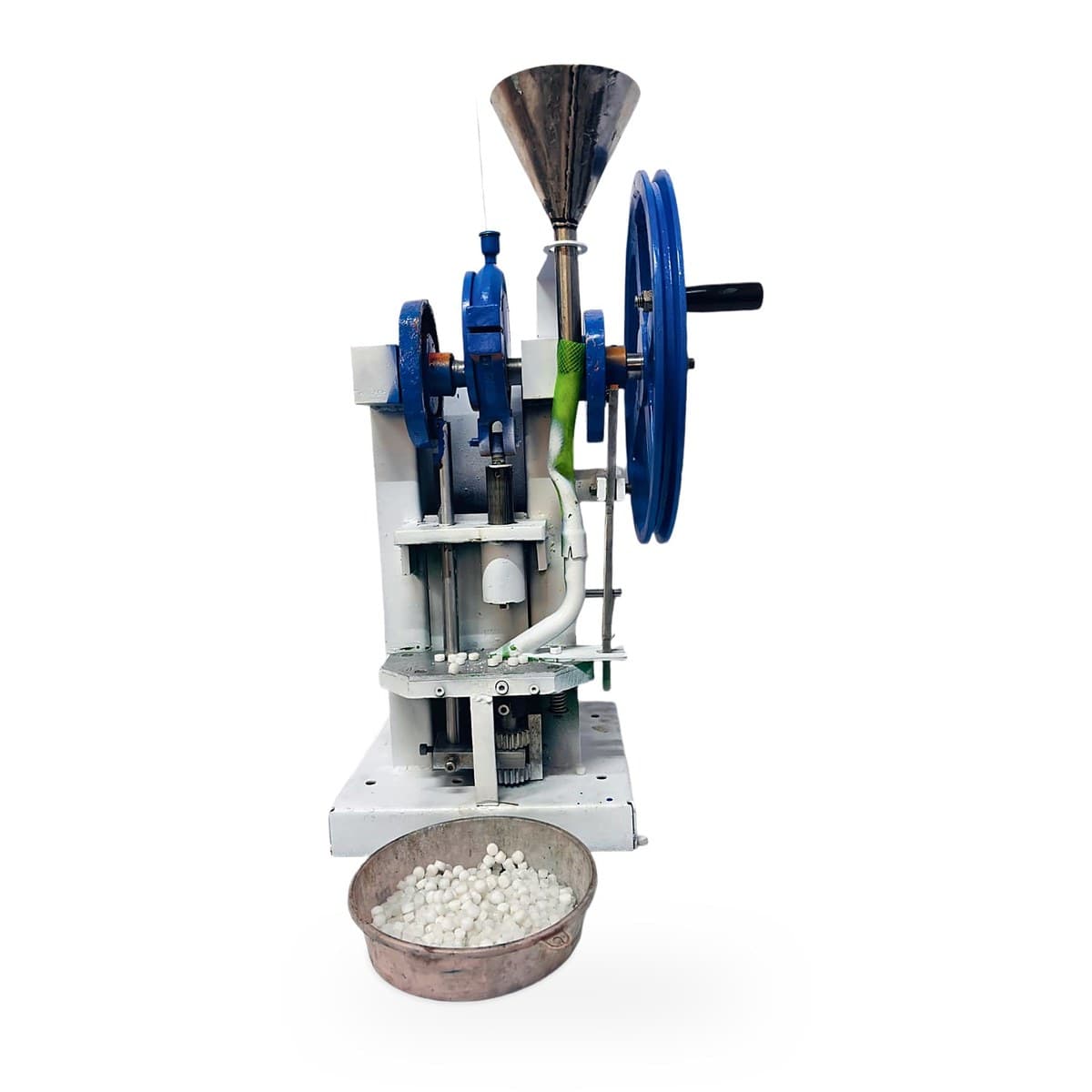
Camphor tablets are pressed from loose camphor powder. A manual machine does the pressing by hand power. The photo shows the layout: a stainless steel funnel hopper on top, a hand wheel with a handle on the side, a punch in the middle and a small table where the tablets come out.
Each turn of the wheel brings the punch down into the die, presses a tablet and pushes it out. With no motor, there is nothing to wire and nothing that depends on the power supply.
Who It Suits
This machine makes the most sense for:
- People starting a pooja samagri business from home with a small budget.
- Areas where power cuts are frequent or there is no suitable connection.
- Shops that want to press their own camphor for local customers.
- Units that already make agarbatti or diyas and want to add camphor to the range.
If you already run a paddle type manual agarbatti machine or a manual diya making machine, camphor tablets go to the same buyers and can be sold together.
What You Need to Start
One of the reasons people choose a manual camphor machine is how little else is needed. Besides the machine itself, a home unit usually needs:
- A strong table or bench that does not wobble when the wheel turns.
- A dry, ventilated corner away from the kitchen, stoves and any open flame.
- Camphor powder from a supplier who can give the same quality every time.
- Airtight containers to store powder, and pouches or boxes for packing.
- A small weighing scale, so each pack can be checked.
Camphor catches fire very easily, so treat it with care at home. Keep children away from the work area, keep a fire extinguisher or a bucket of sand nearby, and never smoke or light lamps in the room where you press or store camphor.
It also helps to decide the pack before you start pressing. Choose how many tablets go into each pouch or box and what price point you are aiming for at local shops. Tablet size comes from the die, so ask us which sizes are available and match the pack to that.
How to Make Tablets, Step by Step
- Set up. Place the machine on a strong, level bench at a comfortable height for turning the wheel.
- Clean. Wipe the hopper, punch and die so no old powder or dust is left.
- Fill. Pour dry, free-flowing camphor powder into the hopper.
- Press. Turn the hand wheel at a steady pace. A smooth, even rhythm gives more even tablets than fast, jerky turns.
- Check. Look at the first tablets. They should be firm, round and clean at the edges.
- Collect and pack. Gather tablets in a bowl or tray and pack them the same day.
Manual or Semi Automatic?
We also supply a semi automatic camphor tablet making machine. This table shows how the two differ, using what is on each spec sheet.
| Manual | Semi automatic | |
|---|---|---|
| Drive | Hand wheel | 1 HP motor and flywheel |
| Power | None | Single phase |
| Hopper | Stainless steel funnel | Hopper with outlet chute |
| Build | Compact, bench mounted | MS frame on its own stand, 60 – 70 kg |
| Best for | Home start, low budget, no power | Steadier daily output, less effort |
A common path is to start manual, build a set of regular buyers, and move to the motorised machine when hand pressing can no longer keep up with orders.
What Makes a Good Camphor Tablet
Customers judge camphor at the aarti plate. A good tablet lights quickly, burns with a bright steady flame and leaves little or nothing behind. Most of that comes from the powder, not the machine.
- Buy white powder with no yellow or grey tint.
- Ask your supplier whether it is natural or synthetic, and label honestly.
- Keep powder dry. Damp or lumpy powder gives weak tablets that crumble.
- Turn the wheel evenly so every tablet gets the same pressure.
Packing and Selling From Home
Camphor evaporates slowly in open air, so tablets lose weight if they sit unpacked. Pack them the same day in sealed pouches, small boxes or jars. Counting a fixed number of round tablets per pack is simple and buyers like it.
A band sealing machine gives neat, airtight pouch seals once your volume grows. Local pooja shops, temples and kirana stores are the usual first buyers. Rules on registration and labelling for packed goods vary, so check with local authorities before selling packed tablets.
Looking After the Machine
- Brush powder off the hopper, punch and die after every session.
- Keep moving parts lightly oiled, but keep oil away from the die faces.
- Store the machine covered, in a dry place.
- If the wheel starts to feel stiff, stop and check for packed powder before forcing it.
A manual press has few parts, so most problems come from powder rather than wear. Tablets that break usually mean damp or lumpy powder. Tablets of different sizes usually mean the hopper is running low or the wheel is being turned unevenly. Keep the hopper topped up and keep a steady pace, and most of these problems go away. If a part does wear, contact us with a photo and we will help you find the right replacement.
Short Mein Samjhiye (Hinglish Summary)
Manual camphor making machine haath se chalne wali chhoti machine hai jo kapoor powder se gol tablet banati hai. Isme bijli nahi lagti, sirf hand wheel ghumaana hota hai. Hopper stainless steel ka hai aur machine table par rakhi ja sakti hai, isliye ghar se kaam shuru karne ke liye achhi hai.
Saaf, safed aur sookha kapoor powder use kijiye aur tablet banate hi sealed packing kijiye, kyunki kapoor hawa mein udta hai. Output aur size ki detail request par milti hai. Price aur demo video ke liye WhatsApp kijiye.