What a Camphor Tablet Machine Does
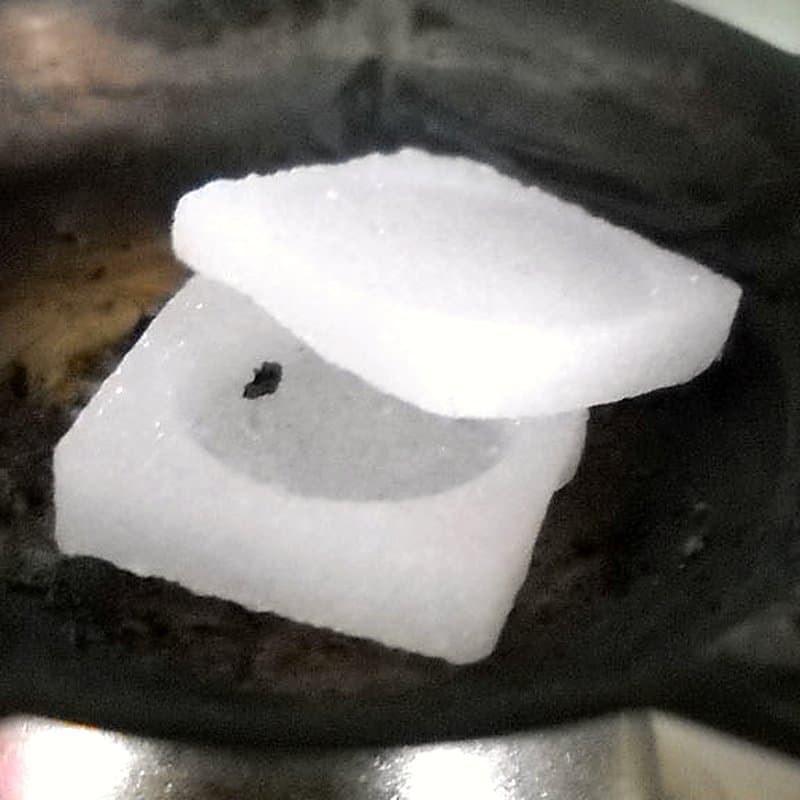
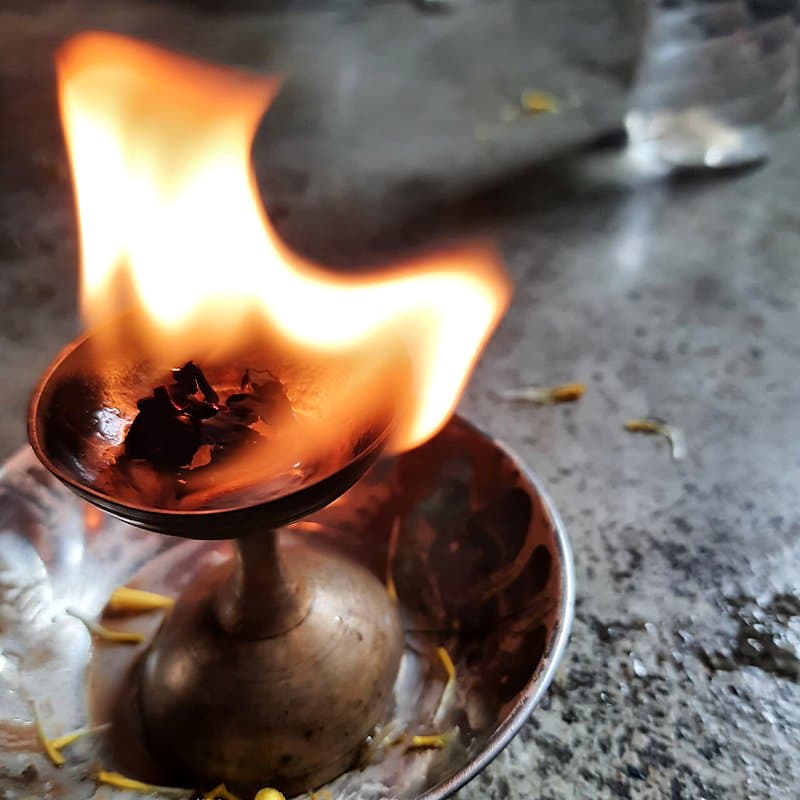
Camphor, kapoor or karpur, is burnt at almost every aarti in India. Most of it is sold as small pressed tablets in pouches and boxes. The tablets are made by pressing loose camphor powder in a die until it holds a firm shape.
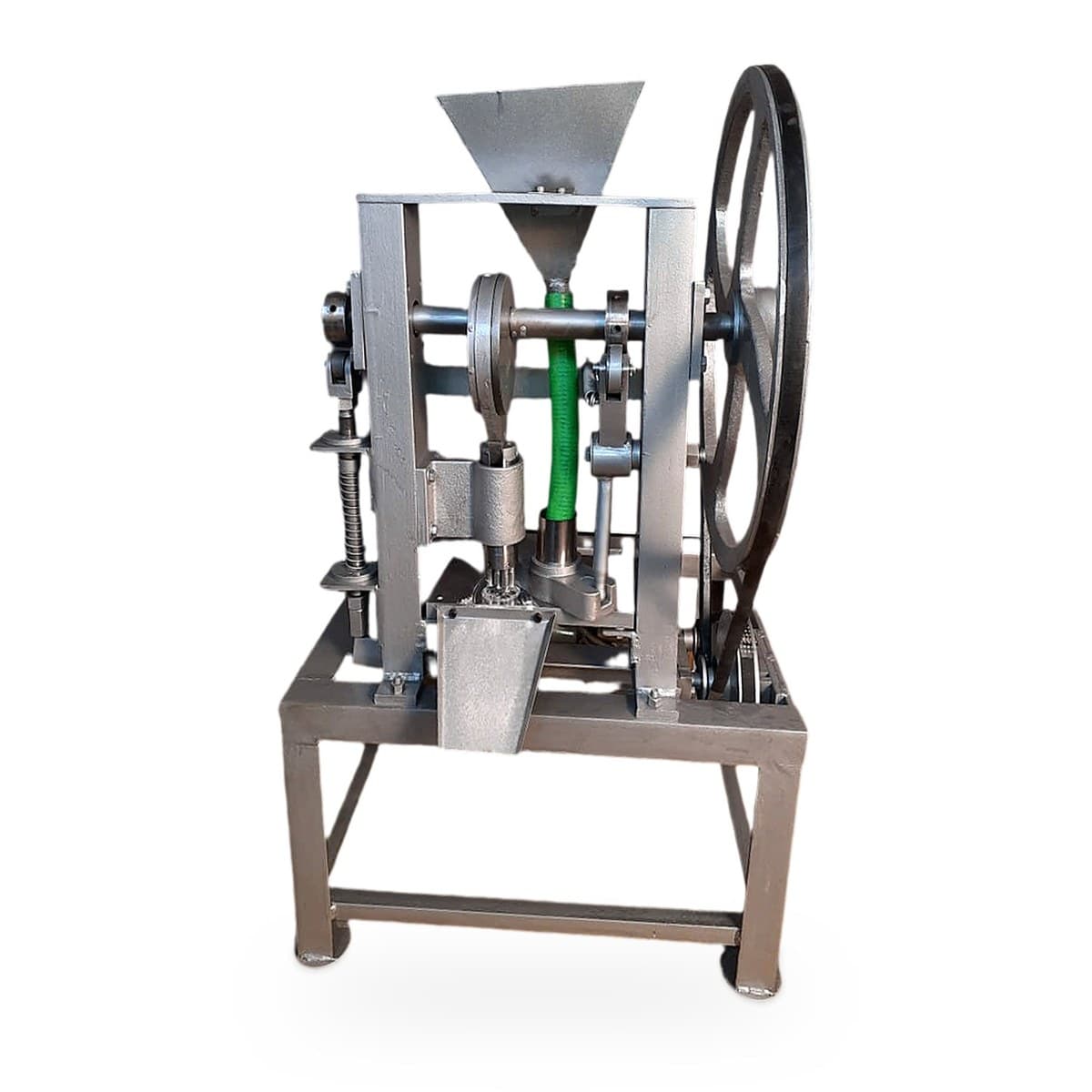
This machine does that pressing with a motor. It is the step up from a hand-operated press such as our manual camphor making machine. The operator keeps the hopper full and clears the tablets, and the motor does the pressing. That means steadier output with much less effort, and a machine that one person can run through a full day.
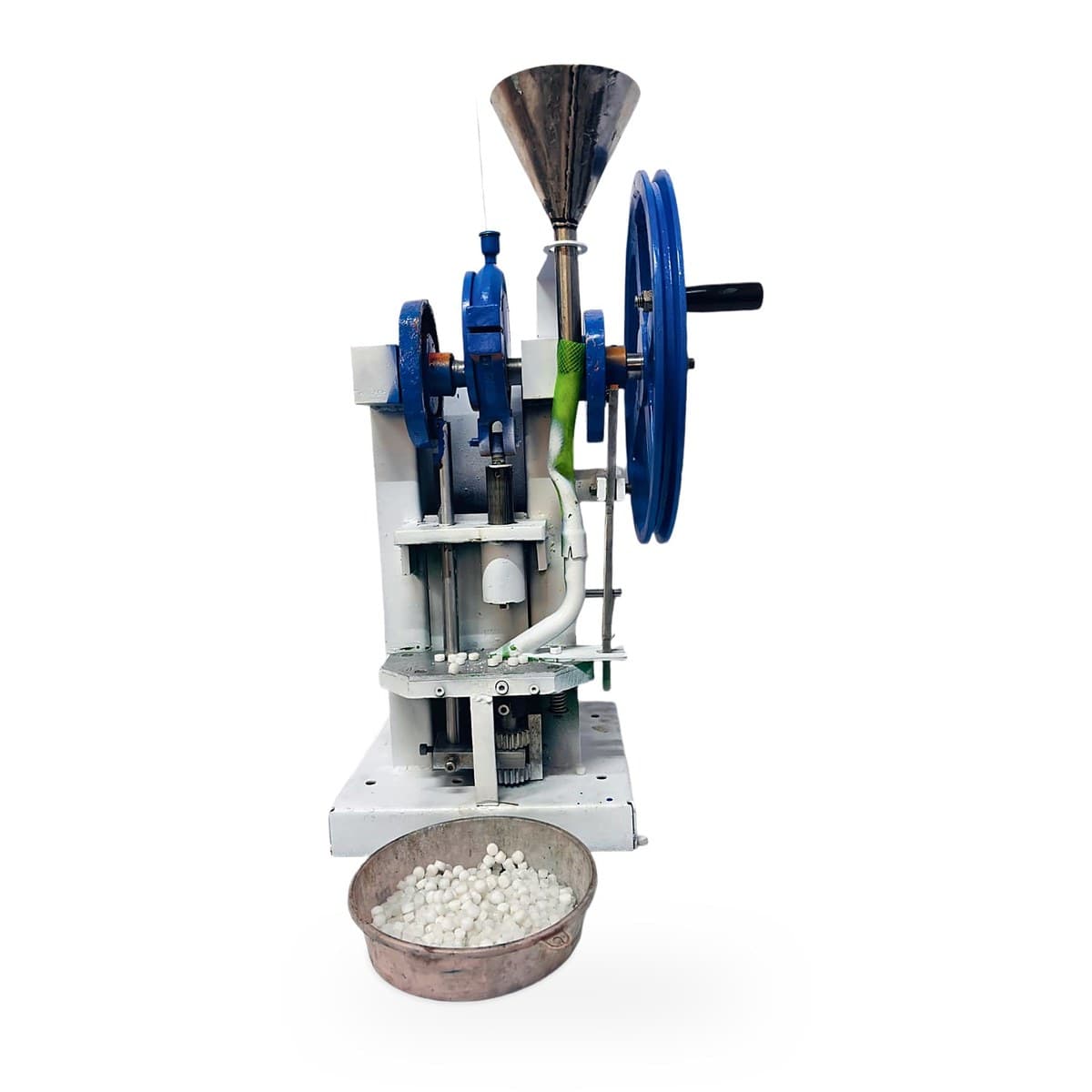
How the Flywheel Press Works
Looking at the machine from top to bottom:
| Part | What it does |
|---|---|
| Hopper | Holds camphor powder and feeds it down to the die |
| Punch and die | Press the powder into a tablet of fixed shape and size |
| Flywheel | Stores energy between strokes so each press is smooth and even |
| 1 HP motor | Keeps the flywheel turning through a belt |
| Outlet chute | Guides finished tablets out into a tray |
| MS frame and stand | Keep the punch aligned under repeated pressing |
The flywheel is the important part. It carries the motor’s effort from stroke to stroke, so the punch comes down with the same force each time. Equal force gives tablets of equal hardness, which is what keeps them from crumbling in the pack.
Why Single Phase Matters
Many small pooja samagri businesses run from a home or a small shop with an ordinary single phase connection. Machines that need three phase force those businesses to apply for a new connection before they can start. A 1 HP single phase motor avoids that. You can set the machine up, plug it in and start.
Check that your wiring and socket are suitable for a 1 HP motor, and keep the machine on its own point rather than sharing with heaters or other heavy loads.
Setting Up Your Camphor Room
A camphor unit does not need much space, but it does need the right space. The machine stands on its own frame and weighs 60 to 70 kg, so a level concrete floor is enough. Leave room around it to reach the hopper, clear the chute and move trays.
Camphor is highly flammable and its smell is strong. Keep the room ventilated, keep any flame, stove or heater well away, and keep a fire extinguisher where you can reach it. Store powder and packed tablets in a cool corner, not next to a window in direct sun.
Plan three zones: powder storage, the machine, and a clean packing table. Moving tablets straight from the chute to the packing table, without leaving them on an open tray, is the simplest way to protect their weight. If you make other pooja items in the same room, keep camphor powder well apart from fragrance oils and dhoop masala so smells do not mix.
Camphor Powder: Your Only Raw Material
A camphor tablet is only pressed camphor, so the powder you buy is your product. Buyers judge camphor by colour, by how easily it lights and by whether it burns away cleanly.
- Buy white powder with no yellow or grey tint.
- Keep it dry and free-flowing. Lumps feed unevenly and give broken or light tablets.
- Ask your supplier to state clearly whether it is natural or synthetic camphor.
- Burn-test a few tablets from every new lot before pressing the whole lot.
A Day on the Machine
- Wipe the hopper, punch and die clean before starting.
- Fill the hopper with dry powder. Do not pack it down hard.
- Start the motor and let the flywheel come up to speed.
- Check the first few tablets for size, edges and hardness, then let it run.
- Empty the tray regularly and send tablets straight to packing.
- At the end of the day, clean out leftover powder and keep the machine covered.
Output per hour is not on the spec sheet, because it depends on tablet size and powder. Ask us for a demo video to see the machine running before you plan your numbers.
If tablets start coming out soft or chipped, stop and check the powder before touching the machine. Damp powder, lumps or a hopper that has run low cause most problems. A clean die and a steady supply of dry powder fix the rest.
Packing: Where Camphor Units Lose Money
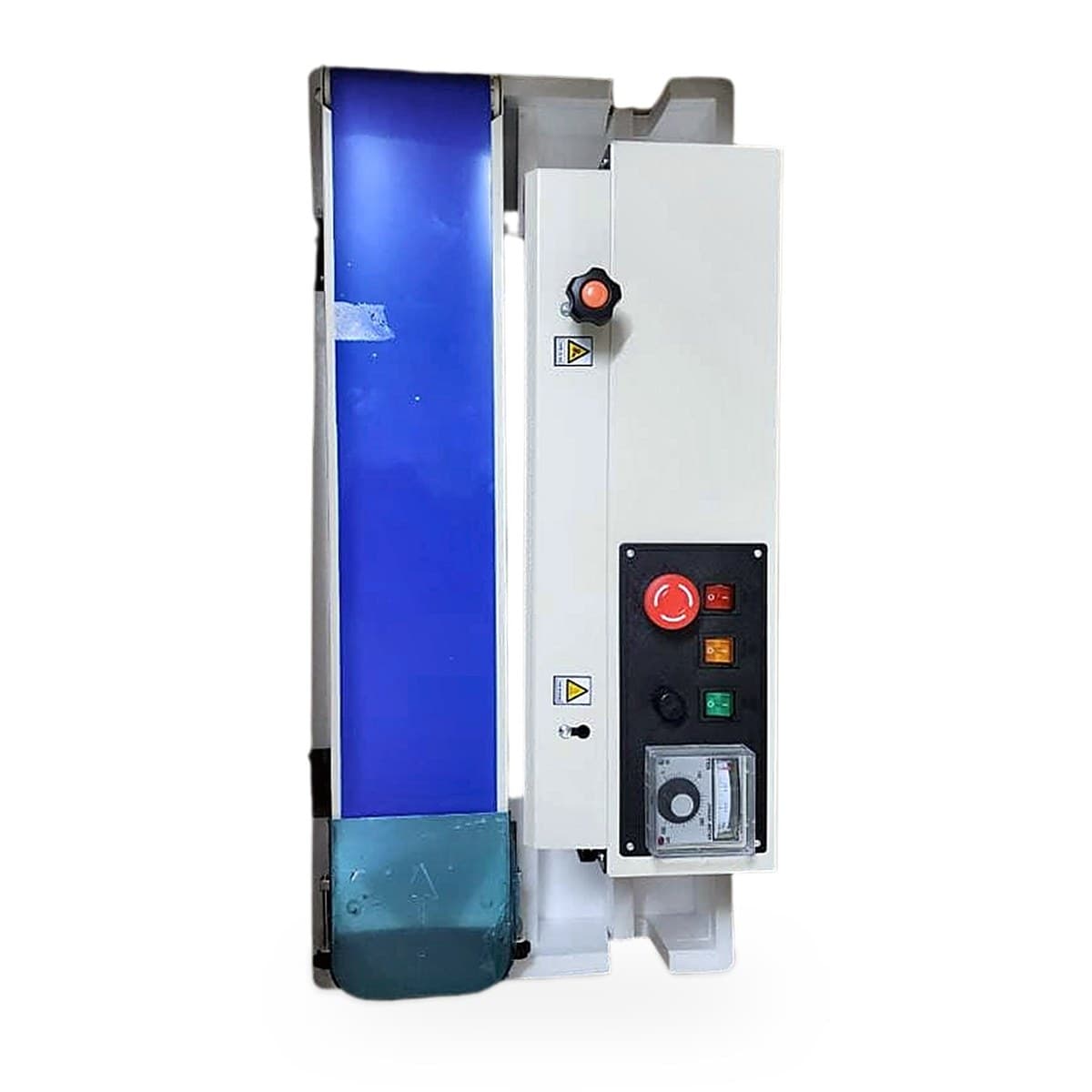
Because camphor evaporates, tablets left on an open tray lose weight. If you sell by weight or count, that loss comes out of your margin. Pack the same day in sealed pouches, boxes or jars. A band sealing machine for pouches seals pouches quickly and evenly, and a handheld inkjet printer can add batch details to the pack.
Camphor sells to the same shops as dhoop, samrani and diyas. If you want a wider pooja range later, the hydraulic samrani cup making machine and automatic dhoop stick machine fit the same customers.
Questions to Ask Before You Buy
- Which tablet sizes can the punch and die make, and can I change size later?
- What output should I expect for my tablet size?
- Can I see a demo video with powder like mine?
- What is covered by the 1 year motor warranty?
- Which spare parts should I keep, and how do I get them?
Registration and labelling rules for packed goods vary by state and by how you sell, so check with your local authorities before selling packed tablets.
Short Mein Samjhiye (Hinglish Summary)
Semi automatic camphor tablet machine kapoor powder ko dabaakar ek jaisi tablet banati hai. Isme 1 HP single phase motor hai, isliye ghar ki normal supply par chal jaati hai. Bhaari flywheel se har tablet ek jaisi dabti hai. Powder hopper mein daaliye, tablet chute se bahar aati hai.
Machine ka wazan 60 se 70 kg hai aur motor par 1 saal ki warranty hai. Kapoor hawa mein udta hai, isliye tablet banate hi sealed packing kijiye. Price aur demo video ke liye WhatsApp kijiye.