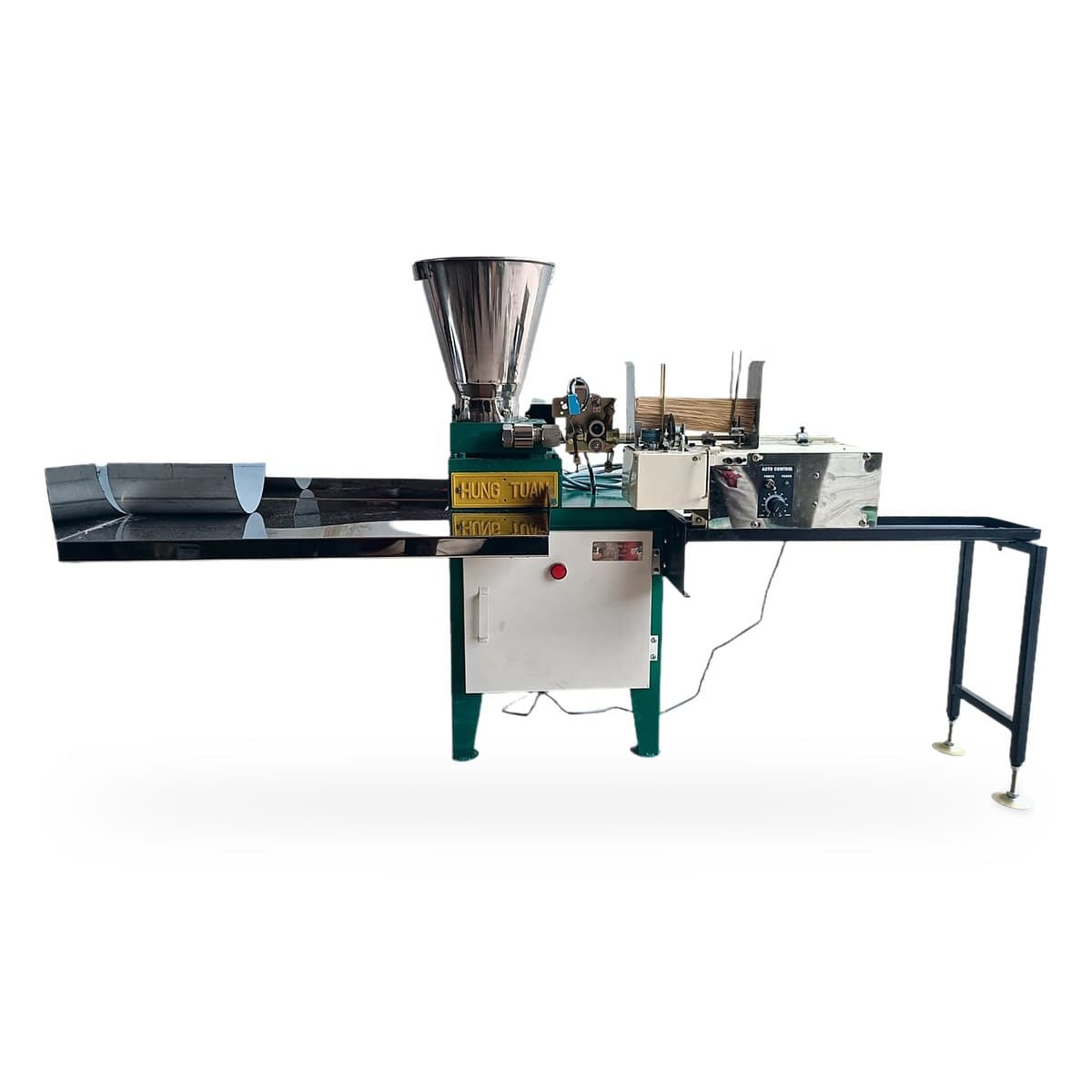
What Is a Fully Automatic Agarbatti Making Machine?
For generations, agarbatti (incense sticks) were rolled by hand. A worker took a thin bamboo stick, pressed a lump of wet masala around it and rolled it on a wooden board until the coating was even. It is skilled, tiring work. One person can only roll so many sticks in a day, and no two batches come out exactly alike.
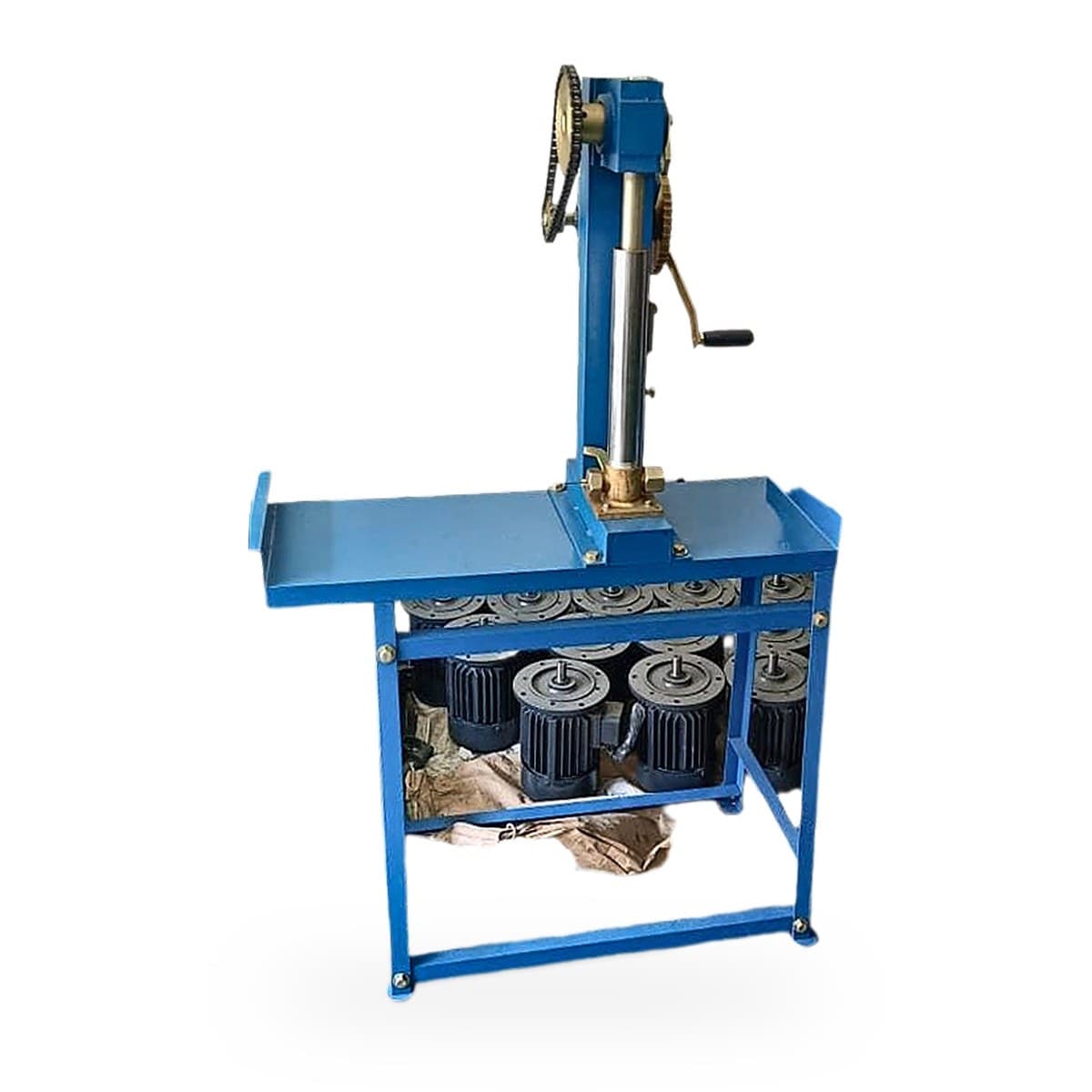
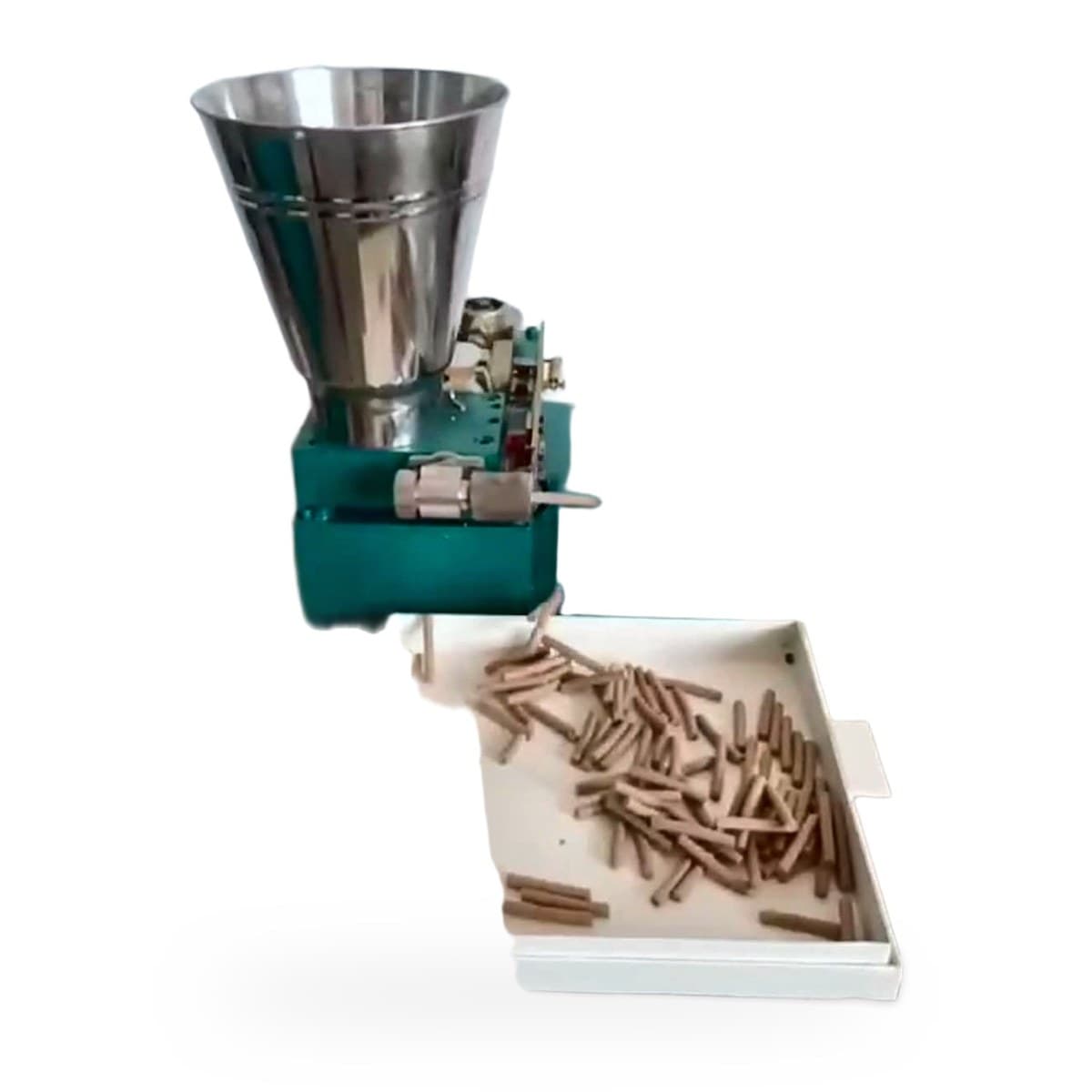
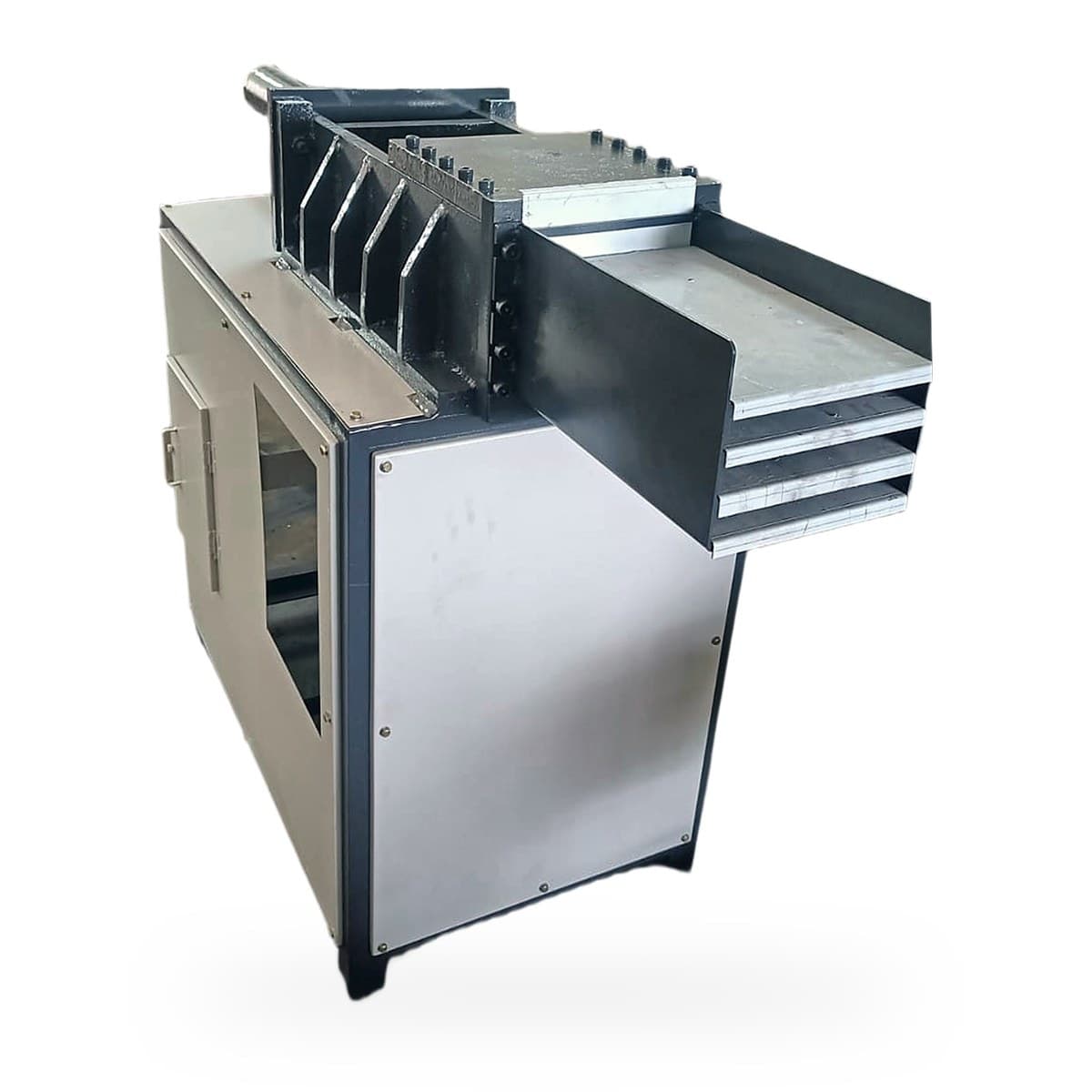
A fully automatic agarbatti making machine does the same coating mechanically. Bamboo sticks go into a feeder, masala dough goes into a stainless steel hopper, and the machine presses the masala through a die around each stick as it moves past. Coated sticks come out on the other side with the same thickness, the same length of bare handle and nearly the same weight. The operator’s job shrinks to keeping the feeder and hopper filled and lifting finished sticks onto drying trays.
“Fully automatic” describes the two steps that used to need skilled hands: feeding the stick and coating it. It does not mean the whole unit runs itself. Mixing the masala, drying, perfuming and packing are still separate jobs, and we explain each of them below. Knowing the full process before you buy helps you plan the right space, staff and budget, and avoids surprises after the machine arrives.
You will also see these machines called high-speed agarbatti machines or automatic incense stick making machines. In the trade they are often known by the design they follow. Model 2 on this page is a Hung Tuan type machine, the name on its yellow front plate.
What Can You Make With It?
The machine makes raw agarbatti: the unscented coated stick that is the starting point for almost every incense product sold in India. From there you can go in several directions.
- Black raw agarbatti (kali batti). Charcoal-based sticks sold in bundles to brands and perfumers who do their own scenting and packing. This is the simplest product to begin with and is traded in bulk by weight.
- Scented agarbatti. The same raw sticks dipped in fragrance (rose, sandal, mogra, jasmine, lavender, guggal and hundreds of other blends), dried again and packed under your own name.
- Coloured agarbatti. Sticks finished in pink, yellow, green, blue and other shades, which are popular in retail packs and festival gift boxes. Colour is added at the masala or finishing stage.
- Different lengths for different buyers. Depending on the die, the machine works with sticks from 6 to 16 inches. Shorter sticks suit daily puja packs, while longer, slower-burning sticks suit temples, meditation and bulk buyers.
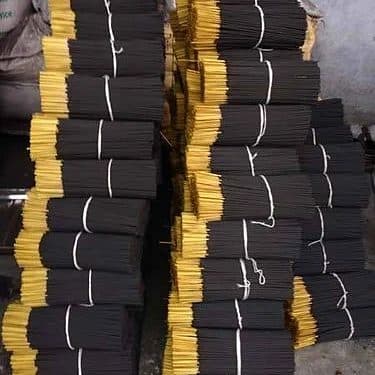
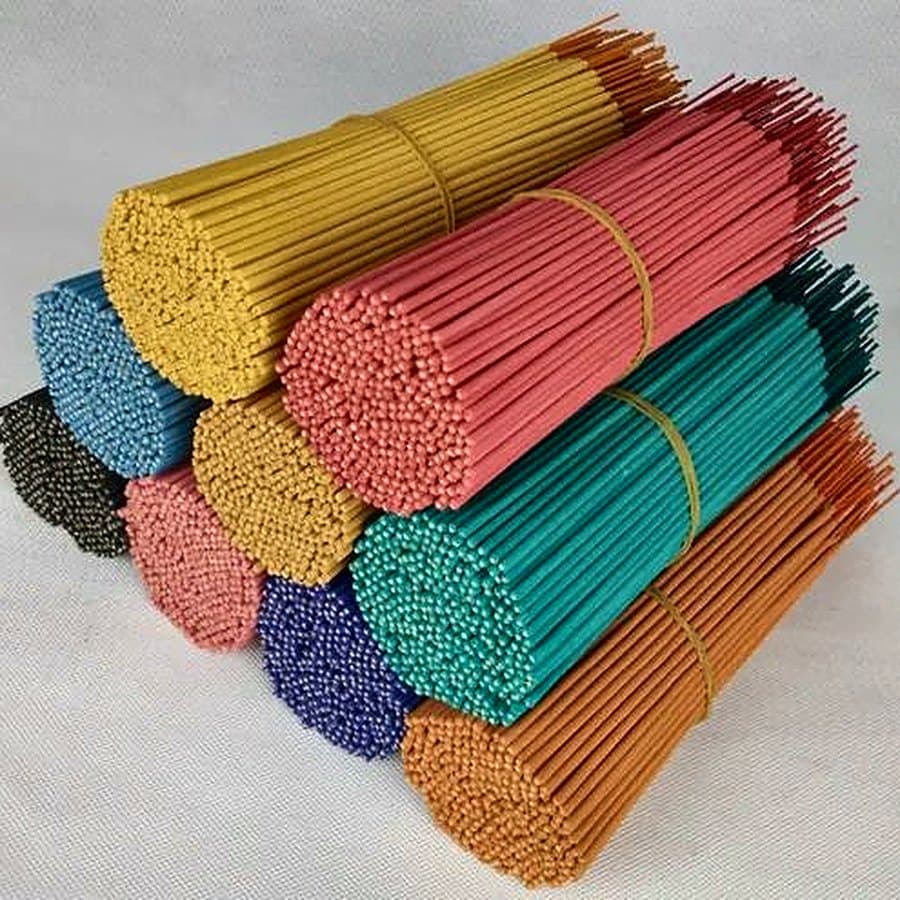
So one machine can feed several product lines. Many units sell raw batti in bulk to keep cash coming in while they slowly build a scented brand of their own on the side.
How the Machine Works, Step by Step
Here is what happens inside the machine during a normal run.
- Load the sticks. Straight, machine-grade bamboo sticks are placed in the stick feeder. Its guides line the sticks up so that one enters the coating head at a time.
- Fill the hopper. Ready masala dough goes into the conical stainless steel hopper. It should be soft enough to flow but firm enough to hold its shape, roughly like stiff chapati dough.
- Coating. The machine pushes masala through the die and around each stick as it moves forward. The die decides how thick the coating is and how much of the stick stays bare as a handle.
- Set the speed. The knob on the “Auto Control” panel sets how fast the machine runs. Start slower while you fine-tune the masala, then raise the speed once the coating comes out even.
- Collect the output. Coated sticks land on the output side, and the operator moves them onto drying trays.
- Refill and repeat. As long as sticks and masala are topped up, the machine keeps running. That steady, non-stop running is where its speed advantage comes from.
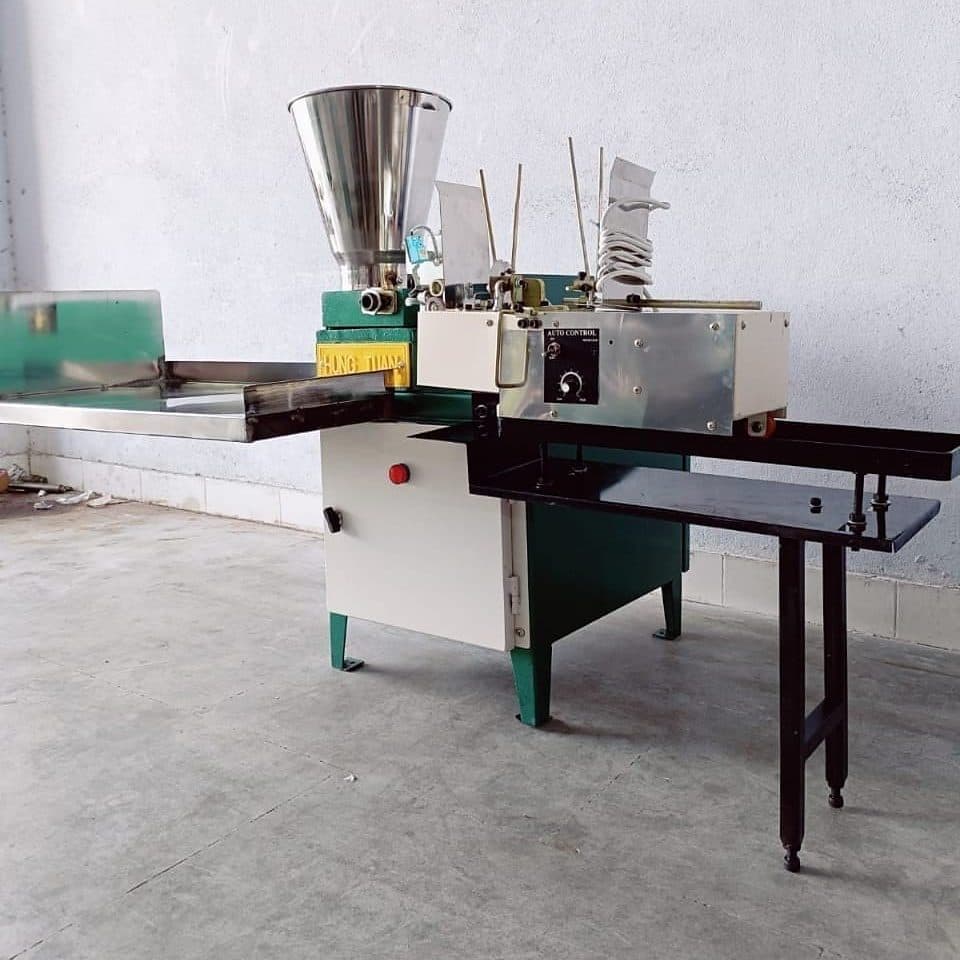
The two things that decide how smoothly the machine runs are not inside the machine at all: the quality of the bamboo sticks and the consistency of the masala. Get those right and it will run for hours with very few stops. Get them wrong and even a perfect machine jams and wastes material. That is exactly why we supply the raw material along with the machine; see section 02 above.
Your first run
On day one, set the machine on a firm, level floor and adjust its legs until it sits steady. Fit the die for the stick size you want and check that the stick guides match the stick length. Mix a small trial batch of masala rather than a full one, run the machine slowly, and look at the first few dozen sticks: is the coating even, does it hold when you tap the stick, is the handle the same length each time? Adjust the water in the masala first, then the speed. Once the sticks look right, dry a handful and burn-test them before you start full production. A careful first day saves a lot of wasted material later.
Raw Materials You Need, and Where to Get Them
Machine-made agarbatti needs a short list of materials. Knowing what each one does makes it far easier to judge quality when you buy, and to fix problems later.
Bamboo sticks
Bamboo sticks are the backbone of the product. For an automatic machine they must be round, straight and uniform. A crooked or oversized stick jams the feeder, and a thin, weak one can break under coating pressure. Much of India’s bamboo comes from the north-east, including Assam and Tripura, and sticks are also imported. Whatever the source, ask for machine-grade round sticks in the length your die is set for, and store them somewhere dry.
Charcoal powder
Charcoal (koyla) powder gives black agarbatti its colour and keeps it smouldering slowly once lit. It should be finely ground and free of sand or grit. Grit wears the die and makes the stick crackle and spit as it burns.
Jigat powder
Jigat is a natural binding powder made from tree bark, traditionally from the Litsea glutinosa tree, also called maida lakdi. When wet it turns gummy, and that gum is what holds the masala on the bamboo. The share of jigat in your mix matters: too little and the coating cracks or falls off; too much and the stick turns hard and burns poorly.
Wood powder
Fine wood powder, or sieved saw dust, adds body to the masala and helps the agarbatti burn evenly without going out. It must be dry and free from oil, paint or polish, because contaminated saw dust gives the smoke a harsh smell that no perfume can hide.
Premix: the easy route
Instead of buying charcoal, jigat and wood powder separately and working out a recipe, many units buy agarbatti premix, a ready blend made for machine use. You add water, mix, and load the hopper. Premix can cost more per kilo than loose powders, but it removes the guesswork while your operator is still learning. Plenty of units start on premix and move to their own recipe once they understand the process.
Perfume and DEP
For scented agarbatti, dry raw sticks are dipped in a fragrance compound diluted with DEP (diethyl phthalate) or another dipping solvent recommended by your perfume supplier. Fragrance is where brands set themselves apart, so test small batches with a few scents before you order in bulk.
Water and packing material
Clean water for mixing, and pouches, boxes, labels and cartons for the finished product. Packing is often planned last, but a neat pack with clear branding sells far better than loose sticks.
Storing raw material
Almost every raw material problem is a moisture problem. Keep powders in sealed bags on pallets or racks, off the floor and away from walls that get damp. Store bamboo sticks flat in their bundles so they stay straight, and keep them covered. Perfumes and DEP go in sealed containers in a cool, shaded corner, away from any flame. Use older stock first, and do not mix a fresh lot of powder into an old one without testing a small batch.
Where to buy raw material
Karnataka, around Bengaluru and Mysuru, is India’s best-known agarbatti hub, and raw material traders work in most large cities. The simplest route, though, is to order it with your machine. Shivaa Traders supplies raw material for the machines it sells, so you have one supplier to call for both, and your first lot of sticks and masala arrives together with the machine. See the raw material list in section 02 or ask us for a raw material price on WhatsApp.
From Masala to Packet: The Full Production Process
The machine is one step in a six-step process. Here is the whole chain, from powder to packed product.
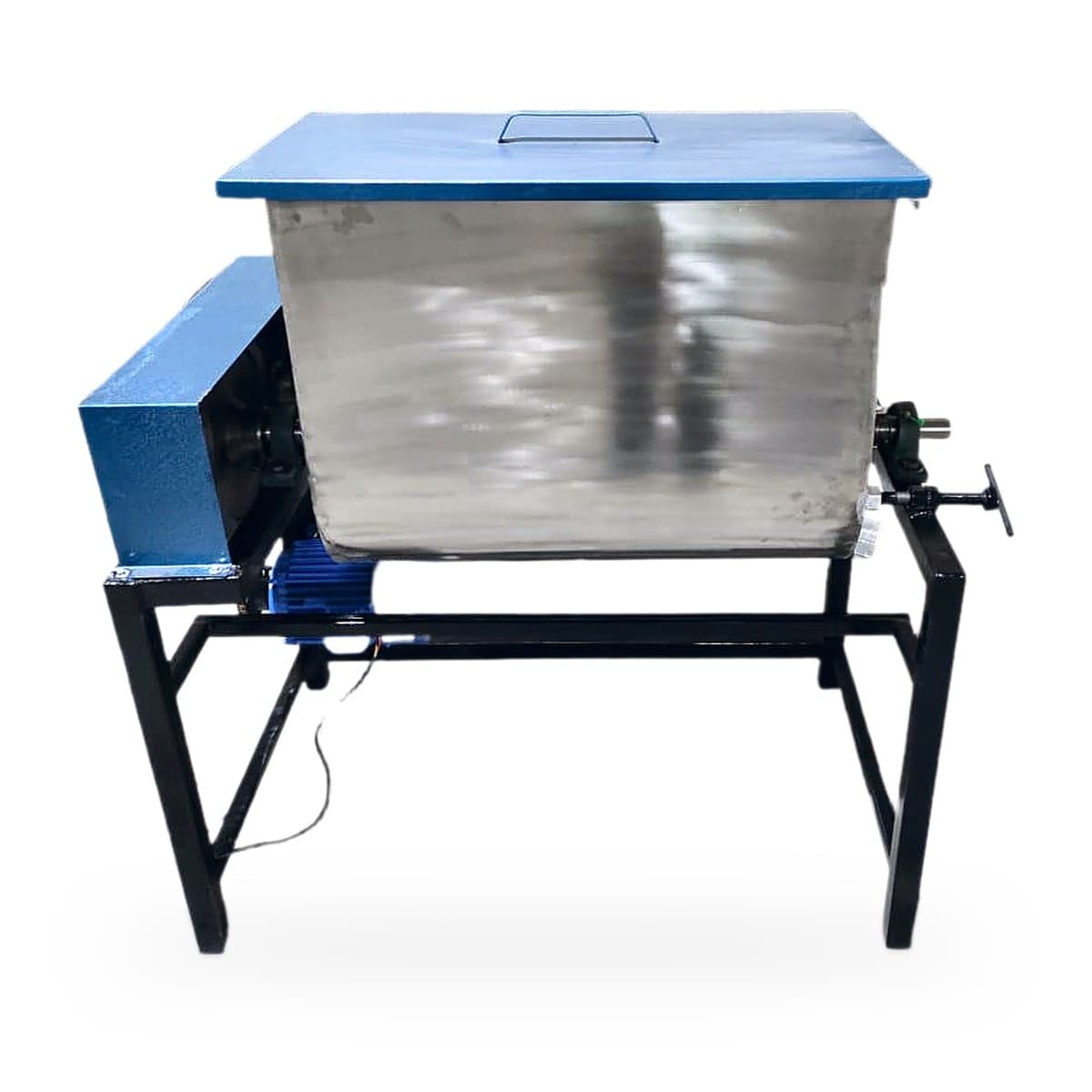
- Weigh and mix. Weigh the powders (or premix) and add water a little at a time. Knead until there are no dry pockets left. At higher volumes a mixer saves hours. Our 25 kg agarbatti mixture machine mixes one even batch at a time.
- Make the sticks. Load the machine and start it. Check the first sticks closely: the coating should be even and firmly attached, and the bare handle should be the same length every time.
- Dry. Spread the raw agarbatti on trays or racks in a ventilated space. Drying time depends on the weather. It is quick in warm, dry conditions and slow in monsoon humidity. Very harsh direct sun can crack the coating, so many units start drying in shade.
- Check quality. Dry sticks should be hard, straight and free of cracks. Burn-test a few from every batch. They should light easily, stay lit and burn at a steady pace.
- Dip and scent (optional). Dip bundles in the perfume and DEP mix, let the extra drain off, and dry them again until the surface is no longer wet. Keep this area well ventilated and away from any flame.
- Pack. Count or weigh, then pack in pouches or boxes printed with your brand, MRP and batch details. A handheld batch coding printer prints dates and batch numbers directly on the pack.
How Much Can It Produce?
Speed figures can be confusing, so here is how the numbers on the spec sheets fit together.
- sticks a minute (Model 1)
- 250
- sticks an hour at full speed
- 15,000
- sticks in 8 hours, in theory
- 1,20,000
- rated output per 8-hour shift
- 60–70 kg
The sticks-per-minute figure is the machine’s running speed. Real output is lower because the machine pauses for refills, die cleaning and breaks. That is why the rated figure of 60–70 kg per 8-hour shift is the number to use when you plan sales and raw material.
Model 2 shows the same logic. At 180–200 sticks a minute it runs 10,800–12,000 sticks an hour. Its spec sheet gives a counting of 1,000–1,200 sticks per kg and an output of about 10 kg an hour, and those figures line up: 10 kg at roughly 1,100 sticks a kilo is about 11,000 sticks.
As a simple monthly picture, one 8-hour shift on Model 1 for 25 working days comes to roughly 1,500–1,750 kg of raw agarbatti. A second shift roughly doubles that without buying a second machine. Before you count on it, though, check that your masala supply, drying space and buyers can keep up.
What raises or lowers your output
- Stick quality: crooked or uneven sticks cause jams and rejects.
- Masala consistency: dough that is too dry or too wet slows the machine and spoils coating.
- Die and stick size: longer, thicker sticks weigh more, so you get more kilos but fewer sticks per kilo.
- Operator rhythm: refilling before the feeder or hopper runs empty keeps the machine going.
- Power supply: steady voltage keeps the motor and drive running at the set speed.
Who Should Buy This Machine?
This machine suits anyone who wants agarbatti production to be a business rather than a side activity. These buyers get the most out of it:
- First-time entrepreneurs. Agarbatti is a simple, everyday product with steady demand, and the machine needs little power, little space and one operator. That makes it a practical first manufacturing business.
- Manual units ready to grow. If your pedal machines are running flat out and orders are still waiting, one automatic machine produces about ten times what a pedal machine makes in a shift.
- Agarbatti brands. Making raw batti in-house gives you control over quality, stick count and supply, instead of depending on outside suppliers before every festival season.
- Raw batti suppliers (B2B). Brands and perfumers buy raw agarbatti by the kilo, and they value uniform weight and thickness. A machine delivers both.
- Pooja-item traders and distributors. If you already sell to shops, adding your own label of agarbatti uses the network you have already built.
- Women entrepreneurs and self-help groups with electricity at hand: the work is light, one person can run the machine, and it fits in a small room.
- Rural and semi-urban units. The single-phase option means you do not need an industrial power connection to get started.
Benefits of a Fully Automatic Agarbatti Machine
Much higher output
At up to 250 sticks a minute, the machine produces in an hour what a hand roller makes in days. That volume lets you take bulk orders and supply several buyers at once.
Uniform sticks, every time
Every stick gets the same coating thickness and handle length. Uniform sticks burn evenly, pack neatly by count or weight, and earn the trust of buyers who reject mixed batches.
Less labour, less skill
Hand rolling takes practice. Running the machine mostly means keeping it fed, which a new operator learns quickly. That lowers your wage bill and your dependence on a few skilled workers.
Low running cost
A 1 HP motor draws little electricity for the output it gives, and it is available for single-phase as well as three-phase supply.
Flexible product range
With the right die, one machine makes sticks from 6 to 16 inches, in black, coloured or scented finishes, so you can serve different markets without buying different machines.
Easy to keep clean
The hopper and tables are stainless steel, so wet masala washes off easily and the surfaces do not rust. A clean machine is also a reliable machine.
Compact, and delivered safely
Model 2 measures about 1.19 × 0.76 m once assembled, so it fits in a small room. Every machine is dispatched in a wooden box to reach you in working condition.
One supplier for the whole job
Machine, raw material, installation support and after-sales help all come from Shivaa Traders, so you have one number to call for anything.
Fully Automatic vs Manual Agarbatti Machine
The most common question we get is whether to start with a manual machine or go straight to fully automatic. Here are the two side by side, using their spec sheets.
| Feature | Fully automatic (Model 1) | Paddle-type manual (double pedal) |
|---|---|---|
| Operation | Motor driven, automatic feeding & coating | Foot operated with two pedals |
| Speed | 250 sticks / min | 15–25 sticks / min |
| Output | 60–70 kg / 8 hrs | About 6–8 kg / 8 hrs |
| Electricity | 1 HP motor | Not needed |
| Machine weight | 150 kg | 55–60 kg |
| Best for | Commercial production, bulk and B2B supply | Home units, training, places without reliable power |
Put simply, the automatic machine makes about ten times more agarbatti per shift. If you plan to sell to wholesalers, brands or many shops, that difference decides whether you can take the order at all.
The paddle-type manual agarbatti machine still makes sense if you have no dependable electricity, want to learn the trade on a very small budget, or are training a group before moving to a machine. Many units start on pedal machines and add an automatic one once their buyers are in place.
Model 1 or Model 2: How to Choose
We offer this machine in two models. Both are fully automatic and both ship in wooden box packing.
- Model 1 (250 sticks / min) is the faster of the two, rated at 60–70 kg per 8-hour shift. Choose it when output per shift is your top priority.
- Model 2 (Hung Tuan type, 180–200 sticks / min) is rated at about 10 kg an hour. It has a detailed spec sheet covering 6″–16″ sticks, single- and three-phase power and a compact 125 kg body.
Five questions to answer before you order
- Which stick length and thickness will you make? This decides the die.
- Is your power supply single-phase or three-phase?
- How many kilos a day do you need? Base it on orders, not hopes.
- Will you sell raw batti, or scent and pack your own brand? This changes your space and raw material list.
- Do you also need a masala mixer and a first lot of raw material?
Setting Up Your Agarbatti Unit
Space
Model 2 takes about 1.19 × 0.76 m once assembled. Add room around it for the operator, stick boxes and trays. Then plan separate areas for dry raw material storage, mixing, drying (the biggest area), dipping (well ventilated) and packing and finished stock. Many small units manage in a ground-floor shop or shed with a covered yard or roof for drying.
Power
A 1 HP motor needs only an ordinary connection, single-phase 220 V or three-phase 380 V depending on the model you choose. Have an electrician give it a dedicated socket with proper earthing and a breaker. Where voltage swings a lot, a stabiliser protects the motor and drive.
People
One operator runs the machine. Most units add a helper for mixing masala and handling drying trays, and bring in packing staff as orders grow.
Registrations
Rules differ by state and change from time to time, so confirm them with your District Industries Centre (DIC) or a chartered accountant. Most small units look at:
- Udyam registration, the free online MSME registration, which helps with loans and government schemes.
- GST registration, when your turnover crosses the limit or you sell through online marketplaces.
- Trademark for your brand name, if you sell your own scented range.
- Local trade licence, plus any pollution-board consent and fire-safety rules that apply in your area, especially for storing perfumes and solvents.
Finance
Central schemes such as PMEGP and MUDRA loans support new micro enterprises. Eligibility and subsidy rules change, so check the current terms with your bank or DIC. If you are applying for a loan, ask us for a quotation and spec sheet for your project file.
Start-up checklist
- Fully automatic agarbatti machine with the right die
- Masala mixer (optional at the start, very useful later)
- First lot of raw material: bamboo sticks and premix or powders
- Drying trays and racks, and a covered drying area
- Weighing scale for masala and finished stock
- Dipping tubs and fragrance, if you make scented agarbatti
- Packing material, and a batch coding printer for dates and batch numbers
What to Budget For: Costs of an Agarbatti Unit
Prices of machines and raw material change, so we share live quotes on request rather than printing numbers that go out of date. What does not change is the list of things you need to budget for. Plan for all of them, not just the machine.
One-time costs
- The machine and its die, plus GST at 18% and installation charges.
- A masala mixer, if you plan to run full shifts.
- Drying trays, racks and a covered drying area.
- Electrical work: a dedicated point, earthing, a breaker and a stabiliser if needed.
- Weighing scale, dipping tubs and basic tools.
- Registrations and branding: trademark, pack design and printing plates.
Running costs
- Raw material: sticks and masala, plus perfume, DEP and packing if you sell scented agarbatti.
- Wages for the operator, helper and packing staff.
- Electricity for a 1 HP motor and lighting.
- Rent, transport and routine maintenance.
- Working capital to cover raw material and stock while you wait for buyers to pay.
Working out your cost per kilo
Add up one month of running costs and divide by the kilos you actually sold that month, not the kilos the machine could make. That gives your real cost per kilo. Compare it with the price buyers in your area pay for raw batti or for scented packs, and you will know quickly which product line earns you more. Recalculate every few months, because raw material prices and your own efficiency both change.
Maintenance Is Simple: A Daily, Weekly and Monthly Checklist
Good news: this machine is easy to maintain. Most stoppages come from masala drying inside the machine, not from mechanical faults, so a few minutes of cleaning each day does most of the work.
Daily
- Empty the hopper and clean out leftover masala before it dries
- Clean the die and coating head
- Wipe the steel tables and stick feeder
- Switch off, unplug and cover the machine
Weekly
- Oil or grease moving parts and the chain, as shown at installation
- Check belt tension
- Tighten any loose nuts and bolts
- With power off, clear masala dust around the control panel
Monthly
- Inspect the die for wear and change it if coating turns uneven
- Check wiring, plugs and earthing
- Listen for unusual noise; check the motor is not overheating
- Re-level the machine on its adjustable legs
A few habits also extend the machine’s life: use straight, dry sticks; keep the masala at the right consistency so the motor is not straining; never run the machine empty for long; and keep it under a cover when it is not in use. Warranty covers the gear box, AC drive and AC motor, and our team is on call and WhatsApp from Monday to Saturday if something does not look right.
Common Problems and Quick Fixes
Most problems trace back to sticks or masala. Here is a quick guide.
| Problem | Likely cause | What to do |
|---|---|---|
| Masala falls off the stick | Dough too dry, too little jigat, or dusty sticks | Add water gradually, check the jigat share, use clean sticks |
| Sticks jam in the feeder | Crooked, uneven or damp sticks; guides not set for the length | Sort sticks before loading, keep them dry, reset the guides |
| Uneven coating | Masala not evenly mixed, air pockets, worn die | Mix longer (or use a mixer), fill the hopper evenly, check the die |
| Cracks after drying | Dough too wet, or dried too fast in harsh sun | Use a little less water; start drying in shade |
| Agarbatti goes off while burning | Too much binder or too little charcoal and wood powder | Adjust the mix, or switch to a tested premix |
| Machine slows down or motor runs hot | Masala too stiff, overloading, low voltage | Correct the dough, do not overfill, check the supply |
If a problem continues after these checks, send us a short video on WhatsApp. Seeing the machine running is usually the fastest way to find the cause.
Safety Tips for the Shop Floor
- Switch off and unplug the machine before cleaning it, changing the die or making adjustments.
- Keep hands, loose sleeves and dupattas away from moving parts while it runs.
- Use a properly earthed socket and keep the control cabinet door closed during work.
- Perfumes and DEP can catch fire. Store them sealed, away from heat, and never allow smoking or open flames near the dipping area.
- Ventilate the mixing, dipping and drying areas, and wear a mask while handling fine powders.
- Sweep up spilled powder and oil so the floor does not get slippery, and keep a fire extinguisher handy.
Where to Sell Your Agarbatti
Agarbatti is used every day in homes, temples and shops across India, which gives you many ways to sell.
- Bulk raw agarbatti to brands and perfumers. Sold by the kilo; uniform sticks and steady supply win repeat orders.
- Wholesalers and pooja-item distributors who supply hundreds of shops in your region.
- Retail shops directly: kirana stores, pooja stores, gift shops and stalls near temples.
- Your own brand online, through marketplaces, social media and your own website.
- Festival demand. Diwali, Navratri and other festivals bring big spikes, so build stock ahead of the season.
- Exports. India is among the world’s largest producers and exporters of incense sticks. Once your quality and volume are steady, exporters become a natural next step.
What bulk buyers check
Brands and wholesalers who buy raw agarbatti usually test a sample before placing an order. Expect them to look at how straight the sticks are, whether the coating thickness is even, how many sticks there are in a kilo, how long a stick burns, whether it goes off halfway, how much ash it leaves, and whether the sticks are fully dry. A machine takes care of uniformity; drying and a consistent masala take care of the rest. Keep a few sticks from every batch with a date on them, so you can answer any complaint with facts.
Why Buy From Shivaa Traders
- Machine and raw material from one supplier: bamboo sticks, premix, powders, perfume and DEP along with your machine.
- Two models to choose from, and honest advice on which one fits your plan.
- Installation support at your site (charges extra, depending on location).
- Warranty on the gear box, AC drive and AC motor.
- Wooden box packing so the machine reaches you safely.
- After-sales help on call and WhatsApp, Mon – Sat, 10:00 AM – 7:00 PM.
- The full agarbatti line under one roof: mixer, manual machines, dhoop stick and wet dhoop machines.
Agarbatti Making Glossary
- Agarbatti
- An incense stick: a bamboo stick coated with a burnable, often scented, masala.
- Raw batti / kali batti
- Unscented coated sticks straight from the machine, after drying. Sold in bulk for dipping.
- Masala
- The dough that coats the stick, made from charcoal, jigat and wood powder (or premix) with water.
- Premix
- A ready-blended masala powder. Just add water.
- Jigat
- A natural bark powder that works as the binder and holds the masala on the stick.
- DEP
- Diethyl phthalate, a solvent used to dilute fragrance for dipping agarbatti.
- Die
- The part that shapes the coating. It sets the thickness and the bare handle length.
- Counting
- The number of sticks in one kilogram. It depends on stick length and the die.
- Hopper
- The cone-shaped steel container that holds masala and feeds it to the coating head.
- Single / three phase
- Types of electricity supply. Homes usually have single-phase; workshops often have three-phase.
Short Mein Samjhiye (Hinglish Summary)
Fully automatic agarbatti banane ki machine mein aap bamboo sticks aur agarbatti masala daalte hain, aur machine khud har stick par masala chadha deti hai, bina haath se bele. Model 1 ek minute mein 250 tak sticks banata hai, yaani 8 ghante mein lagbhag 60–70 kg agarbatti. Isme sirf 1 HP motor lagti hai, single phase aur three phase dono mein milti hai, aur ek operator ise aaraam se chala leta hai.
Raw material, jaise bamboo sticks, premix, charcoal powder, jigat, wood powder, perfume aur DEP, sab Shivaa Traders se machine ke saath mil jaata hai. Maintenance bhi aasaan hai: roz kaam ke baad hopper aur die saaf karein, aur samay par oiling karein. Price, demo video aur sahi model chunne ke liye humein WhatsApp ya call karein.